Brand histories
The History of Toyota
Autopapyrus
For a long time now, Japan's Toyota Motor Corporation has had every right to be proud of its status as the best-selling and largest automaker in the world. Besides vehicles of all kinds, including buses, Toyota also manufactures components.
The company's history goes back to the first half of the last century. In 1922, the firm Toyoda Automatic Loom Works was producing automatic looms designed by the engineer Sakichi Toyoda, who found success with them not only in the Japanese market but around the world.
In the 1930s, the British textile firm Platt Brothers & Co. took an interest in Toyoda's invention. A deal was soon struck, and Sakichi sold the patent rights to his loom. Sakichi Toyoda and his son Kiichiro put part of the proceeds into founding a new company to develop automobiles, fulfilling a long-held dream. This is how Toyota Motor Corporation came to be in 1937. It received strong backing from the government, which wanted to build up domestic car production, solve several economic problems at once, and at the same time freeze almost all imports of cars into the country.
Kiichiro Toyoda's experiments with two-cylinder engines were not successful, however, so he copied the design of a 65-horsepower six-cylinder Chevrolet engine. The transmission and chassis were modeled on the Chrysler Airflow.
The first engine went into production in 1934, and the first G1 truck and the Toyota Model A1 passenger car followed in 1935.
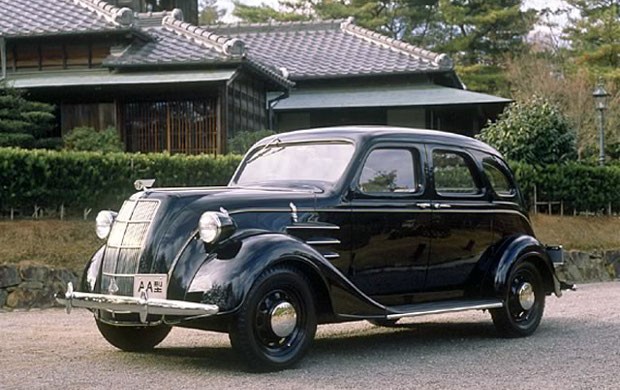
Vehicle assembly was set up on the island of Honshu, in what is now Aichi Prefecture, where the city of Toyota now stands. The debut passenger car, the Toyota Model AA sedan, was built from 1936 to 1943. It had a 3.4-liter (208 cu in) engine and drum brakes on every wheel. The spare tire was mounted on the almost vertical rear window, and the body was made entirely of metal, with no wooden parts, which was an innovative and bold decision for the time.
During World War II, the company built almost exclusively military vehicles. Toyota's assembly lines turned out trucks for the military, special off-road vehicles, and parts for combat aircraft at a rapid pace.
When Japan's defeat became clear, the situation around Toyota, like that of other companies serving the war effort, was far from stable. Although the factory buildings survived the bombings intact, car production was banned.
But at the end of 1945, the American military allowed Toyota to make goods for the household needs of the population, such as dishes and various tools. This continued until 1947.
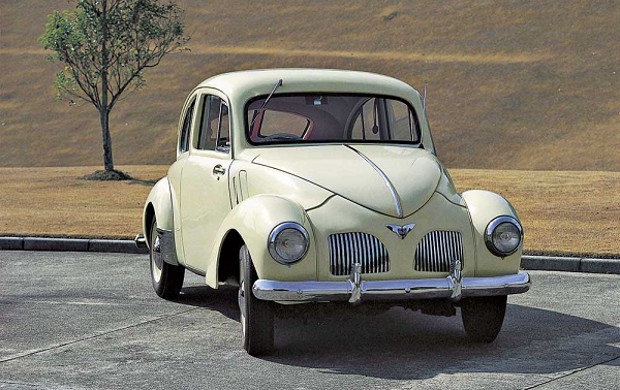
Kiichiro Toyoda, however, did not want to forget his main interest, and as soon as peacetime began, development of a new car got under way. This time it was the SA, an affordable, compact and fairly undemanding sedan sold under the name Toyopet. It had a four-cylinder, one-liter engine making 27 horsepower. The styling resembled the famous Volkswagen Beetle. The car could reach a speed of 88 km/h (55 mph), but no more.
Still, it was the later models of the Toyopet line that made Toyota well known. Ten years after the end of the war, Toyota could supply 8,400 cars a year to the market, and ten years after that, by 1965, 600 thousand.
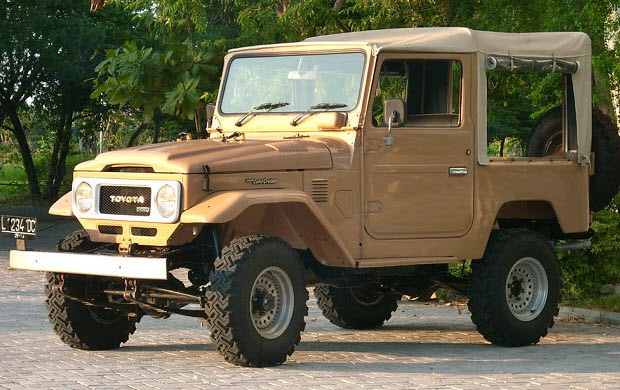
In addition, modeled on the Jeep, utility vehicles for civilian use were created and named Land Cruiser. These four-wheel-drive vehicles, with a payload of up to one thousand kilograms (about 2,200 lb), were fitted with a six-cylinder engine rather than a four-cylinder one, a first in this class. The new Jeep-style vehicles were widely used by Japanese government services, including the National Police Reserve.
In the 1950s, Toyota began to consistently carry out the program of action that still gives it its reputation today as a global manufacturer that tolerates not the slightest defect in its cars. Production is run like clockwork, and costs are kept to a minimum thanks to the just-in-time principle, which was already in use when the company made automatic looms. Every employee is responsible for their own section and strictly monitors the quality of the parts used. If a worker finds a defect or fault, they give a special signal and stop the assembly line. That way, all flaws are caught before the car ever goes on sale.
Toyota's management has also always listened closely to employees' suggestions for improvements, put the best ideas into practice, and rewarded their authors financially.
The first luxury-class car, the Toyota Crown, appeared in 1955. Two years later Toyota took its first steps toward conquering the U.S. market, exporting a pair of models there: the Land Cruiser BJ and the Crown sedan. In 1959, Toyota's first plant outside Japan began operating in Brazil.
It must be said that at first Japanese cars did not impress the North American market. Contrary to expectations, fewer than three hundred cars were sold there in the first year. They were simply inferior to the competition in every respect. Toyota then put an important rule of its corporate philosophy first: focus on the customer, not on the car.
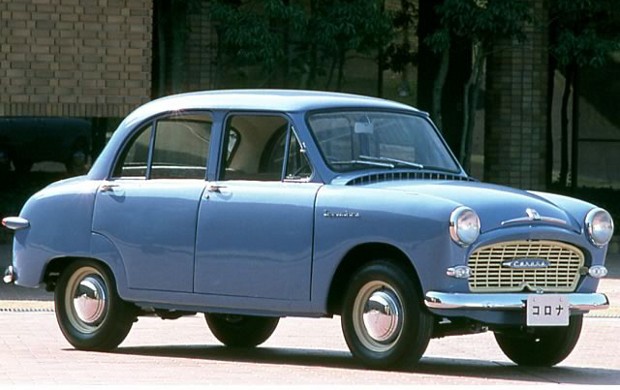
In the 1960s, Toyota managed to fit into a new trend in the car world. Roaring American cars with big, thirsty engines were giving way to small cars, and the reliable, economical Toyota Corona, introduced in 1957, became one of the symbols of this generational change. A year later the shape of the hood and door handles changed, and the rear end got elements similar to Ford sedans built eight years earlier. The engine was also replaced with a new one making 45 horsepower with a displacement of 997 cc.
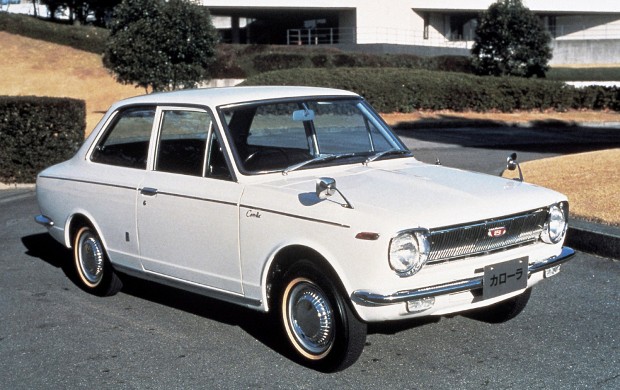
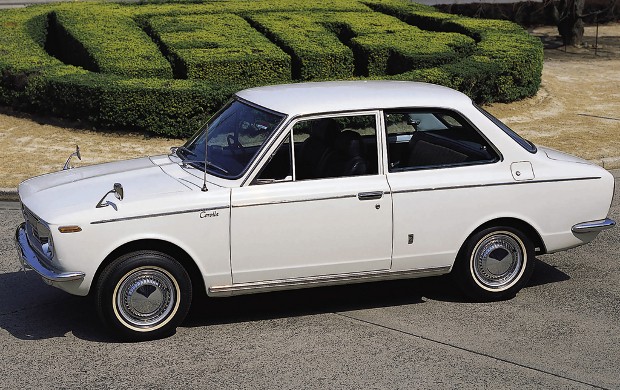
In 1962 the one-millionth Toyota rolled off the line, and by 1972 a total of 10 million cars had been built. At the end of the 1960s the Toyota Corolla became the most in-demand car in the world. By 2000, 25 million of this model had been sold, and by 2006, 32 million, which was even recorded in the Guinness Book of World Records.
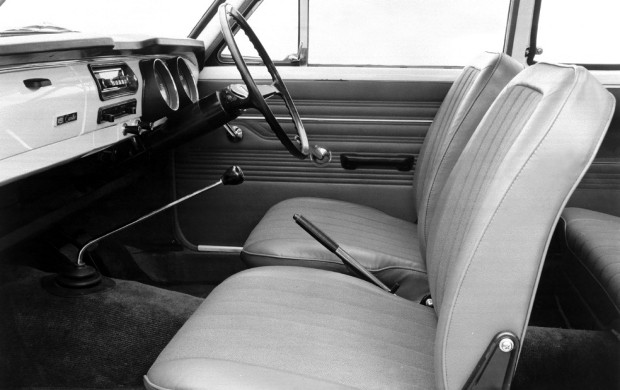
The rear-wheel-drive Toyota Corolla kept its longitudinally mounted engine unchanged until 1984, when the front-wheel-drive generation arrived. In total there have been eleven generations of the Corolla.
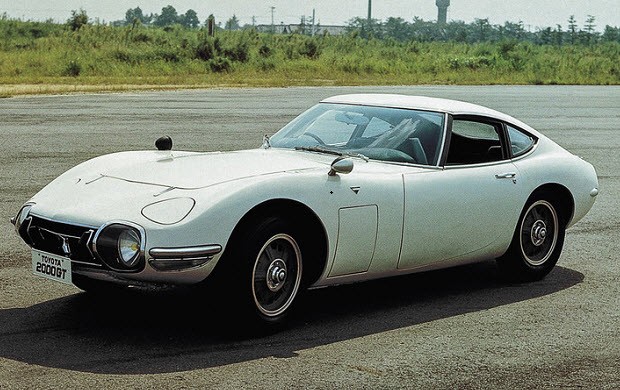
Another famous car is the sporty 2000GT coupe of 1967, built together with the Japanese company Yamaha. This time the world saw that Toyota was capable of building luxury sports cars. The new sports car, powered by a six-cylinder engine making 150 horsepower, could reach 220 km/h (137 mph) and accelerate to 100 km/h (62 mph) in 8.4 seconds. Today collectors literally hunt for this model, and back then it proved that Toyota was ready to compete on equal terms with the most successful automakers in the world.
In the 1970s, with fuel in short supply, demand for economical cars rose several times over, and Toyota again found itself riding the wave of success, since its lineup was full of inexpensive, reliable cars with efficient engines. American automakers could only kick themselves as they watched how well Toyota's far-sighted strategy worked in the U.S. market. It is no coincidence that by 1975 Toyota had become the most popular imported brand in America, overtaking even Volkswagen. The response to this success, however, was higher taxes on imported cars, so the company, along with other major Japanese manufacturers, began setting up its own plants in the United States.
In the late 1970s the company once again updated the principles of its corporate policy, and also designed a modern exhaust system for its new models to meet environmental regulations.
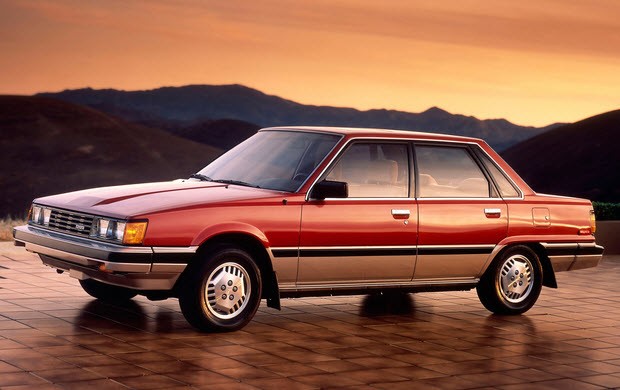
1982 was the year the famous Toyota Camry was born. It is still in production today, having gone through seven generations and improving step by step.
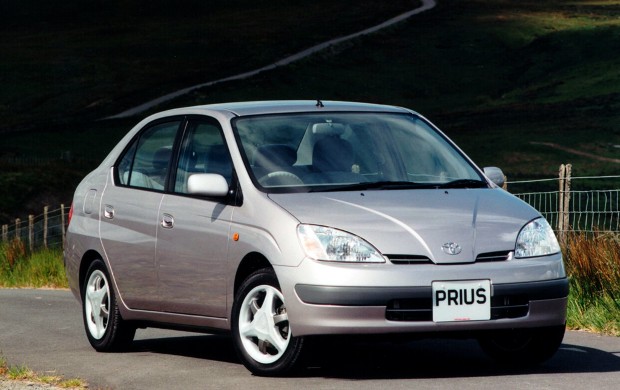
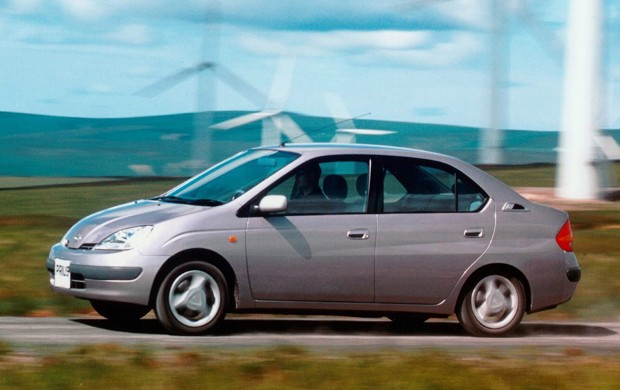
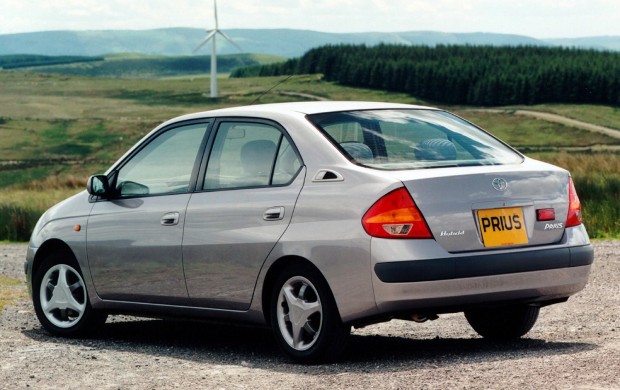
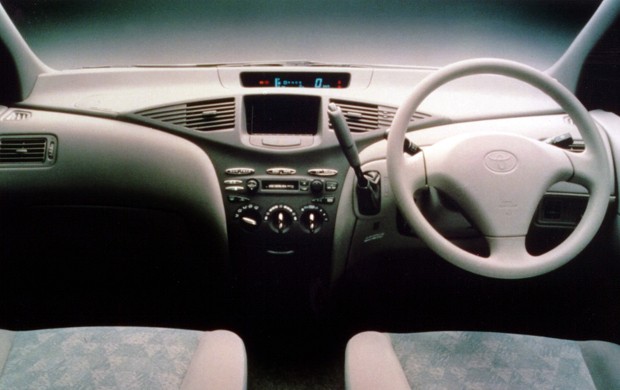
After 1990, Toyota's model range was enriched with new solutions: larger cars appeared, along with premium-class cars, a number of new SUVs, and a sporty version of the Camry. At the same time Toyota actively introduced new technologies, for example a four-stroke gasoline engine with direct fuel injection (D-4). The mass-produced Prius hybrid, a world first, which shuts the engine off instead of idling, literally stunned the public and gained the status of a car that changed the world. Alongside the gasoline engine, it has an electric motor-generator and a high-capacity battery. The two power sources can work together or separately. Kinetic energy is converted into electricity, which charges the battery.
The floods and earthquakes of 2011 hurt the company's operations and sales volumes. The natural disasters disrupted supplies, temporarily halted production, and reduced exports of cars. The flooding in Thailand destroyed the production base located there. As a result of the tsunami and earthquakes, Toyota lost a total of 390,000 vehicles of production.
To top off all these problems, Toyota had to recall more than nine million vehicles, sold or still on sale, over problems with unintended acceleration in its trucks and passenger cars.
Still, Toyota is not giving up ground today. It continues to build a diverse model range, whether classic passenger cars, SUVs, trucks or buses. The company is constantly working on new technical developments, for example in the production of hydrogen fuel cells.
The company's history goes back to the first half of the last century. In 1922, the firm Toyoda Automatic Loom Works was producing automatic looms designed by the engineer Sakichi Toyoda, who found success with them not only in the Japanese market but around the world.
In the 1930s, the British textile firm Platt Brothers & Co. took an interest in Toyoda's invention. A deal was soon struck, and Sakichi sold the patent rights to his loom. Sakichi Toyoda and his son Kiichiro put part of the proceeds into founding a new company to develop automobiles, fulfilling a long-held dream. This is how Toyota Motor Corporation came to be in 1937. It received strong backing from the government, which wanted to build up domestic car production, solve several economic problems at once, and at the same time freeze almost all imports of cars into the country.
Kiichiro Toyoda's experiments with two-cylinder engines were not successful, however, so he copied the design of a 65-horsepower six-cylinder Chevrolet engine. The transmission and chassis were modeled on the Chrysler Airflow.
The first engine went into production in 1934, and the first G1 truck and the Toyota Model A1 passenger car followed in 1935.
Vehicle assembly was set up on the island of Honshu, in what is now Aichi Prefecture, where the city of Toyota now stands. The debut passenger car, the Toyota Model AA sedan, was built from 1936 to 1943. It had a 3.4-liter (208 cu in) engine and drum brakes on every wheel. The spare tire was mounted on the almost vertical rear window, and the body was made entirely of metal, with no wooden parts, which was an innovative and bold decision for the time.
During World War II, the company built almost exclusively military vehicles. Toyota's assembly lines turned out trucks for the military, special off-road vehicles, and parts for combat aircraft at a rapid pace.
When Japan's defeat became clear, the situation around Toyota, like that of other companies serving the war effort, was far from stable. Although the factory buildings survived the bombings intact, car production was banned.
But at the end of 1945, the American military allowed Toyota to make goods for the household needs of the population, such as dishes and various tools. This continued until 1947.
Kiichiro Toyoda, however, did not want to forget his main interest, and as soon as peacetime began, development of a new car got under way. This time it was the SA, an affordable, compact and fairly undemanding sedan sold under the name Toyopet. It had a four-cylinder, one-liter engine making 27 horsepower. The styling resembled the famous Volkswagen Beetle. The car could reach a speed of 88 km/h (55 mph), but no more.
Still, it was the later models of the Toyopet line that made Toyota well known. Ten years after the end of the war, Toyota could supply 8,400 cars a year to the market, and ten years after that, by 1965, 600 thousand.
In addition, modeled on the Jeep, utility vehicles for civilian use were created and named Land Cruiser. These four-wheel-drive vehicles, with a payload of up to one thousand kilograms (about 2,200 lb), were fitted with a six-cylinder engine rather than a four-cylinder one, a first in this class. The new Jeep-style vehicles were widely used by Japanese government services, including the National Police Reserve.
In the 1950s, Toyota began to consistently carry out the program of action that still gives it its reputation today as a global manufacturer that tolerates not the slightest defect in its cars. Production is run like clockwork, and costs are kept to a minimum thanks to the just-in-time principle, which was already in use when the company made automatic looms. Every employee is responsible for their own section and strictly monitors the quality of the parts used. If a worker finds a defect or fault, they give a special signal and stop the assembly line. That way, all flaws are caught before the car ever goes on sale.
Toyota's management has also always listened closely to employees' suggestions for improvements, put the best ideas into practice, and rewarded their authors financially.
The first luxury-class car, the Toyota Crown, appeared in 1955. Two years later Toyota took its first steps toward conquering the U.S. market, exporting a pair of models there: the Land Cruiser BJ and the Crown sedan. In 1959, Toyota's first plant outside Japan began operating in Brazil.
It must be said that at first Japanese cars did not impress the North American market. Contrary to expectations, fewer than three hundred cars were sold there in the first year. They were simply inferior to the competition in every respect. Toyota then put an important rule of its corporate philosophy first: focus on the customer, not on the car.
In the 1960s, Toyota managed to fit into a new trend in the car world. Roaring American cars with big, thirsty engines were giving way to small cars, and the reliable, economical Toyota Corona, introduced in 1957, became one of the symbols of this generational change. A year later the shape of the hood and door handles changed, and the rear end got elements similar to Ford sedans built eight years earlier. The engine was also replaced with a new one making 45 horsepower with a displacement of 997 cc.
In 1962 the one-millionth Toyota rolled off the line, and by 1972 a total of 10 million cars had been built. At the end of the 1960s the Toyota Corolla became the most in-demand car in the world. By 2000, 25 million of this model had been sold, and by 2006, 32 million, which was even recorded in the Guinness Book of World Records.
The rear-wheel-drive Toyota Corolla kept its longitudinally mounted engine unchanged until 1984, when the front-wheel-drive generation arrived. In total there have been eleven generations of the Corolla.
Another famous car is the sporty 2000GT coupe of 1967, built together with the Japanese company Yamaha. This time the world saw that Toyota was capable of building luxury sports cars. The new sports car, powered by a six-cylinder engine making 150 horsepower, could reach 220 km/h (137 mph) and accelerate to 100 km/h (62 mph) in 8.4 seconds. Today collectors literally hunt for this model, and back then it proved that Toyota was ready to compete on equal terms with the most successful automakers in the world.
In the 1970s, with fuel in short supply, demand for economical cars rose several times over, and Toyota again found itself riding the wave of success, since its lineup was full of inexpensive, reliable cars with efficient engines. American automakers could only kick themselves as they watched how well Toyota's far-sighted strategy worked in the U.S. market. It is no coincidence that by 1975 Toyota had become the most popular imported brand in America, overtaking even Volkswagen. The response to this success, however, was higher taxes on imported cars, so the company, along with other major Japanese manufacturers, began setting up its own plants in the United States.
In the late 1970s the company once again updated the principles of its corporate policy, and also designed a modern exhaust system for its new models to meet environmental regulations.
1982 was the year the famous Toyota Camry was born. It is still in production today, having gone through seven generations and improving step by step.
After 1990, Toyota's model range was enriched with new solutions: larger cars appeared, along with premium-class cars, a number of new SUVs, and a sporty version of the Camry. At the same time Toyota actively introduced new technologies, for example a four-stroke gasoline engine with direct fuel injection (D-4). The mass-produced Prius hybrid, a world first, which shuts the engine off instead of idling, literally stunned the public and gained the status of a car that changed the world. Alongside the gasoline engine, it has an electric motor-generator and a high-capacity battery. The two power sources can work together or separately. Kinetic energy is converted into electricity, which charges the battery.
The floods and earthquakes of 2011 hurt the company's operations and sales volumes. The natural disasters disrupted supplies, temporarily halted production, and reduced exports of cars. The flooding in Thailand destroyed the production base located there. As a result of the tsunami and earthquakes, Toyota lost a total of 390,000 vehicles of production.
To top off all these problems, Toyota had to recall more than nine million vehicles, sold or still on sale, over problems with unintended acceleration in its trucks and passenger cars.
Still, Toyota is not giving up ground today. It continues to build a diverse model range, whether classic passenger cars, SUVs, trucks or buses. The company is constantly working on new technical developments, for example in the production of hydrogen fuel cells.
What next