Autopapyrus · Range Rover Sport 3.0 TDV6 306DT (2012)
https://autopapyrus.com/guides/range-rover/sport/cooling-system-diagnostics/
https://autopapyrus.com/guides/range-rover/sport/cooling-system-diagnostics/
Compiled automatically from service literature and owner experience. Specs are for the typical configuration — check them against your exact car before you start.
Range Rover Sport 3.0 TDV6 306DT (2012): Cooling System Diagnostics
Typical complaints on the 3.0 TDV6 (306DT) are coolant loss, a low coolant level warning, overheating, and weak cabin heat. Diagnostics go from simple to complex: coolant level and condition, visual inspection for leaks and corrosion, pressure test, thermostat and fan checks, then a check for internal leaks (EGR cooler, oil heat exchanger).
Part
- 🔩 Depends on diagnostic results. Typical candidates: coolant pump assembly, thermostat with housing, expansion tank with cap, coolant hoses and pipes, radiator, EGR cooler or heat exchanger, radiator fan with control module. Price depends on the component, so check with your supplier
Step by step
11 steps- Only with the engine cold, check the coolant level in the expansion tank. It should be between the MIN and MAX marks. Assess the color and clarity: rusty cloudiness, an oil film, or an exhaust smell points to an internal problem. Do not open the cap on a hot engine, because the system is under pressure.
- Read fault codes with a scan tool from all modules, especially the engine ECU. Check live data: coolant temperature should reach operating temperature (about 90 °C) within a reasonable time and stay stable, without spikes and without overheating in traffic.
- Remove the under-engine shield and inspect the radiator, the lower hose, the coolant pump, and the pipes. Look for leaks, white and pink traces of dried coolant, and wet hose clamps. The pump is belt-driven at the front of the engine: coolant traces on the housing, play, or bearing noise indicate wear. A small dry deposit at the weep hole is acceptable. A wet leak or play is not.
- Pay special attention to the steel coolant pipe that runs from the left side of the engine, turns at the front of the engine, and heads down to the thermostat, where it connects with a hose. Because of road salt and moisture, it corrodes on the outside where it goes under the hose. To inspect it, you usually have to remove the fan with the shroud. Flaking rust, deposits, and thinning metal mean the pipe must be replaced. Severe deterioration can cause a sudden loss of all coolant and overheating.
- Inspect the expansion tank for cracks along the seams and for damage to the plastic fittings. Check the hoses: they should not be swollen, sticky, or overly hard. Check the tank cap, which must hold pressure.
- Pressure test the cold system with a hand pump tester. Do not exceed the pressure marked on the tank cap. The pressure should hold for at least 10-15 minutes without dropping. During the test, look for the leak with a flashlight and mirror, including the area under the intake manifold and around the thermostat.
- Warm up the engine and check the thermostat: the lower radiator hose should stay cold until the thermostat opens, then heat up quickly and evenly. If the radiator is cold with a hot engine, the thermostat is not opening. If the upper and lower hoses heat up right away and the engine takes a long time to warm up, the thermostat is stuck open.
- Check the radiator fan: it should switch on when coolant temperature rises and when the A/C is on. If it does not, check the fuse, the connector, and the control module, and compare against the command shown in live data.
- Check the heater: with the engine warm, both heater core hoses should be hot. If heat is weak, possible causes are an air pocket, a clogged heater core, or a circulation problem (pump).
- Internal leak diagnostics: if coolant is disappearing with no external leaks, check the exhaust for white smoke and a sweetish smell, look at the oil for emulsion, and look for signs of coolant entering the EGR cooler and intake. A combustion gas in coolant test (chemical tester) will reveal a head gasket fault or a crack. Suspect the EGR cooler first in this case.
- After fixing the fault, bleed the air from the system following the manufacturer's procedure and top up with coolant of the correct Land Rover specification. Do not mix different coolant types. Check the system for leaks with the engine warm and again after it cools down, and recheck the level.
Common mistakes and warnings
- Do not open the expansion tank on a hot engine: severe burns are possible. If the engine overheats, stop immediately and shut it off: the TDV6 diesel is sensitive to overheating, and cylinder head warping and head gasket damage are possible. If you suspect an internal leak (coolant in the oil or cylinders), do not drive the vehicle and take it to a repair shop. Take tightening torques for the pump, thermostat, and pipe fasteners from the manufacturer's service data for your specific version. Exact values are not given here.
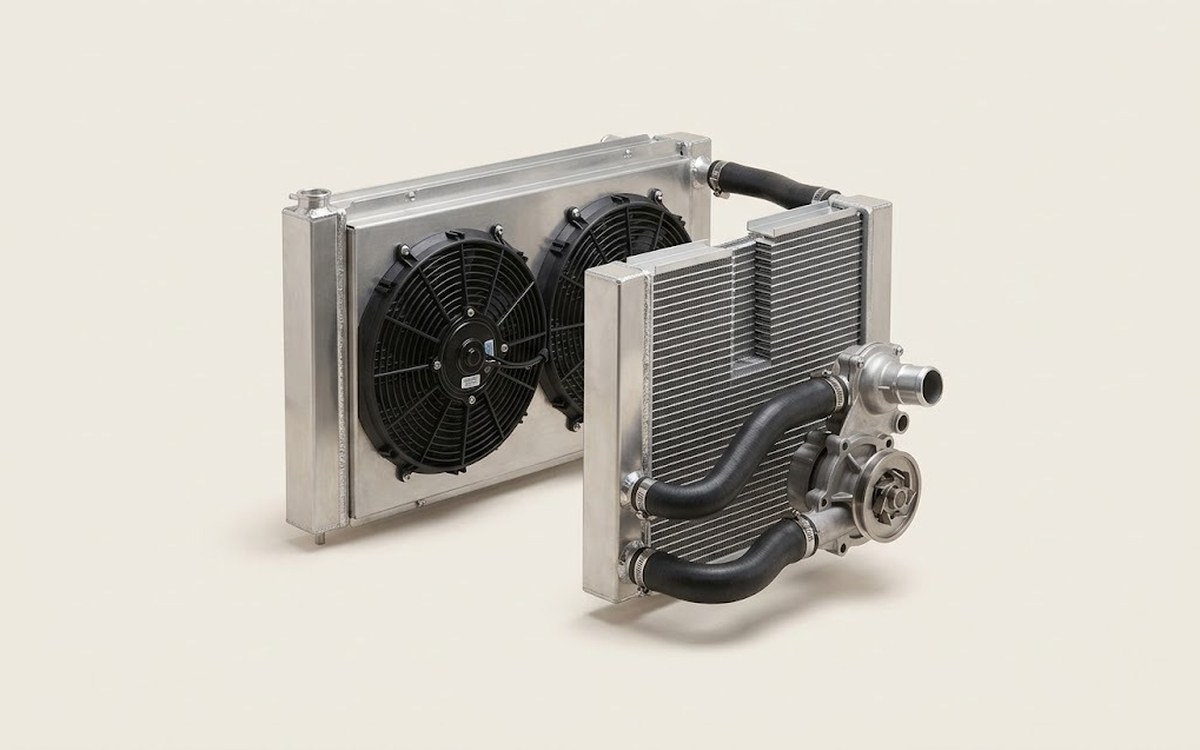 How it works · 3D
How the Engine Cooling System Works
How the part you're working on actually works — in plain English, on a 3D model.
Open in 3D →