Brand histories
The History of Volkswagen
Autopapyrus
Today the name Volkswagen is familiar to everyone: a German maker of passenger cars, commercial vehicles, trucks and vans. The company behind it, which shares the same name, is headquartered in Wolfsburg. Volkswagen also produces automotive components.
In the 1930s, far from every German could afford a car. For most people, income stretched to a motorcycle at best. There was a need for a "people's" car that would serve as an alternative to luxury models. The first mass-market models included the Mercedes 170H, the Hanomag 1.3 and others.
Ferdinand Porsche, a designer of sports cars and powerful machines, spent many years developing a compact vehicle that most Germans could afford and use as a family car. It was not supposed to be just a cut-down version of a large car, but something new, built from scratch.
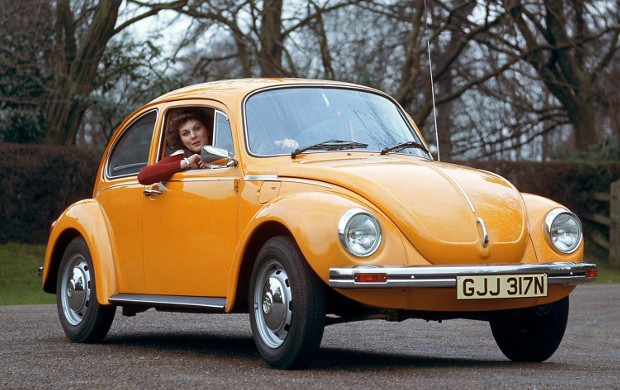
The first car matching Porsche's vision was built in 1931 under the name Volksauto (literally, "people's car"). It was based partly on his own original work and partly borrowed ideas from other manufacturers. The rounded, beetle-like body improved aerodynamics. The car also had a torsion bar suspension and an air-cooled engine.
In 1933, on the orders of Adolf Hitler, work began on a budget car designed to carry five people (two parents and three children) and capable of reaching 100 km/h (62 mph). The Führer wanted cars in the Third Reich to be as accessible as they were in America, costing no more than 990 marks, equivalent to $396.
But it soon became clear that private factories could not build cars at a market price that low for the time. So Hitler ordered the construction of a new state-run facility to assemble cars based on Ferdinand Porsche's designs, but with a number of technical restrictions.
This is how the KDF-Wagen appeared in 1936, with specifications similar to the 1931 Volksauto. As for the prefix "Volks-", it was used to designate any inexpensive, mass-market product. The first few hundred KDF-Wagens were assembled at Daimler-Benz plants.
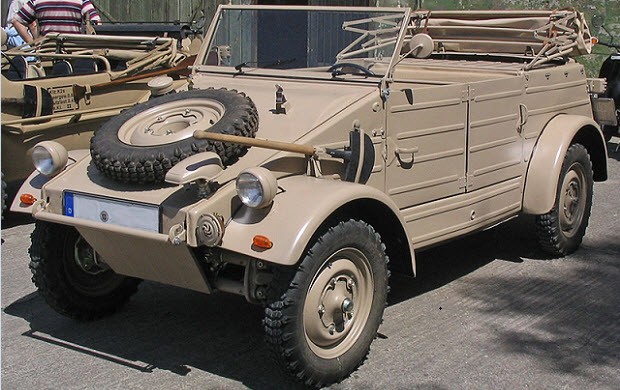
In spring 1937 a company called Volkswagenwerk GmbH began operations. A year later, construction of the factory in Wolfsburg started. Until 1939, when hostilities began, the plant barely operated, and only a handful of cars left its gates. When the war started, the plant switched to military production, building military vehicles. One example is the Kübelwagen ("bucket car"), which reached speeds of up to 80 km/h (50 mph), had 29 cm (11.4 in) of ground clearance, 16-inch tires and a dependable air-cooled engine.
As is well known, factories in Nazi Germany used forced labor. The Volkswagen plant was no exception: according to an admission by Volkswagen management in the 1990s, the plant used the labor of 15,000 people who had no rights. In light of this, the company voluntarily established a restitution fund, an attempt to compensate the victims for their suffering.
After the war the factory buildings were badly damaged by bombing. The British also occupied the Wolfsburg area and were planning to shut the company down, since it had served the Nazi war machine and used forced labor. However, the British government suddenly took an interest in the civilian cars the plant had produced. As a result, Volkswagen received an order for 20,000 cars, and assembly soon began.
Despite the plant's sorry state, a thousand cars a month rolled off its line, which was a very good achievement. But the company's future remained uncertain for a long time.
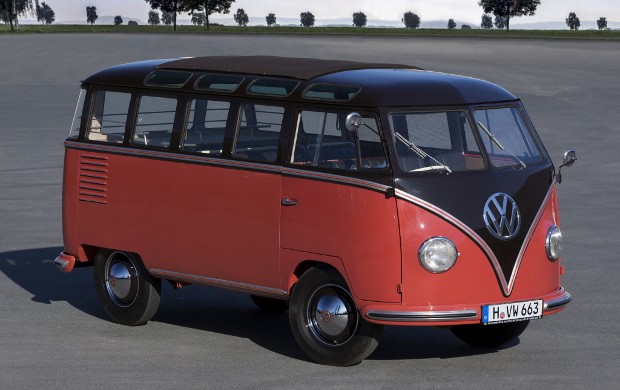
By 1948, though, Volkswagen could be called a symbol of Germany's stabilization. An important model was the commercial Volkswagen Type 2, fitted with a 1100 cc rear-mounted engine. In 1965 a version of this model appeared that could carry loads of up to 1,000 kg (2,200 lb), up from the previous 750 kg (1,650 lb), and had a 1.5-liter engine.
Volkswagen entered the American market in 1949, though at first there were almost no sales. At the time nobody imagined that this brand would eventually become the most popular import in the United States.
In the early 1950s, demand for upscale cars returned. This led to the sporty Volkswagen Karmann Ghia, with a coupe body. The model was the result of cooperation between Volkswagen, Karmann and the Italian firm Ghia. The body panels were no longer bolted on but were hand-welded edge to edge. The first version was presented in Paris in 1953 and received a warm welcome from those present. Once series production began, demand for the model broke all previous records: in the first year alone, ten thousand of the practical Volkswagen Karmann Ghia, with a 60 hp, 1.5-liter engine, were sold.
From 1960, Volkswagen offered the public a new type of car with a monocoque body, powerful engines and an electronic fuel injection system.
Then came a pivotal moment in Volkswagen's history: it acquired two companies, Auto Union and NSU Motorenwerke AG, and merged them into a single subsidiary that began producing premium cars under the Audi brand. This was a smart and profitable decision for Volkswagen, which refreshed its technological capabilities and improved its somewhat outdated air-cooled engines.
In the early 1970s, the success of the best-selling Volkswagen Beetle took a sharp downturn, and sales fell noticeably. A replacement had to be found, and as soon as possible. Gradually (using technology drawn from Audi and Auto Union), the designs of today's famous Volkswagen models, the Passat, Golf and Polo, began to appear.
First came the Volkswagen Passat (1973), a sedan with a four-cylinder engine of 1.3 or 1.5 liters, producing 55 and 75 hp respectively.
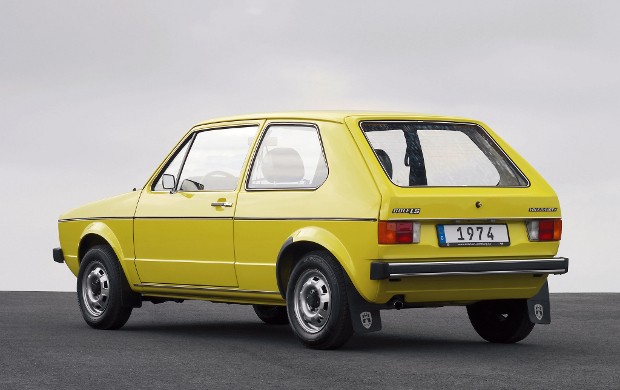
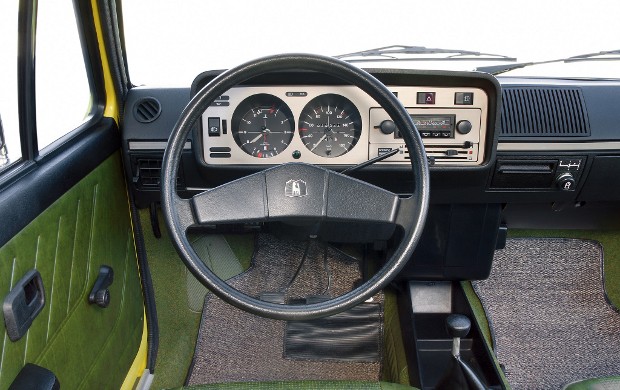
The Scirocco appeared in 1974. Its platform was also used for the upcoming Volkswagen Golf and the Karmann, and its styling was created by Italian designer Giorgetto Giugiaro. He also designed the iconic 1974 Volkswagen Golf, with a front-mounted, water-cooled engine. The Golf is an undisputed success for the company and one of the most popular cars in the world. More than 20 million Golfs have been built, and it is still produced today, now in its seventh generation.
The year 1975 saw the launch of the Volkswagen Polo, and the Derby was built on its basis two years later. Models such as the Golf, Polo, Passat and Scirocco secured the company's steady success for many years ahead and are its calling cards.
The 1980s were not the most successful decade for Volkswagen, because competitors from Japan and the US appeared with cars priced far lower. Volkswagen then turned to developing markets and, following this new direction, gradually bought up shares of the Spanish automaker SEAT until it acquired the company outright in 1990.
In 1991 the third generation of the legendary Volkswagen Golf was successfully launched. Then, on the Golf platform, work began on the production New Beetle.
In 2007 the Volkswagen plant in Kaluga opened, and was later put in charge of assembling the Volkswagen Tiguan, Skoda Octavia, Volkswagen Polo Sedan and Skoda Fabia.
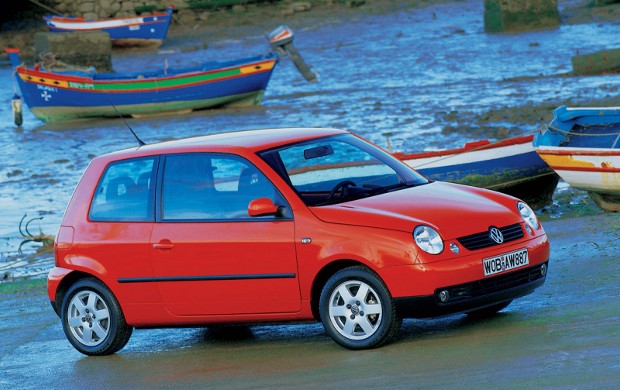
In 1999 the VW Lupo set a fuel economy record, able to cover 100 kilometers on just three liters of diesel (about 78 mpg US). Volkswagen devotes considerable effort to finding the most efficient ways of using fuel and often receives important awards for its inventions.
That same year, 1999, the popular Volkswagen Bora, also known as the Jetta, appeared, built on the Golf platform.
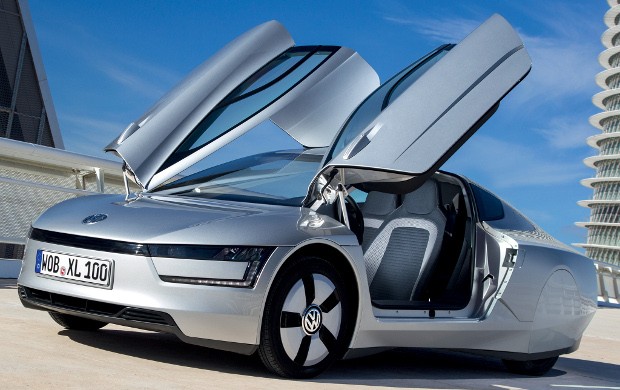
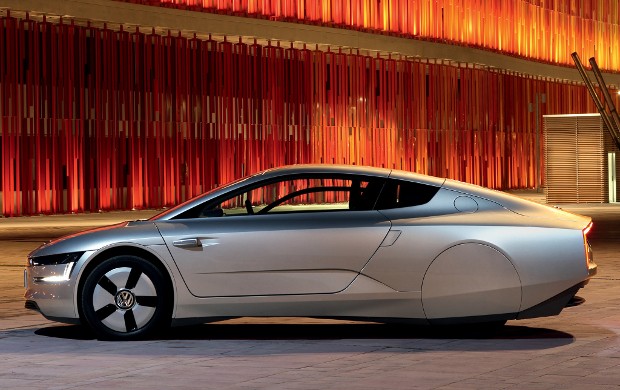
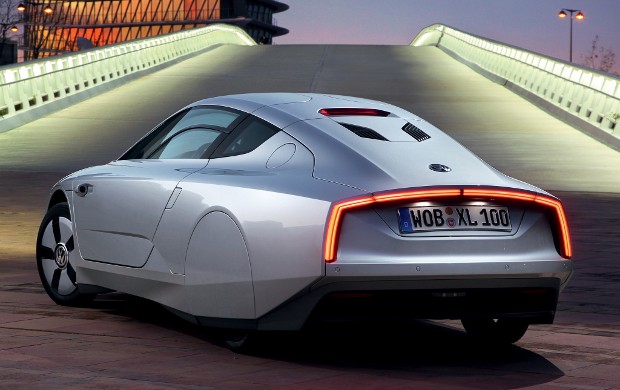
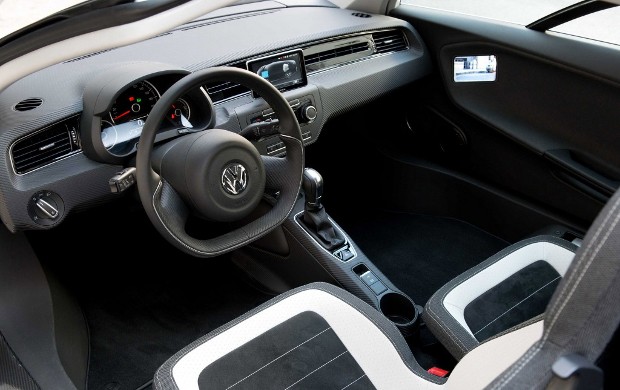
In 2002 the Volkswagen XL1 project was unveiled. The car was meant to be ultra-economical and lightweight, with excellent aerodynamics. Rear-view mirrors were replaced by cameras, and the closely spaced rear wheels were meant to improve streamlining. New components were designed from scratch and brought to life specially for this model, including aluminum brakes, ceramic bearings and a dedicated powertrain. However, the production version appeared only in 2013.
Today Volkswagen is the founder of the large international Volkswagen Group, which owns brands such as Audi, SEAT, Bentley, Bugatti, Skoda and Lamborghini. Among European automakers, Volkswagen is rightly considered the most significant. Its plants are located around the world: in Germany and the US, India and China, Mexico and Brazil, Poland and Russia, and other countries.
In the 1930s, far from every German could afford a car. For most people, income stretched to a motorcycle at best. There was a need for a "people's" car that would serve as an alternative to luxury models. The first mass-market models included the Mercedes 170H, the Hanomag 1.3 and others.
Ferdinand Porsche, a designer of sports cars and powerful machines, spent many years developing a compact vehicle that most Germans could afford and use as a family car. It was not supposed to be just a cut-down version of a large car, but something new, built from scratch.
The first car matching Porsche's vision was built in 1931 under the name Volksauto (literally, "people's car"). It was based partly on his own original work and partly borrowed ideas from other manufacturers. The rounded, beetle-like body improved aerodynamics. The car also had a torsion bar suspension and an air-cooled engine.
In 1933, on the orders of Adolf Hitler, work began on a budget car designed to carry five people (two parents and three children) and capable of reaching 100 km/h (62 mph). The Führer wanted cars in the Third Reich to be as accessible as they were in America, costing no more than 990 marks, equivalent to $396.
But it soon became clear that private factories could not build cars at a market price that low for the time. So Hitler ordered the construction of a new state-run facility to assemble cars based on Ferdinand Porsche's designs, but with a number of technical restrictions.
This is how the KDF-Wagen appeared in 1936, with specifications similar to the 1931 Volksauto. As for the prefix "Volks-", it was used to designate any inexpensive, mass-market product. The first few hundred KDF-Wagens were assembled at Daimler-Benz plants.
In spring 1937 a company called Volkswagenwerk GmbH began operations. A year later, construction of the factory in Wolfsburg started. Until 1939, when hostilities began, the plant barely operated, and only a handful of cars left its gates. When the war started, the plant switched to military production, building military vehicles. One example is the Kübelwagen ("bucket car"), which reached speeds of up to 80 km/h (50 mph), had 29 cm (11.4 in) of ground clearance, 16-inch tires and a dependable air-cooled engine.
As is well known, factories in Nazi Germany used forced labor. The Volkswagen plant was no exception: according to an admission by Volkswagen management in the 1990s, the plant used the labor of 15,000 people who had no rights. In light of this, the company voluntarily established a restitution fund, an attempt to compensate the victims for their suffering.
After the war the factory buildings were badly damaged by bombing. The British also occupied the Wolfsburg area and were planning to shut the company down, since it had served the Nazi war machine and used forced labor. However, the British government suddenly took an interest in the civilian cars the plant had produced. As a result, Volkswagen received an order for 20,000 cars, and assembly soon began.
Despite the plant's sorry state, a thousand cars a month rolled off its line, which was a very good achievement. But the company's future remained uncertain for a long time.
By 1948, though, Volkswagen could be called a symbol of Germany's stabilization. An important model was the commercial Volkswagen Type 2, fitted with a 1100 cc rear-mounted engine. In 1965 a version of this model appeared that could carry loads of up to 1,000 kg (2,200 lb), up from the previous 750 kg (1,650 lb), and had a 1.5-liter engine.
Volkswagen entered the American market in 1949, though at first there were almost no sales. At the time nobody imagined that this brand would eventually become the most popular import in the United States.
In the early 1950s, demand for upscale cars returned. This led to the sporty Volkswagen Karmann Ghia, with a coupe body. The model was the result of cooperation between Volkswagen, Karmann and the Italian firm Ghia. The body panels were no longer bolted on but were hand-welded edge to edge. The first version was presented in Paris in 1953 and received a warm welcome from those present. Once series production began, demand for the model broke all previous records: in the first year alone, ten thousand of the practical Volkswagen Karmann Ghia, with a 60 hp, 1.5-liter engine, were sold.
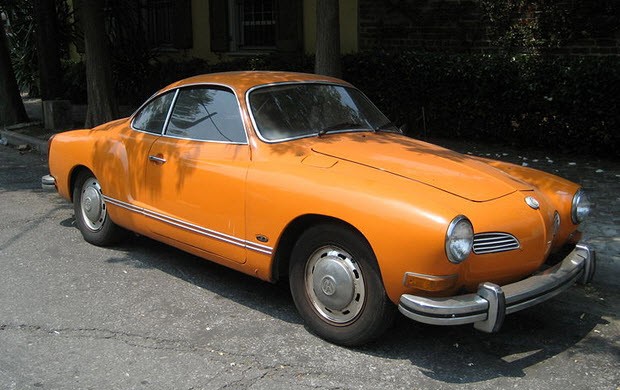
From 1960, Volkswagen offered the public a new type of car with a monocoque body, powerful engines and an electronic fuel injection system.
Then came a pivotal moment in Volkswagen's history: it acquired two companies, Auto Union and NSU Motorenwerke AG, and merged them into a single subsidiary that began producing premium cars under the Audi brand. This was a smart and profitable decision for Volkswagen, which refreshed its technological capabilities and improved its somewhat outdated air-cooled engines.
In the early 1970s, the success of the best-selling Volkswagen Beetle took a sharp downturn, and sales fell noticeably. A replacement had to be found, and as soon as possible. Gradually (using technology drawn from Audi and Auto Union), the designs of today's famous Volkswagen models, the Passat, Golf and Polo, began to appear.
First came the Volkswagen Passat (1973), a sedan with a four-cylinder engine of 1.3 or 1.5 liters, producing 55 and 75 hp respectively.
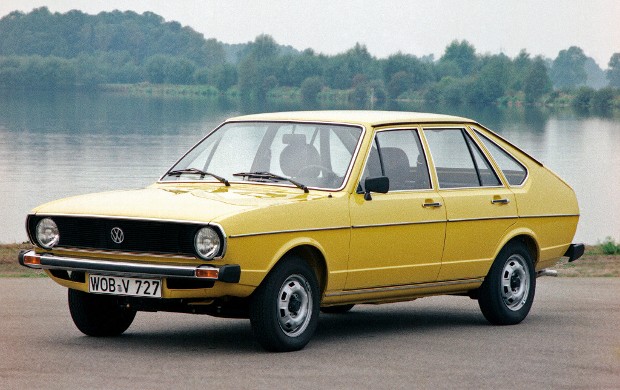
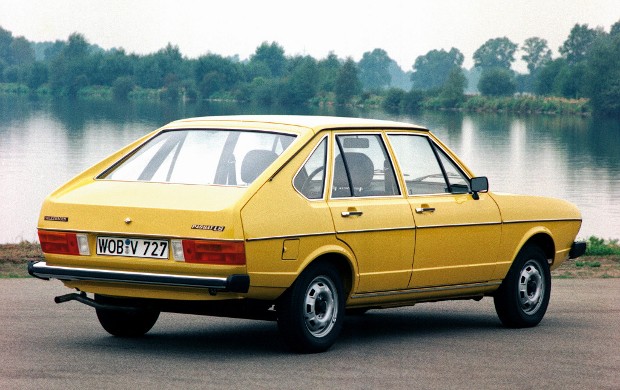
The Scirocco appeared in 1974. Its platform was also used for the upcoming Volkswagen Golf and the Karmann, and its styling was created by Italian designer Giorgetto Giugiaro. He also designed the iconic 1974 Volkswagen Golf, with a front-mounted, water-cooled engine. The Golf is an undisputed success for the company and one of the most popular cars in the world. More than 20 million Golfs have been built, and it is still produced today, now in its seventh generation.
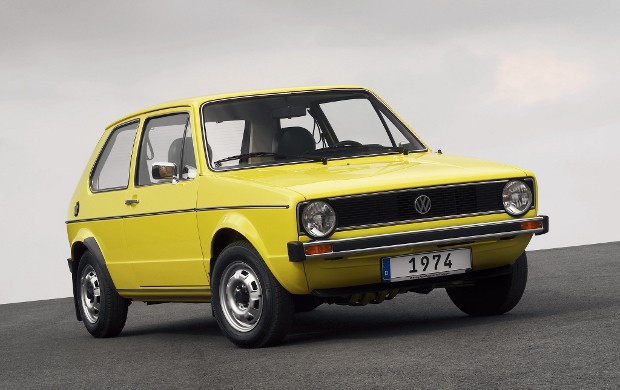
The year 1975 saw the launch of the Volkswagen Polo, and the Derby was built on its basis two years later. Models such as the Golf, Polo, Passat and Scirocco secured the company's steady success for many years ahead and are its calling cards.
The 1980s were not the most successful decade for Volkswagen, because competitors from Japan and the US appeared with cars priced far lower. Volkswagen then turned to developing markets and, following this new direction, gradually bought up shares of the Spanish automaker SEAT until it acquired the company outright in 1990.
In 1991 the third generation of the legendary Volkswagen Golf was successfully launched. Then, on the Golf platform, work began on the production New Beetle.
In 2007 the Volkswagen plant in Kaluga opened, and was later put in charge of assembling the Volkswagen Tiguan, Skoda Octavia, Volkswagen Polo Sedan and Skoda Fabia.
In 1999 the VW Lupo set a fuel economy record, able to cover 100 kilometers on just three liters of diesel (about 78 mpg US). Volkswagen devotes considerable effort to finding the most efficient ways of using fuel and often receives important awards for its inventions.
That same year, 1999, the popular Volkswagen Bora, also known as the Jetta, appeared, built on the Golf platform.
In 2002 the Volkswagen XL1 project was unveiled. The car was meant to be ultra-economical and lightweight, with excellent aerodynamics. Rear-view mirrors were replaced by cameras, and the closely spaced rear wheels were meant to improve streamlining. New components were designed from scratch and brought to life specially for this model, including aluminum brakes, ceramic bearings and a dedicated powertrain. However, the production version appeared only in 2013.
Today Volkswagen is the founder of the large international Volkswagen Group, which owns brands such as Audi, SEAT, Bentley, Bugatti, Skoda and Lamborghini. Among European automakers, Volkswagen is rightly considered the most significant. Its plants are located around the world: in Germany and the US, India and China, Mexico and Brazil, Poland and Russia, and other countries.
What next