Autopapyrus · BMW 5 Series
https://autopapyrus.com/guides/bmw/5-series/diagnosing-unusual-engine-noises-and-knocks-on-the-bmw-n57-3-0d-2011/
https://autopapyrus.com/guides/bmw/5-series/diagnosing-unusual-engine-noises-and-knocks-on-the-bmw-n57-3-0d-2011/
Compiled automatically from service literature and owner experience. Specs are for the typical configuration — check them against your exact car before you start.
Diagnosing Unusual Engine Noises and Knocks on the BMW N57 3.0d (2011)
On the N57, the most common noise sources are the timing chain drive (including the tensioner and guide rails), the crankshaft damper, the belt-driven accessories, and the fuel injectors. It's important to identify the type of noise (metallic knock, rattle, ticking, rumble), the conditions under which it appears (cold start, warm engine, idle, load), and which engine speeds it depends on. A crankshaft or bearing noise is a sign of serious wear, and you must not drive the car with it.
Part
- 🔩 Don't buy anything in advance. After diagnosis, typical candidates are the crankshaft damper (pulley), timing chain with tensioner and guide rails, fuel injectors, serpentine belt pulleys and tensioner, alternator with overrunning clutch (decoupler pulley), and exhaust heat shields. Prices vary widely, so check with your supplier
 There's a full repair manual for this car
Every system, wiring diagrams and torque specs — not just this job. Haynes and 7 more.
See manuals →
Step by step
10 steps- Gather and record the symptoms. When does the noise occur: only in the first seconds after a cold start, constantly at idle, when lifting off the throttle, or under load? Does it change when you rev the engine slightly? Record a video or audio clip of the running engine to help with comparisons.
- Check the oil. Check the level with the dipstick or through the electronic oil level menu (the engine has an electronic sensor, but if in doubt, check with the dipstick). Also check the condition (fuel dilution, diesel smell, thickness). Low or diluted oil causes noise from the chain, the hydraulic lash adjusters, and the turbocharger. Use oil that meets the BMW Longlife-04 specification (at minimum), in viscosity grade 5W-30 or 5W-40 as specified in the service schedule.
- Read the fault codes with a scanner. Check the DDE control unit memory for faults related to the injectors, rail pressure, crankshaft and camshaft sensor correlation (a sign of a stretched chain), and the turbocharger. At idle, look at the per-cylinder fuel quantity correction (injector balance): a noticeable difference on one cylinder points to a faulty injector.
- Determine whether the noise comes from the accessory drive. Start the engine at idle and inspect the serpentine belt. To test, remove the belt (keeping in mind that the water pump and power steering pump won't work without it, so run the engine for only 10-20 seconds) and listen to the engine. If the knock disappears, the culprit is among the alternator, pulley, tensioner, A/C compressor, or crankshaft damper. To check the damper, look for play and runout, as well as damage to the rubber layer. A knock at idle that decreases when you rev the engine slightly is often typical of the damper.
- Listen with a stethoscope or screwdriver at these points: the front engine cover (chain), the valve cover (upper drive), the injectors on each cylinder (a characteristic rapid ticking, which is normal in moderation on a diesel), the alternator, the pulleys, the water pump, and the turbocharger (a whistle or whine, not a knock). Compare the sounds between cylinders.
- Identify the signs of timing chain wear: a metallic rattle or rumble at the front of the engine, especially 1-3 seconds after a cold start and when lifting off the throttle. Additional signs include crankshaft/camshaft correlation faults, loss of power, and an unstable idle. To confirm, you need diagnostics that check the camshaft position and, if necessary, removal of the valve cover and inspection of the timing marks and the tensioner.
- Check the exhaust and heat shields. A rattle at idle or at certain engine speeds is often caused by a loose shield on the manifold, turbocharger, or catalytic converter, or by loose exhaust system mounting hardware. Shake the shields by hand with the engine cold.
- Check the intake system and the turbocharger. Inspect the intercooler hoses for cracks and loose clamps (a whistle or hiss under load), check the turbo shaft play by hand (radial play should be minimal, and axial play practically absent), and look for oil in the intake tract.
- Assess any deep, low-frequency knock. If you hear a dull knock from the lower part of the block that depends on engine speed and gets louder under load, and the oil pressure drops or the oil pressure warning light comes on, shut the engine off immediately. This is a sign of worn bearings, and continued operation will destroy the crankshaft. The car must be towed to a repair shop.
- Based on the results: if the chain, tensioner, or damper is confirmed, replacing the timing chain on the N57 requires a special locking tool for the camshafts and crankshaft and precise valve timing setup. Without experience, it's best to leave this job to a specialist repair shop.
Common mistakes and warnings
- Do not keep driving if you hear a deep knock from the lower part of the engine, the oil pressure drops, or the oil pressure warning light comes on: there is a risk of destroying the engine. If the N57 timing chain breaks or jumps a tooth, it damages the engine, so don't put off dealing with a metallic rattle at startup. When starting the engine without the serpentine belt, keep the run time as short as possible and do not drive the car. For the exact replacement procedures and torque specifications, refer to the manufacturer's service information for your specific engine version; they are not given here.
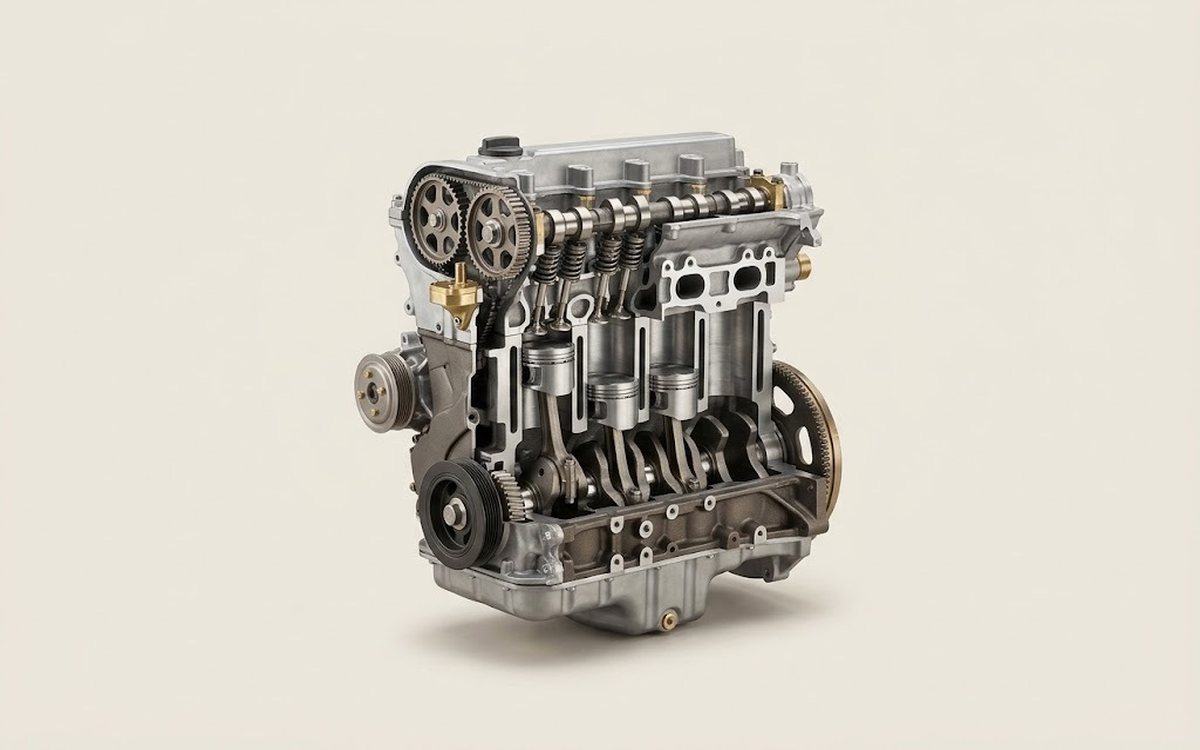 How it works · 3D
How a Car Engine Works
How the part you're working on actually works — in plain English, on a 3D model.
Open in 3D →