Autopapyrus · Lada Kalina (Generation II)
https://autopapyrus.com/guides/lada/kalina/checking-the-condition-of-wheels-tires-and-hubs/
https://autopapyrus.com/guides/lada/kalina/checking-the-condition-of-wheels-tires-and-hubs/
Compiled automatically from service literature and owner experience. Specs are for the typical configuration — check them against your exact car before you start.
Lada Kalina (Generation II): Checking the Condition of Wheels, Tires and Hubs
Regularly checking the condition of the wheels, tires and hubs is a required maintenance procedure for the Lada Kalina II. It lets you spot tread wear, uneven tire wear (a sign of incorrect wheel alignment), hub bearing play and wheel damage. It is recommended every 10,000-15,000 km (6,000-9,000 miles) or before a long trip.
Part
- 🔩 if wear is found: tires (175/65 R14, 185/60 R14 or 185/55 R15), front wheel hub bearing, rear wheel hub bearing
Step by step
11 steps- Check tire pressure. Use a gauge to measure the pressure on cold tires (tire temperature equal to the ambient air temperature). The specification is 2.0-2.2 bar (29-32 psi) for the front wheels and 2.2-2.3 bar (32-33 psi) for the rear. Adjust the pressure when the air temperature changes by 10-15 degrees.
- Inspect the tires. Check the tread depth (the minimum allowed is 1.6 mm; measure with a ruler or a coin). Inspect the sidewalls and tread for cuts, bulges, blisters, tread separation and exposed cords. Check that the wear is even: wear on the edges means low pressure, wear in the center means high pressure, and wear on one side means incorrect alignment.
- Inspect the wheels. Check the wheels for cracks, dents and a deformed rim. Make sure the wheel has no runout (spin the wheel with the car raised).
- Check the lug bolt torque. Make sure all wheel bolts are tight (tightening torque 72-98 N·m (53-72 lb-ft), thread M12×1.25). Check by hand that none are loose.
- Raise the front wheels. Lift each front wheel in turn with the jack, release the parking brake and put the transmission in neutral.
- Check the front hub bearing for play. Grip the wheel at the top and bottom and rock it in the vertical plane. If you feel play, have a helper press the brake pedal. If the play remains with the brake applied, the ball joint is faulty. If it disappears, the hub bearing is worn. The permissible axial bearing clearance is no more than 0.015 mm. If it is exceeded, the bearing must be replaced.
- Check front wheel rotation. Spin the wheel by hand and listen for unusual noises (humming, crunching or grinding indicate a worn bearing). The wheel should turn freely, without binding.
- Raise the rear wheels. Lift each rear wheel in turn in the same way.
- Check the rear hub bearing for play. Rock the rear wheel in the vertical plane, gripping it at the top and bottom. Play of more than 0.015 mm indicates a worn rear hub bearing.
- Check rear wheel rotation. Spin the wheel and make sure there are no unusual noises and that it turns freely.
- Visually inspect the hubs. Inspect the hub dust boots and CV joints for tears and grease leaks. Check the brake discs and hubs for signs of overheating (bluish discoloration of the metal).
Common mistakes and warnings
- Driving with worn hub bearings (play, humming while driving) is dangerous: the wheel may seize or the hub may break off. If you find play or unusual noise, replace the bearing immediately (hub nut tightening torque when replacing it is 225-250 N·m (166-184 lb-ft); a torque wrench and a puller are required). Uneven tire wear impairs handling. After replacing the tires, be sure to check and adjust the wheel alignment.
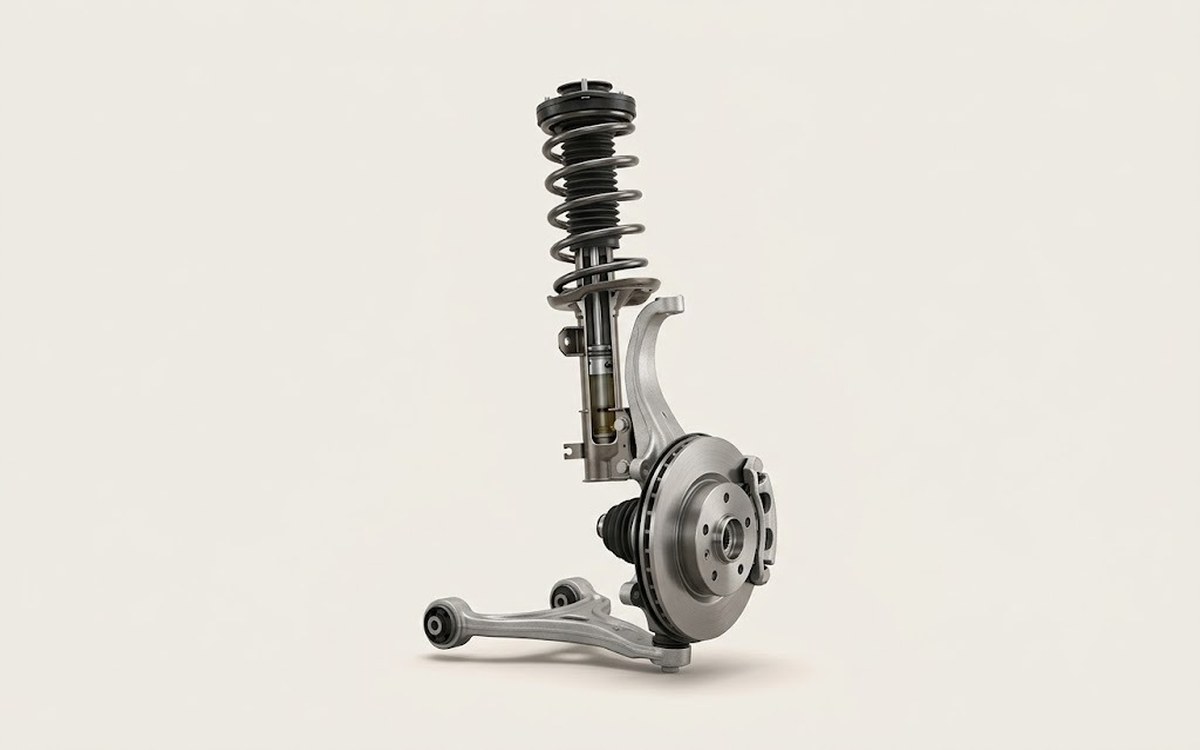 How it works · 3D
How Car Suspension Works
How the part you're working on actually works — in plain English, on a 3D model.
Open in 3D →