Autopapyrus · Luxgen Luxgen7 SUV 2.2 Turbo (2011)
https://autopapyrus.com/guides/luxgen/luxgen7-suv/diagnosing-engine-misfire/
https://autopapyrus.com/guides/luxgen/luxgen7-suv/diagnosing-engine-misfire/
Compiled automatically from service literature and owner experience. Specs are for the typical configuration — check them against your exact car before you start.
Luxgen Luxgen7 SUV 2.2 Turbo (2011): Diagnosing Engine Misfire
Engine misfire means one or more cylinders are not firing or are firing erratically. Symptoms: vibration at idle, loss of power, increased fuel consumption, a gasoline smell from the exhaust, and the Check Engine light coming on. Causes include ignition system faults, fuel system faults, vacuum (intake air) leaks, or mechanical wear. Diagnosis starts with checking the spark plugs and ignition coils, then the fuel injectors and compression.
Part
- 🔩 spark plugs (4 pcs), ignition coils (if needed), fuel filter, fuel injectors (cleaning or replacement)
Step by step
9 steps- Connect an OBD-II scanner and read the trouble codes. P030x codes (where x is the cylinder number) point to the specific misfiring cylinder. Write down the codes for analysis.
- Start the engine and listen to how it runs. A misfire produces a characteristic uneven sound, the RPM hunts, and there is heavy vibration. Smell the exhaust: a gasoline smell means unburned fuel.
- Shut off the engine and open the hood. Remove all 4 spark plugs with a spark plug socket. Inspect the electrodes: black deposits mean a rich mixture or oil contamination, a white coating means a lean mixture, and cracks in the insulator mean the plug must be replaced. The normal color is light brown. Electrode gap is 0.8-1.1 mm (check the service manual for the 2.2 MEFI G22TG).
- Check the ignition coils. The system uses an individual coil on each cylinder. Disconnect the connector of the coil on the problem cylinder and measure the primary winding resistance with a multimeter (usually 0.5-2 ohms). If it reads open or shorted, replace the coil.
- Swap the problem cylinder's coil with one from a neighboring cylinder. Start the engine and read the codes again. If the error moved to the other cylinder, the coil is faulty. If the code stays on the same cylinder, the coil is not the cause.
- Check compression in all 4 cylinders with a compression tester. Normal compression for the 2.2 MEFI turbo gasoline engine is 11-13 bar, with no more than 1 bar difference between cylinders. Low compression (below 9 bar) indicates worn piston rings, burned valves, or a blown head gasket.
- Check for vacuum (intake air) leaks. Inspect the intake hoses for cracks, loose clamps, and damaged throttle body and intake manifold gaskets. An air leak leans out the mixture and the cylinder misfires.
- Check the fuel system. Measure the fuel rail pressure with a gauge (the spec for turbo engines is 3.5-4.5 bar at idle). Low pressure means a clogged fuel filter or a weak fuel pump. If the pressure is within spec, suspect dirty fuel injectors: check injector balance with the scanner or remove them for cleaning.
- After fixing the cause, clear the trouble codes with the scanner and start the engine. Let it run for 5-10 minutes and check that the idle is stable. Take a test drive and make sure power has returned and the vibration is gone.
Common mistakes and warnings
- Do not ignore a flashing Check Engine light. Driving for long with misfires lets gasoline wash into the oil and destroys the catalytic converter. On a turbo engine it is important to use spark plugs with the correct heat range, because the wrong plugs cause knock (detonation) and piston damage. If you find low compression or serious mechanical faults, take the car to a repair shop to have the cylinder head removed and inspected.
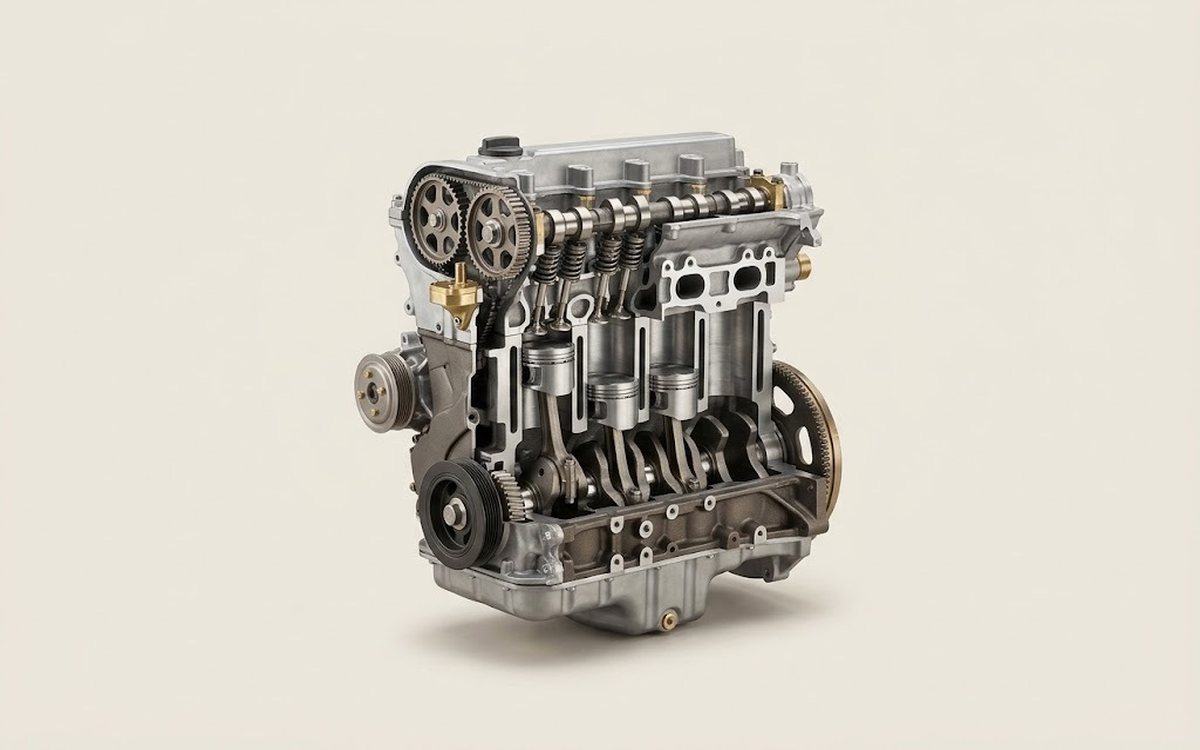 How it works · 3D
How a Car Engine Works
How the part you're working on actually works — in plain English, on a 3D model.
Open in 3D →