Autopapyrus · Opel Astra H 1.6 Z16XER (2007)
https://autopapyrus.com/guides/opel/astra/cooling-system-inspection/
https://autopapyrus.com/guides/opel/astra/cooling-system-inspection/
Compiled automatically from service literature and owner experience. Specs are for the typical configuration — check them against your exact car before you start.
Opel Astra H 1.6 Z16XER (2007): Cooling System Inspection
The Z16XER cooling system runs at 103-105°C. The thermostat opens at 105°C, and the fan switches on at 113°C. This inspection can reveal overheating, running too cold, coolant leaks (external and internal), and water pump or thermostat faults. A typical problem on this engine is wear of the heat exchanger (oil cooler) seals after 150,000 km, which lets oil and coolant mix.
Part
- 🔩 No parts are required for diagnosis. If faults are found, you may need: GM Dex-Cool coolant (concentrate mixed 1:1 with distilled water), thermostat, heat exchanger gaskets, hoses as needed
 There's a full repair manual for this car
Every system, wiring diagrams and torque specs — not just this job. Haynes and 22 more.
See manuals →
Step by step
9 steps- The engine must be cold. Check the coolant level in the expansion tank. It should be between the MIN and MAX marks. If it is low, top it up to the correct level, start the engine and watch how the level changes. A sharp drop points to a leak or an air pocket.
- Inspect the cooling system hoses for cracks, bulges and seepage. Check that the hose clamps are tight at all connections. Inspect the radiator for external damage and signs of coolant leakage.
- Start the engine and let it warm up to operating temperature (the dashboard gauge in the middle zone, about 90-100°C by the needle). At 105°C the thermostat should open. Feel the lower, thick radiator hose. If it was cold and then suddenly turns warm, the thermostat is working. If the hose stays cold while the engine overheats, the thermostat is stuck closed.
- Keep warming the engine. At about 113°C the electric cooling fan should switch on (you will hear a distinct noise). If the fan does not start, use a multimeter to check the fuse, the fan relay (in the engine compartment fuse box), the wiring and the fan motor itself.
- Check the water pump at idle. Squeeze the upper, thick radiator hose by hand, then release it quickly. If you feel a surge of coolant inside the hose, the pump is working properly. No surge points to a faulty pump or a broken drive belt.
- Look under the dashboard on the passenger side for moisture, which would indicate a heater core leak. Look under the car, using an inspection pit or a lift. Check the crankcase, the oil pan and the ground under the car for signs of coolant.
- Check for internal leaks. Pull out the oil dipstick and look at the blade for emulsion (a white or coffee-with-milk colored film). Open the oil filler cap and shine a flashlight inside. Foam or a light-colored residue on the cap and inner walls indicates oil mixing with coolant. This means a blown head gasket or damaged heat exchanger seals, a known weak point of the Z16XER.
- If you find a leak, pressure test the system. Shut off the engine and let it cool down. Connect a cooling system pressure tester to the expansion tank or a hose, build up a pressure of 1.0-1.2 bar (15-17 psi), and watch for a pressure drop. A drop indicates a leak, so look for the leak point by finding wet traces.
- Check the coolant level sensor in the expansion tank (a float with a reed switch). If the low-level warning light comes on while the level is normal, the float is stuck or damaged. Remove the tank cap and check the float's movement by hand.
Common mistakes and warnings
- Never open the expansion tank cap on a hot engine without protection, because pressurized steam can cause burns. Do not add cold water to an overheated engine, because the sudden temperature change can warp the cylinder head. Let the engine cool for at least 30 minutes before working on it. If you find oil in the coolant (or coolant in the oil), stop driving the car immediately and take it to a repair shop. Continuing to run the engine will lead to scored bearing shells and a full engine overhaul.
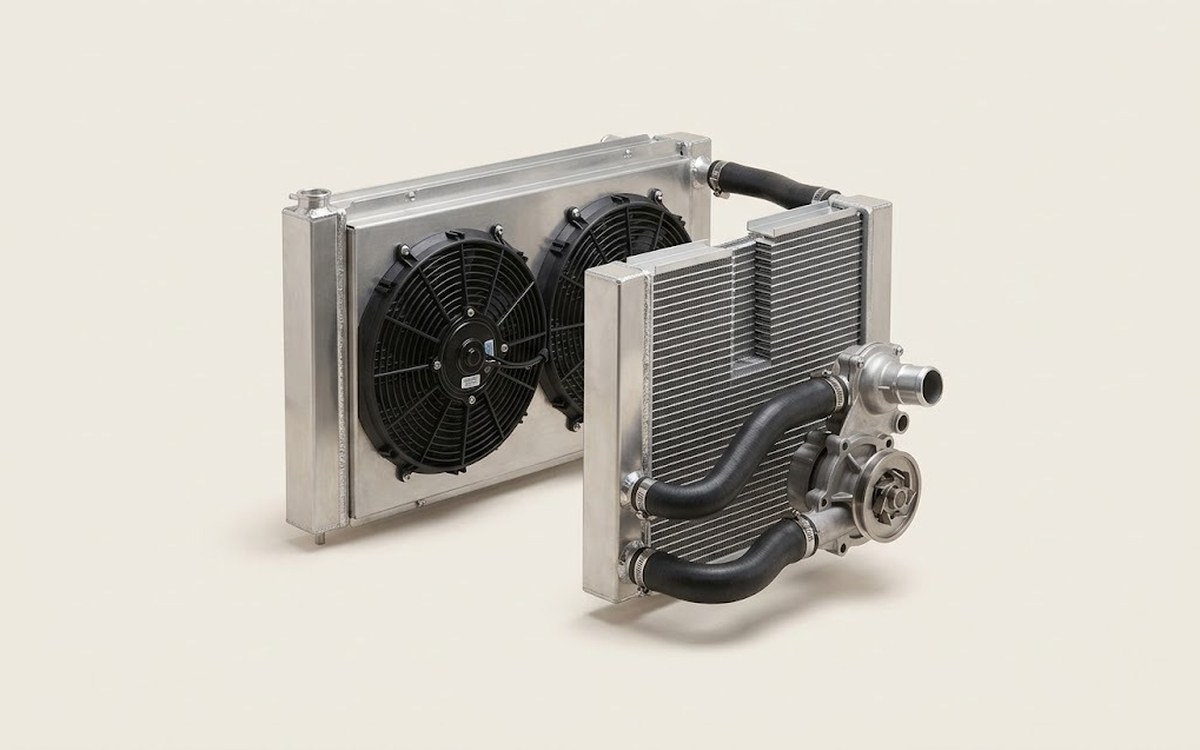 How it works · 3D
How the Engine Cooling System Works
How the part you're working on actually works — in plain English, on a 3D model.
Open in 3D →