Autopapyrus · Suzuki SX4 (1st generation, EY/GY)
https://autopapyrus.com/guides/suzuki/sx-4/antilock-brake-system-abs-diagnostics/
https://autopapyrus.com/guides/suzuki/sx-4/antilock-brake-system-abs-diagnostics/
Compiled automatically from service literature and owner experience. Specs are for the typical configuration — check them against your exact car before you start.
Suzuki SX4 (1st generation, EY/GY): Antilock Brake System (ABS) Diagnostics
The ABS warning light has come on (sometimes together with the parking brake light or the ESP light on trims that have ESP). This means the ABS has shut itself off, while the regular brakes still work. Most often the cause is a wheel speed sensor, dirt on it or a broken wire, low battery voltage, or a bad ground. Diagnostics go from simple to complex: power supply, trouble codes, sensors, hydraulic unit.
Part
- 🔩 Depends on the diagnostic results. Typical candidates: wheel speed sensor (front or rear), sensor tone ring or reluctor, sensor wiring harness, ABS fuses, ABS hydraulic unit with control module (expensive part, replace last), DOT 4 brake fluid. A used or remanufactured hydraulic unit costs less
Step by step
10 steps- Check the brake fluid level in the reservoir and the condition of the brake pedal. A low level or a visible leak means urgent brake repair, not just an ABS problem. If the pedal is soft or sinks to the floor, do not drive the car any further.
- Check the battery and terminals: with the engine off, voltage should be about 12.4-12.7 V, and with the alternator running 13.8-14.5 V. Voltage drops and corroded terminals cause false ABS codes. Tighten and clean the terminals and the ground connection on the body.
- Inspect the ABS fuses in the engine compartment fuse box (check locations and ratings against the box cover) and the relays. If a fuse is blown, don't just replace it. Find the cause of the short circuit.
- Connect the scan tool to the 16-pin diagnostic connector under the dash on the driver's left side and read the codes specifically from the ABS module. Write down the codes and live data, then clear the codes and take a test drive above 20-30 km/h. If the code returns for the same wheel, it is not a random glitch.
- Using live data, compare the speeds of all four wheels at low speed. A wheel showing zero, erratic, or different speed points to the faulty sensor. If you don't have a scan tool, you can find the wheel by the inspection in step 6.
- Raise the car and remove the suspect wheel. Inspect the sensor and its harness for breaks, chafing, traces of oil and dirt, and a corroded connector. Remove the sensor, clean off metal dust and caked-on dirt, and examine its tip (scoring, cracks).
- Inspect the sensor tone ring (the toothed or magnetic ring on the hub or driveshaft). Teeth clogged with dirt, bent or cracked teeth, and corrosion give an unstable signal. Also check the wheel bearing for play: a large gap between the sensor and the tone ring also causes a fault code.
- Measure the sensor resistance with a multimeter and test the wires through to the module connector. Don't rely on memory for the exact acceptable value for your sensor version. It is better to compare with a good sensor on the other wheel of the same axle: a difference of several times means a faulty sensor. Wiggle the harness while measuring, since a break often shows up only while driving.
- If the sensors and wiring are fine, check the ABS hydraulic unit connector in the engine compartment (contact corrosion, moisture) and the unit's ground. Only after that should you suspect the control module or the hydraulic unit itself. Replacement and bleeding with valve activation require a scan tool with an ABS function.
- After fixing the cause, clear the codes and take a final test drive, accelerating above 20-30 km/h. The light should go out. If the hydraulic unit was replaced or the brake circuit was opened, bleed the brakes according to the manufacturer's procedure.
Common mistakes and warnings
- The brake system is safety-critical. If the ABS light is on together with the brake system warning light, the pedal is soft, or the brakes behave strangely, do not continue driving. Take the car to a repair shop. Without ABS the car still brakes, but the wheels can lock up on wet roads and ice, so increase your following distance. If you have no experience working on brakes, leave hydraulic unit replacement and bleeding to a shop. Exact sensor resistance values and torque specifications for this model are not clearly confirmed in open sources, so rely on comparison with a good wheel and on the manufacturer's procedure.
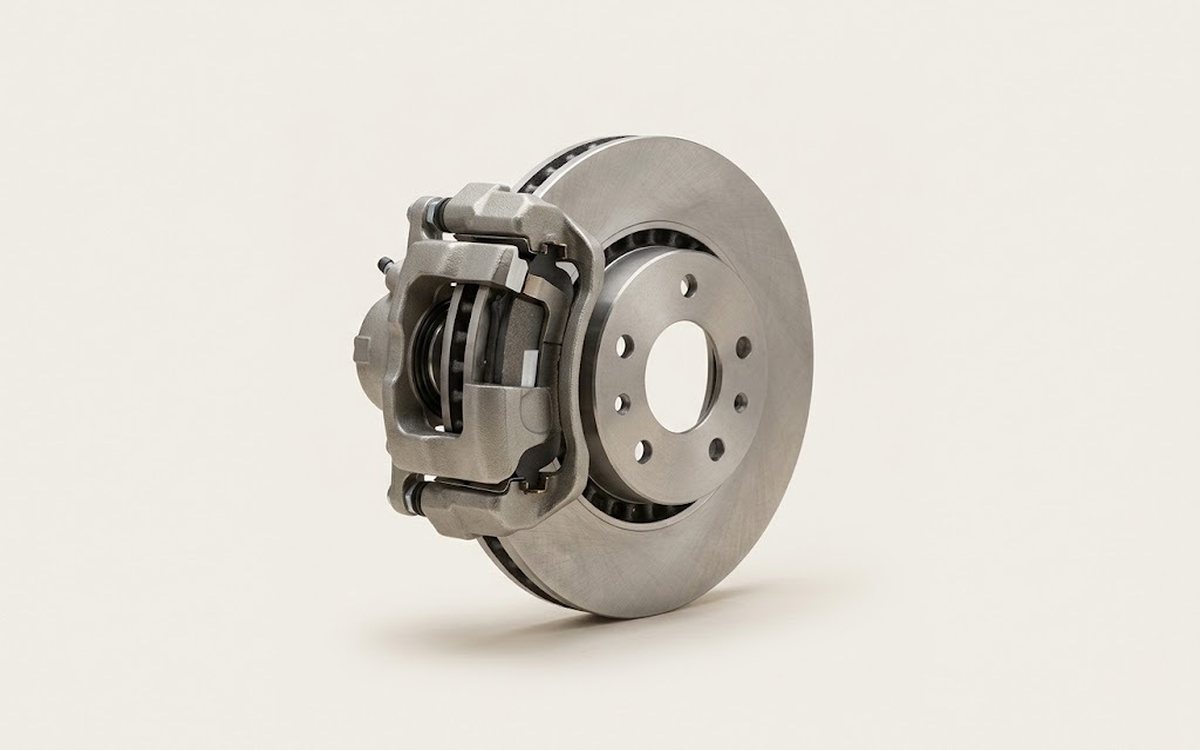 How it works · 3D
How Car Brakes Work
How the part you're working on actually works — in plain English, on a 3D model.
Open in 3D →