Autopapyrus · Toyota Prius (XW30, third generation) 1.8 Hybrid (2009)
https://autopapyrus.com/guides/toyota/prius/engine-coolant-temperature-sensor-replacement/
https://autopapyrus.com/guides/toyota/prius/engine-coolant-temperature-sensor-replacement/
Compiled automatically from service literature and owner experience. Specs are for the typical configuration — check them against your exact car before you start.
Toyota Prius (XW30, third generation) 1.8 Hybrid (2009): Engine Coolant Temperature Sensor Replacement
The ECT sensor sends the engine temperature to the control unit. If it fails, you may see codes P0115, P0117 and P0118, erratic fan operation, higher fuel consumption and frequent engine starts. Before replacing it, test the sensor with a multimeter: if the resistance is out of spec, replace it. Confirm the exact sensor location and drain volume for the 2ZR-FXE in the XW30 by eye on your car, by tracing the harness and connector coming from the cylinder head.
Part
- 🔩 Engine coolant temperature sensor for the 2ZR-FXE engine. For 2009, catalogs list Toyota 89422-33030. Before buying, compare the connector and thread with your old sensor. You will also need coolant for topping off (about 1-3 L (1.1-3.2 qt) if you drain only part of the system)
 There's a full repair manual for this car
Every system, wiring diagrams and torque specs — not just this job. Haynes and 5 more.
See manuals →
Step by step
11 steps- Shut the system down: press the POWER button so the READY indicator goes off, and move the smart key well away from the car (at least 5 m (16 ft)). The hybrid can start the gasoline engine without warning while the system is in READY or ON mode. Wait until the engine has cooled down completely. Open the coolant reservoir cap only on a cold engine.
- Disconnect the negative terminal of the 12 V battery (it is in the trunk). You do not need to touch the high-voltage system. Do not disconnect any orange cables or connectors.
- Remove the plastic engine undercover (if fitted) and the decorative engine cover to get access to the cylinder head and intake manifold.
- Locate the sensor: it is a small brass sensor with a two-pin connector, threaded into the water outlet housing or the cylinder head. Trace the harness from the connector. If necessary, remove anything in the way (air duct, harness clips).
- Drain some of the coolant into a clean container so the level drops below the sensor. You can do this through the radiator drain plug. Coolant is toxic, so keep it out of reach of pets and children.
- Press the locking tab and disconnect the sensor connector. Check the resistance of the removed sensor: at about 20 °C it should be roughly 2.3-2.6 kΩ, and at about 80 °C roughly 0.31-0.33 kΩ. If the values are normal, the problem may be in the wiring or the connector.
- Unscrew the sensor with a suitable socket or a 19 mm wrench. Hold the neighboring hose and do not press on the heater pipes or plastic parts, to avoid damaging them.
- Inspect the mounting seat and remove any dirt. Install the new sensor with a new sealing ring or washer, if one is supplied. Tighten carefully: the torque for an M12 x 1.5 thread is usually 15-25 N·m (11-18 lb-ft) (confirm the exact value in the Toyota service manual). Do not overtighten, because the seat is aluminum.
- Plug in the connector until it clicks, refit the parts you removed, and reconnect the negative battery terminal.
- Top off the coolant to the MAX mark on the reservoir. Switch the system to READY and let the engine warm up (on a Prius it starts automatically). Watch for leaks around the sensor. If needed, add coolant after the engine has cooled down.
- Clear the fault codes (P0115, P0117, P0118) with a scan tool and check in the live data that the coolant temperature rises smoothly and the fan turns on at the right time. If you do not have a scan tool, the codes usually clear after several warm-up cycles, but it is better to erase them manually.
Common mistakes and warnings
- Work only on a cold engine: hot coolant under pressure causes burns. In a hybrid, the gasoline engine can start by itself, so before working under the hood, turn the system off, move the key away, and keep clear of the fan and belts. Do not disassemble high-voltage components (orange cables, inverter) without experience and proper insulated gloves. If the code returns after replacement, the temperature fluctuates, or there is a leak, take the car to a repair shop. Overheating a hybrid engine can damage the cylinder head.
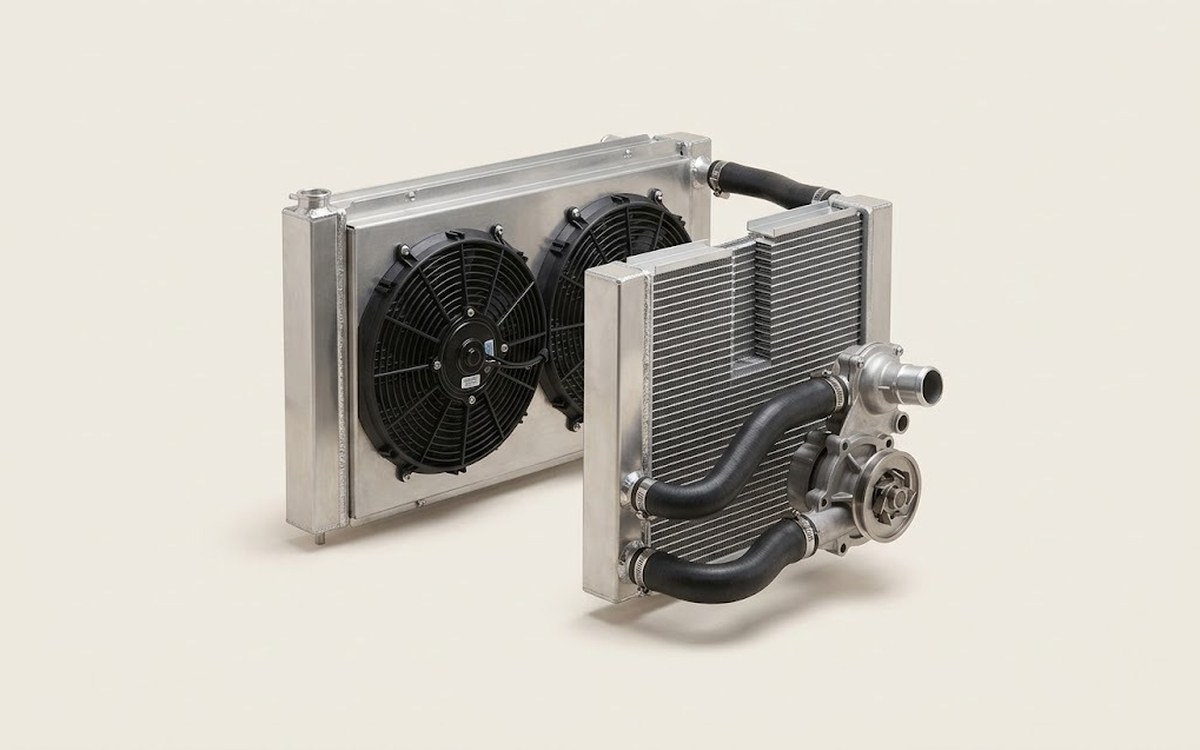 How it works · 3D
How the Engine Cooling System Works
How the part you're working on actually works — in plain English, on a 3D model.
Open in 3D →