Car care & driving
Diesel Engines
Autopapyrus
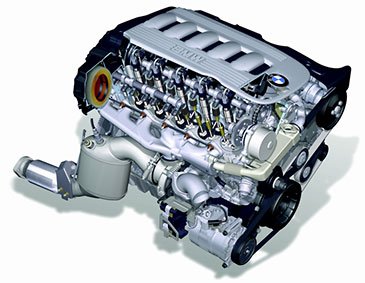
A gasoline engine is fairly inefficient, converting only about 26% of the energy from burning fuel into useful work. Its diesel counterpart is more productive, with an efficiency of around 36%.
Diesel fuel is generally cheaper, and a diesel engine uses much less fuel than a gasoline one.
A diesel produces very high torque even at fairly low crankshaft speeds. A car with this type of engine is more flexible (it pulls well across a wide rev range) than a similar car with a gasoline engine.
Unlike a gasoline engine, a diesel engine's exhaust contains significantly less carbon monoxide (CO). Diesel fuel is not volatile (it doesn't evaporate quickly), so the risk of fire is much lower in diesels. In addition, a diesel engine has no ignition system.
The drawbacks of diesel engines include: the need for a more powerful starter, the complexity and cost of repairing the fuel system, the fuel system's sensitivity to contamination of the fuel by solid particles and water, and the crystallization of paraffin (wax) in diesel fuel at low temperatures. There is a common belief that diesel engines are very noisy. In reality, a diesel runs only slightly louder than a gasoline engine, and the difference is noticeable only at idle; under load, the noise level is practically the same as a gasoline engine's. Only a very old diesel, or one with fuel system problems, can be noisy. Modern diesel engines from many well-known manufacturers are not merely on par with gasoline engines in noise level, but often run much quieter and smoother.
What next