Car care & driving
How to Reduce Your Car's Fuel Consumption
Autopapyrus
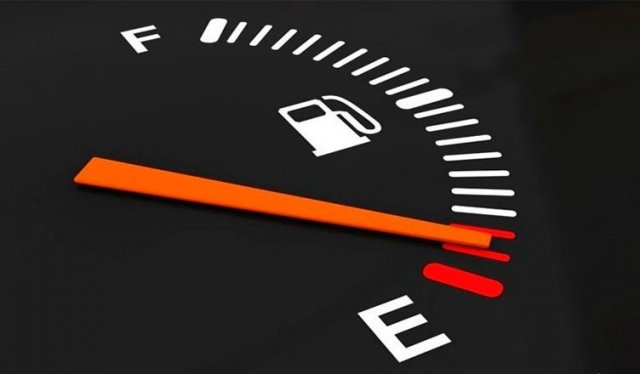
To avoid throwing money away, start with your car's aerodynamics. Boxy older sedans often do poorly here, but even then you can save about 10% on fuel. Skip the roof rack when you don't need it: less drag means more fuel left in the tank. It's also best to keep the windows closed. At just 80 km/h (50 mph), that pleasant breeze through the cabin can raise your fuel costs by 8%.
The air conditioner is another enemy of fuel economy. On average it can burn about 2 liters of fuel per 100 km (roughly 1.2 mpg-equivalent... about 0.85 gallons per 62 miles). Keep that in mind and don't turn it on without a real need. The same goes for any other accessory powered by the car's electrical system. The heater fan uses about 1% of average fuel consumption per 100 km, and a freshly brewed coffee from an in-car maker costs you another 1.5% on the road. High beams can easily eat almost 2%. You should also keep an eye on the battery terminals and the alternator belt tension.
When a car drives on flat pavement, it fights more than just air resistance. Many drivers don't realize that rolling resistance also matters. A car coasting down from 60 km/h (37 mph) in neutral should roll more than 400 m (about 1,300 ft). If it doesn't, it's time for a trip to the shop. For example, the front brake calipers may be sticking, the pads may be lightly dragging on the rotors, or the parking brake may not fully release the rear drums. All of this wastes horsepower and therefore fuel.
Check your tire pressure before every trip. With an underinflated tire, the contact patch grows and friction rises. Being just 0.3 bar (about 4 psi) low can cost you about 7% in extra fuel. Overinflating isn't a good idea either: it can make the car handle worse, which hurts safety, and safety is worth far more than gasoline. Driving in summer on studded winter tires raises fuel consumption by almost 6% and cuts the tires' lifespan roughly in half.
If your engine is properly tuned, none of the tips above help, and you notice that fuel consumption keeps climbing, take a close look at your driving style. Hard acceleration followed by waiting at a red light, and cornering with squealing tires, not only shorten the life of the suspension and drivetrain but also burn a noticeable amount of fuel.
For almost any car, the most economical speed is 80-90 km/h (50-56 mph), and it's often listed in the owner's manual. On an open highway outside the city, this speed is ideal and can save you almost 3 liters per 100 km (about 1.5 mpg... roughly 3 to 4 mpg depending on the car).
Here is another technique widely used by drivers in eco-running competitions. On a flat road, starting from a light, quickly shift through the gears to reach 90 km/h (56 mph). Then press the clutch, or shift into neutral, and let the car coast while the engine drops to idle. Never switch the ignition off while doing this: the steering can lock, the brake booster can stop working, and the power steering, if you have it, can shut off. All of this can cause an accident.
Once the speed drops to 40 km/h (25 mph), put the car back in gear and accelerate to 90 km/h (56 mph) again. This technique works on a fairly empty road with good visibility. It shouldn't be used in the city, where traffic jams create a different problem. Some drivers shut off the engine at red lights. But frequent restarts don't save fuel. In practice, each engine start is equivalent to about 1 km (0.6 mile) of driving in summer and about 5 km (3 miles) in winter. So it only makes sense to switch the engine off when you know you'll be stopped for more than two minutes. Otherwise you won't save anything.
What next