Car care & driving
Xenon Headlights: Pros and Cons
Autopapyrus
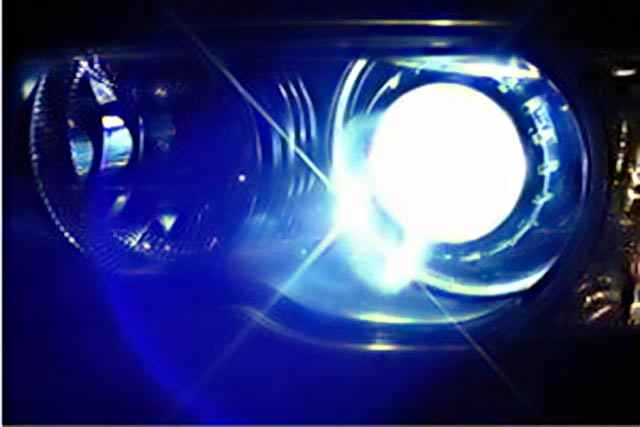
It wasn't that long ago that xenon headlights were a big luxury that only very wealthy drivers could afford.
Xenon lamps were fitted only to high-end imported cars. Even about 10 years ago, most drivers had never heard of this marvel of engineering, and any book on car electrical systems mentioned xenon headlights only in passing. The first xenon lamps came from the well-known company Philips. They produced a high-intensity beam of light by means of an electric arc discharge.
There is no traditional filament. Instead, the brightness depends on the electrodes placed inside a sealed bulb filled with xenon gas. Today these lamps are available to almost any car owner, and installing them is not difficult. It can be done quickly and without much expense. Let's take a closer look at the advantages and disadvantages of xenon headlights in terms of how sensible and practical they are to use.
Without a doubt, the main advantage of xenon headlights, and the reason most drivers install them, is their exceptional brightness. It is more than three times that of standard halogen bulbs. On high-speed highways in poor visibility, good illumination is critical for safe driving. This brightness is achieved inside the bulb by an arc of plasma, which makes the xenon glow. Good lighting matters even more when carrying passengers or hazardous or toxic cargo, where the quality of transport can affect the lives of dozens of people.
Another undeniable advantage of xenon headlights is their efficiency. These lamps have no filament, so the vibration produced while the car is moving does not damage them. This is especially relevant on poor road surfaces. A xenon lamp lasts about 2,000 hours, and its 35 W power draw is far lower than that of ordinary automotive bulbs. In addition, the light from xenon lamps does not harm your eyesight. At night, xenon lighting helps the driver see pedestrians, roadside signs and oncoming cars better, which significantly reduces the risk of accidents.
The main drawback that keeps drivers from installing xenon headlights is their fairly high price. Much of the cost comes from the ballast (ignition unit). To start one of these lamps, a voltage of about 25,000 V is needed, and then about 80 V must be maintained while it operates. Not every system can meet such requirements, which is why an expensive ballast is used.
The lamps burn out gradually. Day by day the light gets dimmer, so both lamps should be replaced at the same time, which is not economical. After 2,000 hours of operation, the color spectrum shifts, the light becomes dimmer, and the lamp can no longer deliver full output. The only solution is to replace the xenon bulb.
The beam from xenon headlights is very powerful, so to avoid blinding oncoming drivers you have to keep adjusting between low and high beams. That is why xenon headlights are best installed in cars equipped with automatic headlight leveling.
To sum up, the main drawback of xenon headlights is their fairly high price. Whether the purchase is worth it is an individual decision that depends on the driver's budget.
Whatever you decide, check your local regulations first: in many places, retrofitting xenon bulbs into headlights designed for halogen bulbs is not permitted, and a proper xenon-rated housing with leveling and washers is the correct way to do it.
Advantages of Xenon Headlights
Without a doubt, the main advantage of xenon headlights, and the reason most drivers install them, is their exceptional brightness. It is more than three times that of standard halogen bulbs. On high-speed highways in poor visibility, good illumination is critical for safe driving. This brightness is achieved inside the bulb by an arc of plasma, which makes the xenon glow. Good lighting matters even more when carrying passengers or hazardous or toxic cargo, where the quality of transport can affect the lives of dozens of people.
Another undeniable advantage of xenon headlights is their efficiency. These lamps have no filament, so the vibration produced while the car is moving does not damage them. This is especially relevant on poor road surfaces. A xenon lamp lasts about 2,000 hours, and its 35 W power draw is far lower than that of ordinary automotive bulbs. In addition, the light from xenon lamps does not harm your eyesight. At night, xenon lighting helps the driver see pedestrians, roadside signs and oncoming cars better, which significantly reduces the risk of accidents.
Disadvantages of Xenon Headlights
The main drawback that keeps drivers from installing xenon headlights is their fairly high price. Much of the cost comes from the ballast (ignition unit). To start one of these lamps, a voltage of about 25,000 V is needed, and then about 80 V must be maintained while it operates. Not every system can meet such requirements, which is why an expensive ballast is used.
The lamps burn out gradually. Day by day the light gets dimmer, so both lamps should be replaced at the same time, which is not economical. After 2,000 hours of operation, the color spectrum shifts, the light becomes dimmer, and the lamp can no longer deliver full output. The only solution is to replace the xenon bulb.
The beam from xenon headlights is very powerful, so to avoid blinding oncoming drivers you have to keep adjusting between low and high beams. That is why xenon headlights are best installed in cars equipped with automatic headlight leveling.
To sum up, the main drawback of xenon headlights is their fairly high price. Whether the purchase is worth it is an individual decision that depends on the driver's budget.
Whatever you decide, check your local regulations first: in many places, retrofitting xenon bulbs into headlights designed for halogen bulbs is not permitted, and a proper xenon-rated housing with leveling and washers is the correct way to do it.
What next