Autopapyrus · Chevrolet Cruze 1.4 Turbo LUV (2018)
https://autopapyrus.com/catalog/chevrolet/cruze/guides/spark-plug-replacement/
https://autopapyrus.com/catalog/chevrolet/cruze/guides/spark-plug-replacement/
Compiled automatically from service literature and owner experience. Specs are for the typical configuration — check them against your exact car before you start.
Chevrolet Cruze 1.4 Turbo LUV (2018): Spark Plug Replacement
On the turbocharged 1.4, the spark plugs sit under individual ignition coils in the cylinder head wells beneath the decorative engine cover. Do this job only on a completely cold engine. The usual replacement interval is 30,000-60,000 km (about 18,000-37,000 miles). On boosted turbo engines, don't put it off, or the load on the coils increases and misfires appear.
Parts
2| № | Part | Alternatives |
|---|---|---|
| 01 | Iridium spark plugs, set of 4 (1.4 Turbo)Find on Amazon → | AlternativesNGKDensoAC Delco |
| 02 | Ignition coilsif worn or boots are oilyFind on Amazon → |
Amazon links search by the part name; use Amazon's fit check for your car before ordering. We may earn a commission from qualifying purchases.
Tools
9- 16 mm spark plug socket (thin-wall, with a rubber retainer or magnet) Amazon →
- extension Amazon →
- ratchet Amazon →
- low-range torque wrench Amazon →
- Torx or hex socket for the coil bolt (check on the vehicle) Amazon →
- feeler gauge for gap Amazon →
- compressed air or vacuum cleaner Amazon →
- flat-blade screwdriver Amazon →
- anti-seize or conductive grease not needed Amazon →
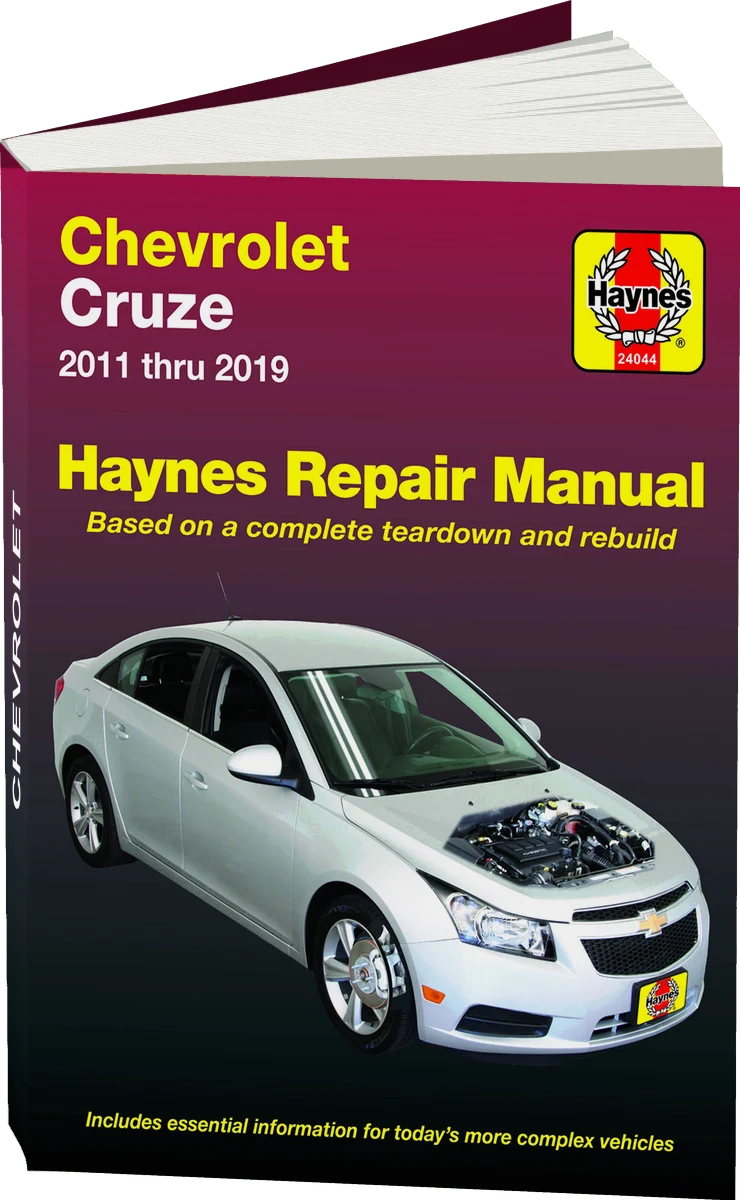 There's a full repair manual for this car
Every system, wiring diagrams and torque specs — not just this job. Haynes and 5 more.
See manuals →
Step by step
10 steps- Park the car on a level surface and let the engine cool down completely. Switch off the engine, remove the key and disconnect the negative battery terminal.
- Remove the decorative engine cover and, if necessary, the plastic air duct housing or hose that blocks access to the coils.
- Press the locking tab on each coil connector and disconnect it. Work on one cylinder at a time so you don't mix up the coils.
- Remove the coil mounting bolt (low torque, don't use force) and carefully pull the coil straight up, rocking it gently. Inspect the rubber boot: traces of oil or cracks are a reason to replace the coil.
- Blow out the well with compressed air or remove the dirt with a vacuum cleaner so that debris doesn't fall into the cylinder.
- Remove the old spark plug with the 16 mm socket and extension, keeping the tool strictly in line with the plug, without tilting. Inspect it: the color of the deposits and the condition of the electrodes will help you judge the air-fuel mixture.
- Check that the new plug matches the type and heat range specified for the engine, and verify the gap with a feeler gauge. It must match the manufacturer's specification (usually around 0.7-0.8 mm for this engine). Don't bend the ground electrode on iridium plugs: the thin center electrode is easily damaged.
- Thread the new plug in by hand until it seats, so you don't strip the threads in the aluminum cylinder head, then tighten it with a torque wrench to about 20-25 N·m (15-18 lb-ft) (check the exact value in the manufacturer's service manual).
- Install the coil until the boot clicks onto the plug, tighten the bolt to a light torque (about 8-10 N·m (6-7 lb-ft)) and plug in the connector. Repeat for the remaining cylinders.
- Reinstall the air ducts and the cover, and reconnect the battery. Start the engine, listen for smooth running and make sure there are no Check Engine codes. If necessary, read the codes with an OBD scanner.
Common mistakes and warnings
- Don't remove spark plugs from a hot engine: the aluminum cylinder head easily loses its threads
- Don't overtighten the plugs, and don't use copper grease on the threads unless the plug manufacturer allows it (on modern coated plugs the threads are usually already protected)
- If misfires persist after replacement, check the coils and connectors, and if you lack experience, it's better to go to a repair shop
Spotted a mistake? Tell us →
Our articles
 Brand stories
The History of the Chevrolet Brand
Chevrolet (Chevrolet Motor Division), a name known around the world, is a division of General Motors that builds…
Read →
 Garage
Fuel Quality Indicators: What Octane and Cetane Numbers Mean
What is an octane number? What about a cetane number? Which fuel should you choose for a high-compression engine?…
Read →
 Before you buy
How to Pick Up Your Car from the Dealership the Right Way
If you've decided to buy a car from a dealership, it isn't enough to simply choose a model you like, pay for it, and…
Read →