https://autopapyrus.com/catalog/citroen/c4/guides/cooling-system-diagnosis/
Citroën C4 (2nd generation) 1.6 VTi 120 (2013): Cooling System Diagnosis
On the EP6 engine (1.6 VTi, 120 hp), typical cooling problems are: coolant loss through hairline cracks in the hoses and thermostat housing, a stuck or failed thermostat, a worn water pump, and a faulty fan or temperature sensor. Diagnosis goes from simple to complex: inspection, checking coolant level and condition, pressure test, then temperature tests and reading scanner data.
Parts
7| № | Part |
|---|---|
| 01 | Thermostat assembly with housingif faultyFind on Amazon → |
| 02 | Water pumpif faultyFind on Amazon → |
| 03 | Radiatorif faultyFind on Amazon → |
| 04 | Expansion tank capif faultyFind on Amazon → |
| 05 | Coolant hosesif faultyFind on Amazon → |
| 06 | Coolant temperature sensorif faultyFind on Amazon → |
| 07 | Electric cooling fanif faultyFind on Amazon → |
Amazon links search by the part name; use Amazon's fit check for your car before ordering. We may earn a commission from qualifying purchases.
Tools
7Read the codes yourself
A scanner plugged into the OBD2 port under the dashboard shows which fault codes the car has stored, before you buy any parts. Cars sold in the US from 1996, and petrol cars in Europe from 2001 (diesels from 2004), have this port.
- Basic code reader, about $20–40: reads and clears engine codes Amazon →
- Bluetooth scanner with a phone app, about $30–100: live sensor data, and on many cars ABS and airbag codes too Amazon →
Check that the scanner lists your make and model year before you buy. We may earn a commission from qualifying purchases.
 There's a full repair manual for this car
Every system, wiring diagrams and torque specs — not just this job. Haynes and 5 more.
See manuals →
Step by step
13 steps- Do the check on a COLD engine. Park the car on a level surface and check the coolant level in the expansion tank against the min/max marks. Do not open the cap on a hot engine: pressurized coolant causes burns.
- Inspect the condition of the coolant. A rusty or cloudy color, an oil film, or foam indicates old coolant, corrosion, or oil or combustion gases getting into the system. If you see oil traces on the coolant surface or on the cap, suspect the head gasket or the oil cooler. Also check for emulsion under the oil filler cap.
- Visually inspect the system with a flashlight: the radiator and heater hoses, the thermostat housing, pipe connections, the radiator (signs of seepage, white or colored streaks), the area around the water pump, and the ground under the car. Look for cracks and seepage on plastic parts, which often fail from age and heat.
- Check the expansion tank cap: the condition of the seal, spring, and valve. A weak cap does not hold pressure and causes boiling over and coolant loss. The nominal opening pressure is marked on the cap itself. If in doubt, simply replace it with a new one.
- Pressure test the system with a manual tester on a cold engine. Pump the pressure up to the value marked on the cap (usually around 1.2-1.5 bar). The pressure should hold for at least 10-15 minutes without dropping. If it drops, look for the leak by drips, hissing, and residue. A drop with no visible leaks may indicate an internal leak (cylinder head, head gasket).
- Connect the scanner and read the engine fault codes. Typical codes for cooling problems: coolant temperature sensor deviations, thermostat control faults, a lean mixture fault (P0171), and a thermostat control circuit fault (P0597). With a faulty electronic thermostat, the control unit may limit power and enter limp mode. This is accompanied by the Check Engine light and sometimes by the A/C being switched off.
- Warm the engine up at idle and watch the coolant temperature on the scanner. Operating temperature is about 90-105 °C. If the engine warms up too slowly or does not reach normal temperature, suspect a thermostat stuck open or a faulty sensor. If it overheats quickly, suspect a thermostat stuck closed, the water pump, the radiator, or the fan.
- Check thermostat operation by touch or with an infrared thermometer. After starting a cold engine, the lower radiator hose should stay cold until the temperature approaches operating level. Then the hose should heat up sharply. If the lower hose warms up right along with the engine, the thermostat is leaking or open. If the upper hose is hot while the lower hose stays cold even at high temperature, the thermostat is stuck closed. Be careful around moving parts.
- Check that the electric fan switches on. When the temperature reaches the threshold or when the A/C is turned on, the fan should start. If it does not, check the fuse, relay, connector, and the fan itself (if needed, force it on with the scanner in actuator test mode).
- Check the water pump. Signs of wear: pulley play, bearing noise, coolant traces on the housing or at the weep hole, and poor circulation during overheating. A noticeable temperature difference between the upper and lower radiator hoses on a warmed-up engine is a sign of poor circulation.
- Check the radiator and heater: whether the cabin warms up well, whether there is an air pocket, and whether the radiator fins are clogged on the outside (leaves, dirt between the A/C condenser and the cooling radiator). A cold heater with a hot engine means air in the system or a blockage.
- Check the coolant density with a refractometer or hydrometer. This shows its freezing point and remaining service life. If the coolant is old, replace it according to the service schedule and use the type specified by the vehicle manufacturer.
- After any work on the cooling circuit, bleed the air using the procedure for this model (top up to the proper level, warm up with the filler open or the bleed screw open, and check the level after the engine cools). Air pockets on this engine cause local overheating and false readings.
Common mistakes and warnings
- Do not open the expansion tank cap on a hot engine: severe burns are possible
- Do not drive while the engine is overheating: it quickly leads to a warped cylinder head and a blown head gasket
- Tightening torques for the hose clamps, thermostat housing bolts, and water pump, as well as the exact cooling system capacity for this engine, are not clearly confirmed in open sources, so check them against the manufacturer's service manual
- If you suspect the head gasket after diagnosis, or you have no experience working with a pressurized system, go to a repair shop
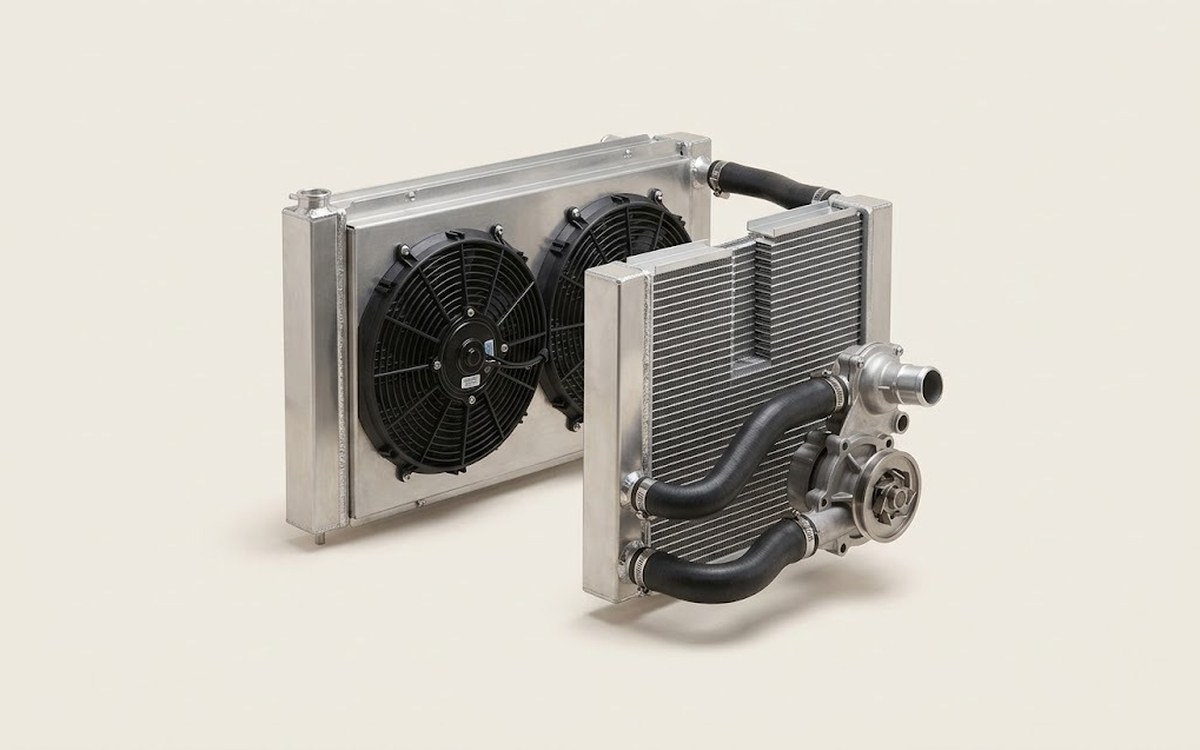 How it works · 3D
How the Engine Cooling System Works
How the part you're working on actually works — in plain English, on a 3D model.
Open in 3D →
Spotted a mistake? Tell us →
Our articles
 Brand stories
The History of the Citroën Brand
Citroën is an automaker founded in France in 1919 by André Citroën. Since 1976 it has been part of the PSA Peugeot…
Read →
 Garage
Fuel Quality Indicators: What Octane and Cetane Numbers Mean
What is an octane number? What about a cetane number? Which fuel should you choose for a high-compression engine?…
Read →
 Before you buy
How to Pick Up Your Car from the Dealership the Right Way
If you've decided to buy a car from a dealership, it isn't enough to simply choose a model you like, pay for it, and…
Read →