https://autopapyrus.com/catalog/honda/civic/guides/centering-the-steering-wheel-by-adjusting-toe/
Honda Civic (11th generation): Centering the Steering Wheel by Adjusting Toe
If the steering wheel sits crooked when the car is driving straight, the cause is almost always a difference in toe between the left and right wheels. Do not move the steering wheel on its splines: it contains an airbag and a clockspring ribbon. The steering wheel is centered by changing the length of the tie rods. They are changed by the same amount in opposite directions, so total toe does not change. If the car also pulls to one side, the cause is something else: tire pressure, tire conicity (conicity pull), or suspension damage.
Parts
3| № | Part |
|---|---|
| 01 | Tie rod endif worn, for the affected sideFind on Amazon → |
| 02 | Ball jointif worn, for the affected sideFind on Amazon → |
| 03 | Dust bootsif wornFind on Amazon → |
Amazon links search by the part name; use Amazon's fit check for your car before ordering. We may earn a commission from qualifying purchases.
Tools
7- lift, or a level surface with a jack and jack stands Amazon →
- 12-14 mm wrenches for holding the tie rods Amazon →
- open-end wrenches for the tie rod end jam nuts Amazon →
- torque wrench Amazon →
- lug wrench Amazon →
- wheel alignment machine (or a ruler/string for a rough estimate) Amazon →
- OBD scan tool for steering angle sensor calibration Amazon →
Read the codes yourself
A scanner plugged into the OBD2 port under the dashboard shows which fault codes the car has stored, before you buy any parts. Cars sold in the US from 1996, and petrol cars in Europe from 2001 (diesels from 2004), have this port.
- Basic code reader, about $20–40: reads and clears engine codes Amazon →
- Bluetooth scanner with a phone app, about $30–100: live sensor data, and on many cars ABS and airbag codes too Amazon →
Check that the scanner lists your make and model year before you buy. We may earn a commission from qualifying purchases.
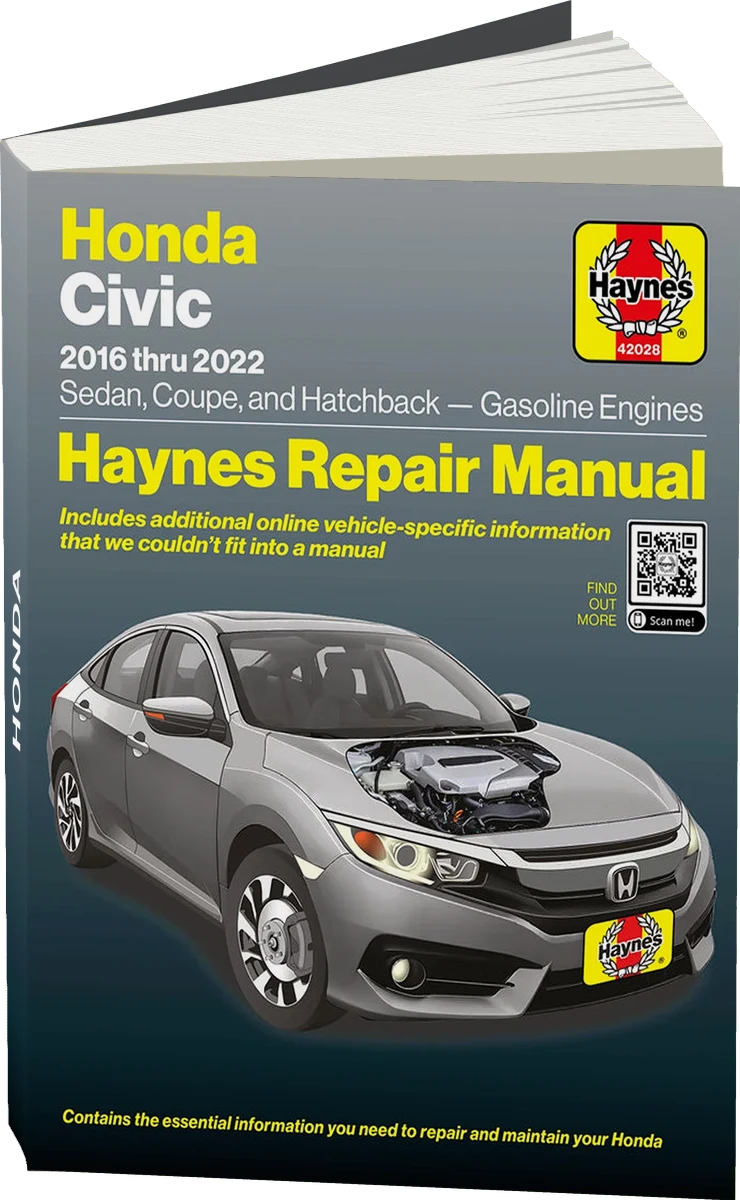 There's a full repair manual for this car
Every system, wiring diagrams and torque specs — not just this job. Haynes and 31 more.
See manuals →
Step by step
11 steps- Check the pressure in all tires and set it to the value on the door jamb placard. Inspect the tires for uneven wear. Wheels that were rotated or mismatched tires on the same axle can also cause pulling.
- Inspect the suspension and steering: play in the tie rod ends and tie rods, ball joints, condition of the dust boots, control arm bushings, and wheel bearings. Replace any worn part before adjusting, or the alignment will quickly drift out of spec.
- Inspect the wheels and body geometry after any curb or pothole impact. A bent wheel or tie rod cannot be fixed by adjustment.
- Put the car on a level surface, roll it straight forward a few meters, and take a photo of the steering wheel position. This helps you judge how many degrees of correction are needed. Attach the alignment machine sensors to the wheels and enter the vehicle data. Lock the steering wheel in the center position with the steering wheel holder from the alignment machine kit.
- Measure the toe of each wheel separately: read it for each wheel, not just the total. The steering wheel center is set using the individual toe values.
- Loosen the jam nuts on the left and right tie rods. Slide the dust boots back so they do not twist when you turn the tie rod ends.
- Turn the tie rod ends so that the individual toe values become symmetrical and the steering wheel sits straight. One side's tie rod gets longer and the other gets shorter by the same number of turns. Total toe must remain within factory specification.
- Tighten the tie rod end jam nuts while holding the tie rod to keep it from turning. Torque per the Honda specification for your model, approximately 40-55 N·m (30-41 lb-ft). Check that the dust boots are not twisted and straighten them if necessary.
- Install the wheels and tighten the lug nuts in a crisscross pattern. The lug nut torque for the Civic is 108 N·m (80 lb-ft).
- Take a test drive of 5-10 km on a level road without ruts or strong crosswinds. The steering wheel should be straight and the car should not pull to either side. If necessary, repeat the fine adjustment.
- After the adjustment, check that the steering angle sensor reads zero when driving straight. If messages appear on the dash for Honda Sensing systems (lane keeping, adaptive cruise control), or the EPS/VSA indicators come on, calibrate the steering angle sensor with a diagnostic scan tool. Camera recalibration may also be required, which is done with dealer equipment.
Common mistakes and warnings
- Steering and suspension affect safety
- If you do not have experience and an alignment machine, leave the adjustment to a repair shop: rough "by eye" adjustment throws off the toe and quickly wears out the tires
- Do not try to remove and reposition the steering wheel yourself: it contains an airbag and a clockspring
Spotted a mistake? Tell us →
Our articles
 Brand stories
The History of Honda
The founder of the famous company, Japanese entrepreneur Soichiro Honda, was born in 1906 into the family of a poor…
Read →
 Garage
Fuel Quality Indicators: What Octane and Cetane Numbers Mean
What is an octane number? What about a cetane number? Which fuel should you choose for a high-compression engine?…
Read →
 Before you buy
How to Pick Up Your Car from the Dealership the Right Way
If you've decided to buy a car from a dealership, it isn't enough to simply choose a model you like, pay for it, and…
Read →