https://autopapyrus.com/catalog/honda/civic/guides/checking-ignition-timing/
Honda Civic 1.8 i-VTEC R18Z1 (2012): Checking Ignition Timing
The R18Z1 has no distributor, and ignition timing cannot be adjusted mechanically. It is controlled by the ECU (PGM-FI) based on signals from the CKP, CMP, knock, temperature and load sensors. So "checking" here means comparing the actual timing with the expected behavior and finding the cause if it is wrong. I will not make up factory specification values for your engine. Check them against the Honda service manual.
Parts
5| № | Part |
|---|---|
| 01 | Crankshaft position (CKP) sensorif faultyFind on Amazon → |
| 02 | Camshaft position (CMP) sensorif faultyFind on Amazon → |
| 03 | Knock sensorif faultyFind on Amazon → |
| 04 | Ignition coilsif faultyFind on Amazon → |
| 05 | Spark plugsif faultyFind on Amazon → |
Amazon links search by the part name; use Amazon's fit check for your car before ordering. We may earn a commission from qualifying purchases.
Tools
6Read the codes yourself
A scanner plugged into the OBD2 port under the dashboard shows which fault codes the car has stored, before you buy any parts. Cars sold in the US from 1996, and petrol cars in Europe from 2001 (diesels from 2004), have this port.
- Basic code reader, about $20–40: reads and clears engine codes Amazon →
- Bluetooth scanner with a phone app, about $30–100: live sensor data, and on many cars ABS and airbag codes too Amazon →
Check that the scanner lists your make and model year before you buy. We may earn a commission from qualifying purchases.
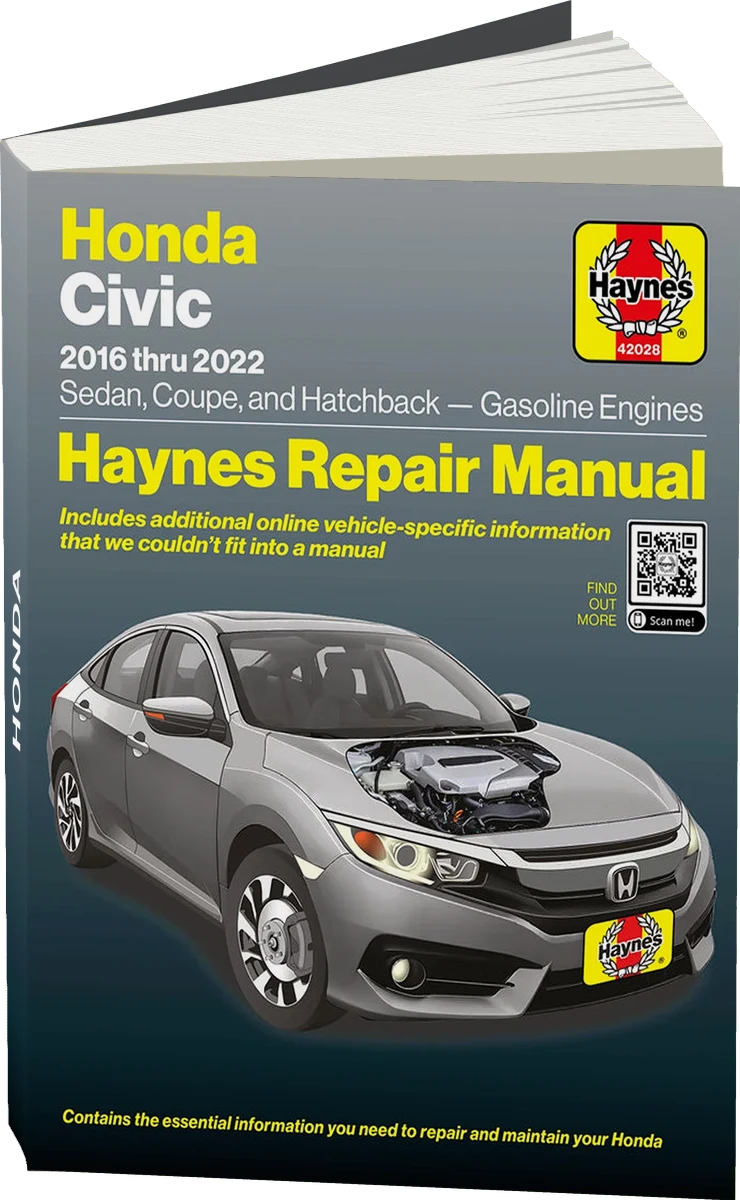 There's a full repair manual for this car
Every system, wiring diagrams and torque specs — not just this job. Haynes and 31 more.
See manuals →
Step by step
8 steps- Preparation: Make sure the engine is mechanically sound and there are no Check Engine codes. Warm the engine to operating temperature. The radiator fan should come on at least once. Turn off all electrical loads (A/C, lights, rear defroster).
- Read the trouble codes with a scan tool. Pay special attention to codes for CKP/CMP, misfires, the knock sensor and valve timing. While these codes are present, timing readings are unreliable. Fix the cause first.
- Connect the scan tool and open the live data: ignition timing advance, RPM, coolant temperature, engine load, fuel trims, knock sensor signal. If your scan tool shows both desired and actual timing, compare them.
- At warm idle, look at the timing value. It should be stable and positive (advanced before TDC), with small fluctuations. The ECU adjusts it constantly. The exact value for the R18Z1 is not documented in open sources, so rely on the manufacturer's service manual.
- Smoothly raise the engine speed to 2500-3000 rpm and release the throttle. Timing should rise smoothly with RPM and load and return to the idle value without jerks. Jumps, drops or "sticking" point to a sensor or wiring problem.
- If you need an independent check with a timing light: timing marks on the pulley and timing cover for comparing against the actual timing on this engine cannot be found in open sources. The TDC mark on the crankshaft pulley is used when setting valve timing. A timing light with a pickup on the coil wire is suitable only for judging stability, not for an exact value.
- If the timing does not match what is expected, check the following in order: a) CKP and CMP connectors and wiring, and any oil or contamination on the sensors; b) spark plugs (condition, gap) and ignition coils; c) timing marks (timing chain, possible jumped or stretched chain), especially with valve timing codes, loss of power or chain noise on a cold start; d) knock sensor and its connector; e) clogged intake, vacuum leaks, coolant temperature sensor.
- After fixing the cause, clear the codes, take a test drive and review the live data again. If timing is stable and changes smoothly, the check is passed.
Common mistakes and warnings
- The R18Z1 engine does not let you "set the timing" by rotating a sensor housing, as on older engines with a distributor
- Do not try to shift sensors or pulleys
- If you suspect a jumped timing chain or incorrect valve timing, do not start the engine again without checking the timing marks
- This can damage the engine
- If you have no experience with a scan tool and timing system disassembly, take the car to a repair shop
Spotted a mistake? Tell us →
Our articles
 Brand stories
The History of Honda
The founder of the famous company, Japanese entrepreneur Soichiro Honda, was born in 1906 into the family of a poor…
Read →
 Garage
Fuel Quality Indicators: What Octane and Cetane Numbers Mean
What is an octane number? What about a cetane number? Which fuel should you choose for a high-compression engine?…
Read →
 Before you buy
How to Pick Up Your Car from the Dealership the Right Way
If you've decided to buy a car from a dealership, it isn't enough to simply choose a model you like, pay for it, and…
Read →