Autopapyrus · SsangYong Rexton (1st generation, 2004)
https://autopapyrus.com/guides/ssangyong/rexton/front-crankshaft-seal-replacement/
https://autopapyrus.com/guides/ssangyong/rexton/front-crankshaft-seal-replacement/
Compiled automatically from service literature and owner experience. Specs are for the typical configuration — check them against your exact car before you start.
SsangYong Rexton (1st generation, 2004): Front Crankshaft Seal Replacement
The seal is mounted in the front cover of the engine block and seals the crankshaft nose. Oil leaking from under the pulley, a wet lower part of the timing cover, and oil traces on the accessory drive belt indicate that it is worn. The job requires removing the crankshaft pulley and the accessory drive. Because the engine is not specified, the exact torque values cannot be given, so take them from the service manual for your specific engine.
Part
- 🔩 Front crankshaft seal (the seal on the front end of the crankshaft, selected by engine: 2.7 diesel or 2.3/3.2 gasoline). It is also advisable to buy a new accessory drive belt at the same time, and when removing the fan, to check the fan blades and the viscous fan clutch
 There's a full repair manual for this car
Every system, wiring diagrams and torque specs — not just this job. Haynes AutoFix (online) and 1 more.
See manuals →
Step by step
14 steps- Park the vehicle on a level surface or over a pit. Disconnect the negative battery terminal. Remove the engine undercover (skid plate) if one is installed.
- Drain the coolant if you cannot remove the fan shroud and radiator hoses without doing so. Remove the air ducts and hoses that block access to the front of the engine.
- Remove the fan shroud. Then remove the fan with the viscous fan clutch, paying attention to the thread direction of the mounting nut. On these engines, the clutch nut usually requires a special wrench or careful work with an open-end wrench while holding the pulley.
- Release the tension and remove the accessory drive belt. Before doing so, take a photo of the belt routing.
- Prevent the crankshaft from turning. Do not lock it with a screwdriver in the flywheel ring gear without inspecting it first. It is more reliable to brace a long lever against the bolt head and "bump" the starter in a short pulse, or to lock the flywheel through the inspection port in the bell housing.
- Remove the center bolt of the crankshaft pulley/damper. It is tightened to a high torque, so you need a long lever. Remove the washer.
- Remove the crankshaft pulley with a puller, pulling on the hub and not on the rim of the damper. Do not hit the rim with a hammer, to avoid damaging the rubber damper.
- Check the key on the crankshaft nose. Inspect the shaft surface where the seal runs. A deep groove worn by the old seal means the new seal must be moved to a clean area of the shaft (using a repair sleeve) or the pulley must be replaced.
- Pry out the old seal with a hook or seal puller. Avoid scoring the shaft nose and the seat in the cover. Alternatively, drive a self-tapping screw into the seal and pull it out with pliers.
- Wipe the seat and the shaft with degreaser. Apply a little clean oil to the lip and the outer casing of the new seal. The lip must stay free of sealant unless the manufacturer requires otherwise.
- Press the seal in evenly, without tilting, using a driver that contacts the outer diameter. Use the position of the old seal as a guide for depth: it should sit flush or slightly recessed, as the old one did.
- Install the key and the pulley. Tighten the center bolt to the torque specified for your engine. The bolt is often single-use or requires fresh thread locker, so it is better to install a new one.
- Install the accessory drive belt, the fan with the viscous clutch, and the shroud. Reinstall the hoses and refill the coolant, bleeding out any air pockets.
- Reconnect the battery, start the engine and let it warm up. Check that there is no leak around the pulley, and check the oil and coolant levels. After a day, check the floor under the vehicle.
Common mistakes and warnings
- This guide gives a general sequence. The exact pulley bolt torque and seal dimensions depend on the engine (diesel or gasoline), so check them against the service manual for your engine. If oil is leaking from above the pulley rather than from under it, first check the valve cover gasket and the oil pump housing. Leaks from them are often mistaken for a seal leak. If you have no experience with pullers and high tightening torques, leave the job to a repair shop, because stripping the crankshaft thread is very expensive.
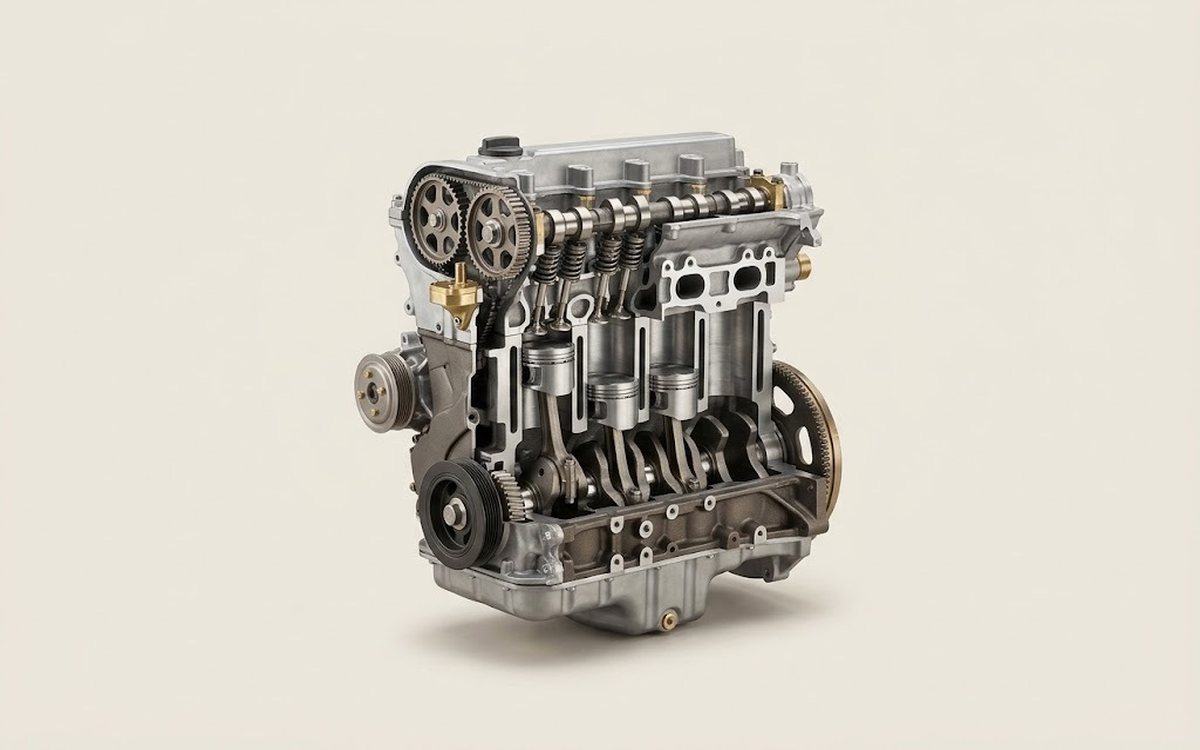 How it works · 3D
How a Car Engine Works
How the part you're working on actually works — in plain English, on a 3D model.
Open in 3D →