Car care & driving
Car Alarms: What They Are and How They Work
Autopapyrus
Protecting personal property is becoming a bigger concern these days, and that's especially true for cars. We hear more and more reports of vehicle thefts, and every time we hope it won't happen to us or our loved ones. Believing that your car will never be stolen is a fine attitude, but it's better to prepare properly for a run-in with thieves and protect your vehicle.
One way to prevent car theft is to install an alarm. In principle, this device is a system that responds to vibration. As a rule, a strong jolt triggers an audible and visual signal that alerts the owner and anyone nearby to a break-in attempt.
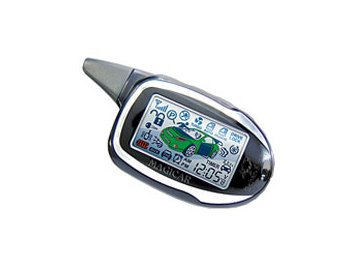
Any car alarm can be divided into three main components: a radio transmitter, a shock detector, and a siren (the signaling unit). Some models also come with an automatic door lock.
The radio transmitter receives signals from the alarm's remote control and processes them to carry out the corresponding action. If the alarm is triggered, the transmitter sends a signal to the remote to notify you of an attempted unauthorized entry. However, this feature works only at short range and isn't available on every car alarm model.
Shock sensors are mounted on the car body according to the manufacturer's instructions. A shock sensor is a small electronic component that closes a circuit between two contacts when it detects strong vibration. Installation deserves special attention, and it's best to have a professional shop handle it. If a sensor is installed incorrectly, the alarm can go off at the slightest bump, or even at a loud noise. A properly tuned system triggers only when something physically makes contact with the car.
The alarm itself is an audible signal, and sometimes a visual one as well, that activates when the sensor is triggered. Above all, the system works on a thief's psychology. The noise and constant flashing lights will most likely scare off a would-be thief and draw the attention of people nearby.
A modern alarm has become a must-have feature for most cars. If your vehicle isn't equipped with one yet, give serious thought to installing one.
What next