Car care & driving
How to Choose Summer Tires
Autopapyrus
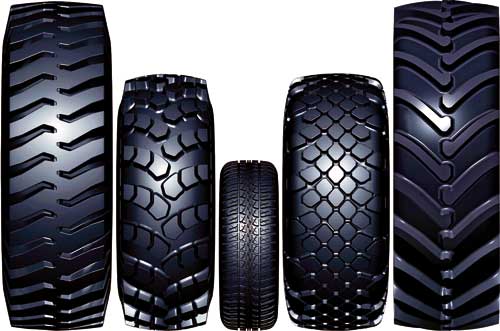
Today there is a huge variety of summer tires for both passenger cars and trucks. Even if you have many years of driving experience behind you, choosing summer tires can still be tricky. Tires differ in design, performance, price, and many other parameters. So how do you make the right choice?
For most vehicles, the best option is an all-season tire. That's no surprise, since these tires often have the most robust construction. They are designed from the start to handle high dynamic loads, and some versions can last up to 100,000 km (about 62,000 miles). But if you plan to tow a travel trailer behind your car, take a look at all-purpose tires, because they perform best in this kind of use. On a long tow they may get hot, but you can be confident they won't blow out under any circumstances.
Tires can also be divided into two categories: tube-type and tubeless. Tube-type tires are hardly used anywhere today, yet they remain popular among drivers with a lot of experience. There is a reason for this: if the tire is punctured, the driver knows right away from the pop, which helps prevent the tire from being destroyed. There is a downside, though. If a tube-type tire on the front axle is punctured, it can jerk the car sideways and cause an accident. That is why inexperienced drivers are best off fitting tubeless tires. Even if the tire loses its ability to work and the car starts to swerve, it will still stay in its lane. Your vehicle's owner's and repair manual can also help you deal with other difficult situations on the road.
Are you a fan of spirited driving? Then low-profile tires are the ideal choice for you. Their advantage is the absence of sidewall roll, so when you change lanes or pass another vehicle, the car responds instantly. Modern low-profile tires have a sidewall height of 50 mm (2 in) or more. The outside has a wear-resistant tread compound made with silica, along with radial grooves. These grooves quickly channel water away from the contact patch. But if you are the kind of driver who doesn't slow down even in rain or snow, look for summer tires with 3-4 circumferential grooves and a large number of lateral grooves.
On the market you can also find slicks and rain tires. Slicks are mainly used in motorsport. Rain tires have many small, raised sipes that give excellent grip on wet pavement. If the race is held on a dry surface, fully smooth slicks are the choice. They are remarkably soft and grip the road superbly. Among professionals, semi-slicks are popular, because a tread pattern is cut into them with a thermal (hot) cutting tool. This clears water better and significantly extends the tire's service life.
What next