Car care & driving
How to Choose a Car Battery
Autopapyrus
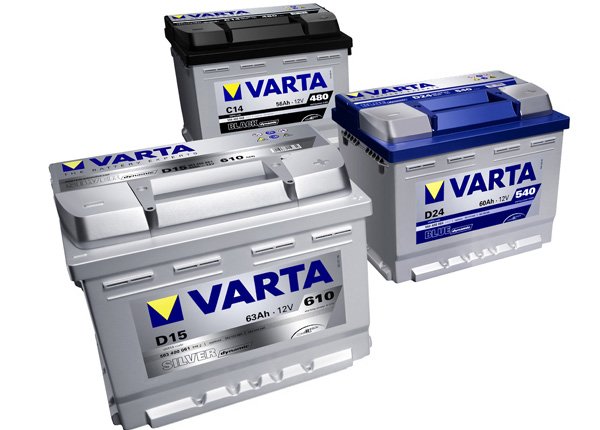
In theory, buying a new battery isn't a difficult task. The electrical systems manual for your car's model or a battery manufacturer's catalog will point you to the right one. If you don't have either on hand, you can simply note the details of the old battery and buy an equivalent. Just make sure the two match in terminal layout, capacity, polarity and dimensions. If you overlook even one of these, the money is wasted. There are workarounds in some cases. For example, terminal adapters are available for some Ford models. But a battery designed for a European car will not fit into the small battery tray of a Japanese car.
To make sure the battery works properly with the rest of your car's electrical system, it must match your vehicle in the following respects:
• Rated capacity (Ah);
• Cold cranking current, meaning the current the battery can deliver at a given voltage when starting the engine;
• Battery dimensions;
• Battery weight.
Let's go through these specifications. It's not as complicated as it first seems. Every car battery carries a marking made up of a set of numbers and letters. Once you decode it, finding the battery you need is easy. To make this concrete, let's look at an example of the older Eastern European labeling system, which you may still see on some batteries: 6СТ-90АМЗ (6ST-90AMZ). Here's how to read it.
The first number is the number of cells connected in series in the battery (usually 3 or 6), which also tells you the nominal voltage (6V or 12V). The letters after it indicate the battery's purpose. In our case, “СТ” (ST) means starter battery. The number after the dash is the rated capacity in ampere-hours, here 90 Ah. What follows is a set of letters that give additional details about the construction.
А means the battery has a common cover, М means the separators are made of polyvinyl chloride, and З (Z) means the battery is supplied fully charged and filled with electrolyte. You may also see these codes: Т means the case is made of thermoplastic, Э (E) means the case is made of ebonite, and П (P) means the envelope-type separators are made of polyethylene.
Now you can head to the store with confidence and pick a battery that not only fits your car but may even be better than the old one. And to keep the rest of your car's systems running reliably for years, it's worth having good reference literature on hand, such as repair manuals for the transmission, electronics, brake system and more.
What next