Car care & driving
Chip Tuning: A Modern Way to Reprogram Your Engine's Power
Autopapyrus
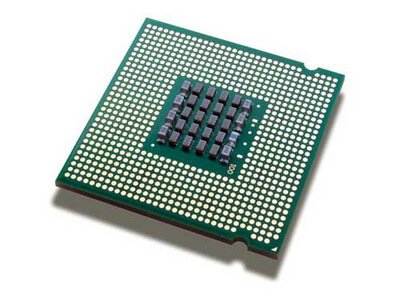
Which car owner doesn't dream of getting more performance out of their ride? Sooner or later, many owners come to that decision. The question is how to do it best. You can increase power mechanically, but that isn't an option in every case. The modern way to boost an engine is chip tuning. It's appealing because it requires no mechanical modifications to the car, so you can boost the engine even on new vehicles that are still under warranty.
Chip tuning is the reprogramming of the engine: the control signals going from the chip to the car's main components are changed. It is used to improve the engine's performance characteristics. Many companies, such as Brabus, AMG and Hamann, put their own badge on a car after chip tuning to show the work that was done. Many dealers include it in their list of official services, explaining that the car has a power reserve that can be put to use. Today chip tuning is quite popular. It can increase engine power by up to 20%. Automakers often use one platform to build many cars. The same engine is installed in a wide range of models, such as Volkswagen, Audi, Alfa Romeo, Skoda, Lancia, Fiat, Seat, Citroën, Peugeot, Renault and many others. Although they essentially have the same engine, their software is still different. The type of transmission also matters: manual, automatic or CVT.
A Brief History of Chip Tuning
In the West, chip tuning has been used successfully for more than 10 years. It is considered the most effective way to optimize everyday cars, because it noticeably improves driveability: launch from a stop, acceleration, low-rpm pull and more. Chip tuning became possible with the arrival of engines with an ECU (electronic control unit). For the boost to go well, a number of factors are taken into account, in a specific order, and that is what raises performance. Chip tuning got its name because the procedure involves rewriting the memory chip that holds the engine program. The first engine tuning work started exactly this way. Later, chip tuning went mainstream and grew into a separate segment of the auto industry. Besides directly reprogramming the chip, it is now possible to rewrite the memory by connecting to the control unit through its external or internal connectors. Reprogramming through the OBD2 diagnostic port is also available. In that case the chip itself isn't changed, and the procedure is called a "remap" of the control unit, or an "ECU remap." For chip tuning, you first have to decode the data from the control unit, develop new code, and only then reprogram the chip. Because of this, chip tuning lags well behind the automotive industry as a whole. It was first developed for cars built in Europe. Then it moved to America, where it developed even further. Rally-type models are especially prized there, particularly the Subaru and Mitsubishi, whose tuning scene thrives.
Chip Tuning Technology
First, the feasibility of chip tuning is assessed, and the data is read through the On-Board Diagnostics (OBD2) port and decoded. Then the methods to be used are determined. The engine is managed by an electronic control unit, essentially a small computer with a memory chip. The engine control parameters program is stored on this chip. The ECU has more than 100 external contact points, called pins, which are grouped into one or two connectors. The ECU processes all the information coming from the various sensors and determines how the engine runs. It compares sensor signals with the maps stored in the processor's memory and, through sensor, control and diagnostic wires, tells the actuators how to act to maintain the specified operating mode. After the data is decoded, the values that affect the car's performance are adjusted. This process is called chip tuning. This method suits many European cars with well-known control units, since that equipment is developed in Europe. But if the control unit is unknown, this method of boosting the engine can't be used. In that case, reprogramming by connecting directly to the ECU, after removing it from the car, can help. This method is used on newer models with uncommon control units. Chip tuning such cars requires specially developed electronics. There is one more option, used when the ECU's connector area can't be decoded or the necessary operations can't be performed. Then the connection has to be made directly to the memory chip. It is either rewritten or replaced with a tuned version. Some control units have the software stored in the processor itself rather than in a memory chip. Most often these are Japanese cars and vehicles from other Asian automakers. Mitsubishi and Subaru, which are popular in America, are exceptions, for example the Galant, Impreza, Lancer and Outback. In that case, it's impossible to decode the stored data, and replacing the control unit is the recommended route. Tuned control units are made for Honda, such as Hondata and MegaSquirt, and others. Chips for Mazda and Nissan, such as the popular Mazda3 MPS and 350Z, can be rewritten. Today there are several companies that have decoded these control units. They tune the engines of these cars, but they keep their technology secret.
Reprogramming the ECU
Chip tuning, using controller programs, lets you change factory settings. These programs require special software developed by leading specialists, because the process is quite complex. But it follows some general principles. A factory ECU file consists of two parts: the control program, which performs calculations based on built-in formulas, and the calibration, which is a set of tables and constants for various operating parameters. The data is stored in a binary file and looks like a set of 0s and 1s. The software is stored in ROM and comes in two types: the older reprogrammable CMOS UV-EPROM, where previous data is erased by UV light, and the more modern and powerful flash memory, which can be rewritten many times. To reprogram it, you need special software for decoding the ECU's program maps. The original file must be saved so you can restore it if something doesn't work out. Then the maps are modified repeatedly, with testing at every step. The modified software is verified with diagnostic equipment under various loads and engine speeds, and any errors found are corrected. This process is quite complex and labor-intensive, and therefore fairly expensive. Many parameters can be reprogrammed: ignition settings, the air-fuel mixture and its burn rate across the full range of load and rpm, intake and exhaust air temperature, boost pressure, lambda sensor correction, idle, and fuel enrichment at different throttle pedal positions. Modified engines can also be remapped, for example for intake manifold volume and other parameters. As an example, consider timing, that is, the ignition and injection maps. First, you have to determine how many degrees of crankshaft rotation before top dead center the mixture should ignite. For diesel engines, we determine the fuel injection angle. Here the quality and richness of the mixture matter. Both overly advanced and overly late ignition can cause knock if the mixture burns while the piston is still moving against it. This can cause a loss of power and can even destroy the engine. It is generally better to advance the timing, which improves pull with the same mixture composition and amount of fuel. For a gasoline engine, the ideal mixture is one part fuel to 14.7 parts air. This is the best balance of power, emissions and economy. But the engine can run on other ratios, from about 1:11 at the richest to 1:17 at the leanest. Richer mixtures go with earlier timing, so there is enough time for the mixture to burn, and leaner mixtures go with later timing. The same amount of fuel at a different air ratio affects performance. At 13:1 the car will accelerate faster than at 15:1, although economy and emissions may suffer. But fitting a catalytic converter and using better fuel can offset that drawback.
Why Can an Engine Be Boosted?
Automakers build in a reserve for engine optimization. By reprogramming the chip, you can improve engine pull while fuel consumption stays the same, or even drops at a steady speed. In turbocharged engines, boost pressure is the deciding factor. Modern engines have enough of a safety margin that a boost pressure increase of up to 1.5 times is possible, though smaller increases are more common. For example, the 1.8-liter turbocharged VW Passat engine makes 150 hp and 210 Nm (155 lb-ft). Reaching 200-210 hp with torque up to 270 Nm (200 lb-ft) is quite realistic. That's an increase of about 35%. But remember that chip tuning requires special equipment, quality software and, of course, knowledge and experience.
Before Chip Tuning
Planning to chip tune your car? Start by diagnosing the fuel injection system. Chip tuning can solve some faults, but it won't fix most of them. If you tune a car with existing problems, you can get the opposite of the effect you wanted. So before tuning, the car should be prepared: fully diagnosed and repaired as needed. Only when the car is in perfect working order should you go ahead with chip tuning.
What next