Car care & driving
How to Drive on Highways and Rural Roads: Useful Tips for New Drivers and Veterans Alike
Autopapyrus
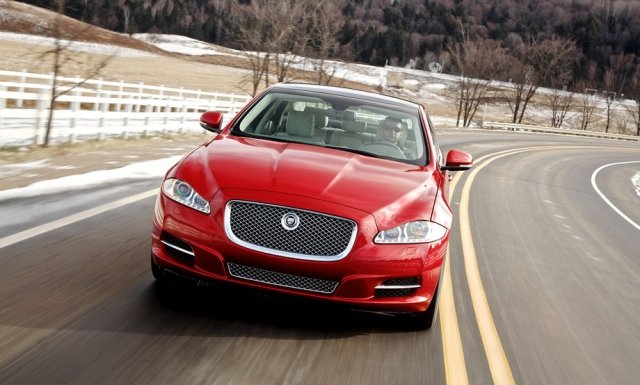
Today we're sharing some tips that you won't find in any vehicle maintenance manual. They're all about driving on highways and open country roads.
Many drivers believe that driving out of town is much easier and safer than driving in heavy city traffic. For this reason, a lot of new drivers get behind the wheel for the first time on a country road. That's a reasonable choice, but only up to a point, because driving outside the city has its own hazards, and you need to know about them and prepare for them in advance.
Many drivers believe that driving out of town is much easier and safer than driving in heavy city traffic. For this reason, a lot of new drivers get behind the wheel for the first time on a country road. That's a reasonable choice, but only up to a point, because driving outside the city has its own hazards, and you need to know about them and prepare for them in advance.
Monotony: The Driver's Enemy
A highway isn't the most varied place, and many drivers know it. The sparse scenery outside the window sets the stage for monotony, which always brings a significant drop in alertness. The brain tricks itself: once it gets used to uniform conditions, it may easily ignore signs of danger. The worst part is that monotony can lead to what's known as sleeping with your eyes open, where a person essentially "switches off" for a short time while still looking awake from the outside.
If you feel you've fallen into the monotony trap and might "zone out" or simply doze off at the wheel, it's best to pull over and take a short break. About half an hour is usually enough, but if you're very tired, you can even take a nap after pulling off onto the shoulder.
If you feel you've fallen into the monotony trap and might "zone out" or simply doze off at the wheel, it's best to pull over and take a short break. About half an hour is usually enough, but if you're very tired, you can even take a nap after pulling off onto the shoulder.
The Roadside as a Source of Danger
Strictly speaking, the source of danger isn't the shoulder itself, but the vehicles parked on it. Remember that every vehicle parked on the roadside is a potential hazard. The first reason is that a pedestrian can step out from behind it at any moment. If you're traveling at high speed and aren't ready for that, the consequences can be tragic. That's why experienced drivers advise always checking the gap between the underside of a parked vehicle and the ground. Sometimes you can see a person's shadow or even their feet in that space, and that's your signal to slow down or take other precautions.
Pedestrians walking along the roadside close to the travel lane (along the curb or at the edge of the sidewalk) are also a hazard. You can never predict that a person might misstep or stumble and fall into the roadway in the next moment. They're also unlikely to warn you of their intentions, so they may start crossing the road at the most unexpected moment. Keep in mind, too, that the pedestrian may have poor eyesight or hearing, which sharply reduces the chance that they'll notice your car from far away. Cyclists are an equally significant potential hazard.
Pedestrians walking along the roadside close to the travel lane (along the curb or at the edge of the sidewalk) are also a hazard. You can never predict that a person might misstep or stumble and fall into the roadway in the next moment. They're also unlikely to warn you of their intentions, so they may start crossing the road at the most unexpected moment. Keep in mind, too, that the pedestrian may have poor eyesight or hearing, which sharply reduces the chance that they'll notice your car from far away. Cyclists are an equally significant potential hazard.
A Few Important Tips
If visibility on the road is poor and you're passing oncoming traffic, it's best to stay as far to the right edge of your lane as is safe. Remember that an oncoming vehicle may be carrying a poorly marked, nearly invisible oversized load that can extend far out to the sides of the vehicle. Also, an oncoming vehicle with just one working headlight isn't necessarily a motorcycle. It may be an ordinary car with a burned-out headlight, so keep that in mind to avoid a collision.
Long, monotonous driving carries one more danger: people start to underestimate their speed. For example, you may feel like you're going no faster than 100 km/h (62 mph) when the speedometer needle passed that mark a long time ago. To avoid tragic accidents, check your speedometer periodically.
We hope these tips help make the roads safer. And if a breakdown or a minor accident does happen, a factory service manual for your vehicle will always help you get it sorted out.
What next