Car care & driving
What Actually Breaks: Engines and Transmissions in Popular Chinese Cars, a Reliability Breakdown
Autopapyrus
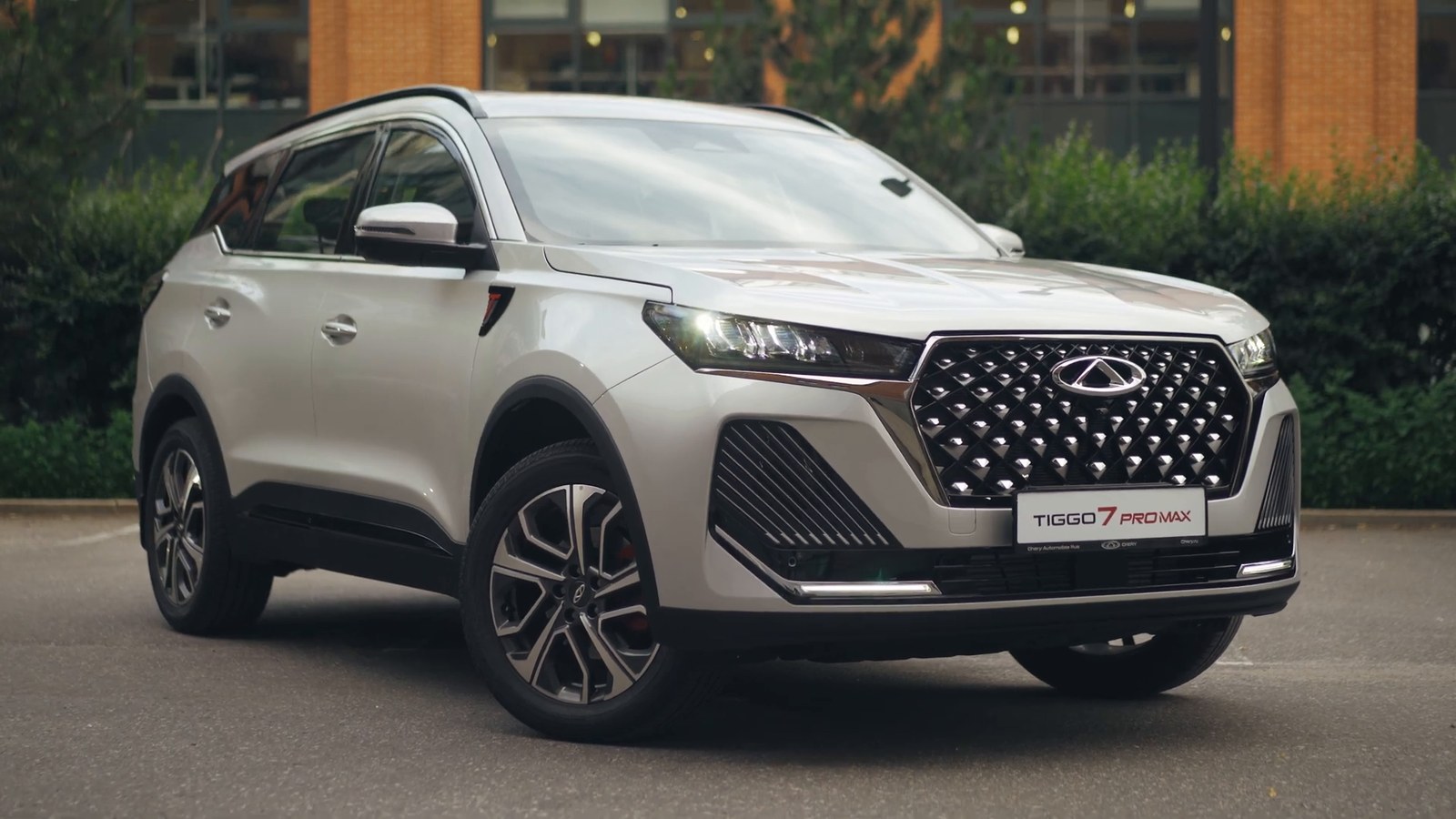
Chinese cars have become an ordinary sight on the road: the Haval Jolion, Chery Tiggo, and Geely Coolray are bought new and resold used, and everyone asks the same question: how long will the engine and transmission last? We pulled together material from the magazine Za Rulem and the Avto.ru site and put it into one table. First, a caveat you need before reading any of the numbers: neither the manufacturers nor any official body publish failure statistics by brand. Everything called "service life" here is an estimate from experts and service shops, and below we say each time whose estimate it is.
How to Read These Numbers
Service life is not a factory guarantee. The factory states a warranty period, while the real-world mileage is estimated by journalists based on service shop visits and owner reports. All the estimates assume decent oil, good gasoline, and no chip tuning. Figures from different articles in the same magazine can differ (for example, for the Jolion the magazine wrote about 200–220 thousand km (124,000–137,000 miles) for the engine in 2022, and 230–260 thousand km in 2025), so we give ranges and name the source.
Summary Table: Service Life Benchmarks
| Model | Engine | Engine life benchmark | Transmission | Transmission life benchmark |
|---|---|---|---|---|
| Haval Jolion | 1.5T 143 hp (front-wheel drive) | 230–260k km (143,000–161,000 mi) | 7DCT450 dual-clutch, two wet clutches | about 300k km (186,000 mi) |
| Haval Jolion | 1.5T 150 hp (all-wheel drive) | about 200k km (124,000 mi) | same dual-clutch | about 300k km (186,000 mi) |
| Haval F7 | 1.5 L, 150 hp | about 250k km (155,000 mi) | 7DCT450 dual-clutch | about 300k km (186,000 mi) |
| Haval F7 | 2.0T, 190 hp, cast-iron block | over 300k km (186,000 mi) | 7DCT450 dual-clutch | about 300k km (186,000 mi) |
| Chery Tiggo 7 Pro | 1.5T 147 hp, cast-iron block | up to 400k km (249,000 mi) (magazine's benchmark) | CVT or 7DCT300 dual-clutch | CVT: 250k km (155,000 mi) on paper; dual-clutch: at least 250k km |
| Chery Tiggo 7 Pro Max | 1.6T 150 hp, aluminum block | about 250k km (155,000 mi) | CVT or dual-clutch | see above |
| Geely Coolray | 1.5T, 3-cylinder, 150 hp | 250k km (155,000 mi) claimed (Avto.ru) | 7DCT dual-clutch, two wet clutches | 250–270k km (155,000–168,000 mi) (Avto.ru, shop survey) |
| Geely Monjaro | 2.0T 238 hp | about 250k km (155,000 mi) | Conventional Aisin automatic, 8-speed | up to 300k km (186,000 mi) |
The estimates come from articles in Za Rulem (I. Khlebushkin, S. Zinoviev, A. Vinogradov) and Avto.ru reviews; the full list is at the bottom.
Haval Jolion
This is the highest-volume car on the list. The front-wheel-drive version has a 1.5-liter 4G15K turbo engine making 143 hp, and the all-wheel-drive version has the 4B15D making 150 hp. Za Rulem puts the first at 230–260 thousand km and the second at about 200 thousand km (about 124,000 miles).
- Typical engine problems: stuck piston rings and oil consumption (often before 100k km, or 62,000 miles); on the all-wheel-drive version, carbon buildup on the intake valves and a finicky engine control unit calibration; after 100k km the timing chain may stretch.
- Transmission: a dual-clutch automated gearbox with two wet clutches, which the magazine rates at about 300k km. At 50–80k km (31,000–50,000 miles) it can judder, and this is most often fixed with an adaptation reset or new software.
- The magazine author's advice: change the transmission oil every 30–40k km (19,000–25,000 miles), which is more often than the schedule calls for.
Haval F7
The magazine puts the 1.5-liter 150 hp engine at about 250k km, and the 2.0-liter 190 hp engine with a cast-iron block at more than 300k km. All versions use the same transmission, the same dual-clutch unit, rated at about 300k km.
- What breaks: after 100k km, oil consumption rises because of carbon buildup, and the crankcase ventilation needs cleaning; isolated fuel pump and turbo failures at low mileage seem to be rare.
- Official recall: on cars sold from May 2019 to January 2021, the fuel lines were replaced because of cases of fire.
Chery Tiggo 7 Pro and Pro Max
The base 1.5T turbo engine making 147 hp has a cast-iron block and runs on regular gasoline. According to the magazine, it usually gives no trouble up to 200k km, and the service life benchmark is up to 400k km. The Pro Max version with the 1.6T has an aluminum block, needs gasoline of at least 91 octane (95 RON), lasts about 250k km, and builds up carbon on the intake valves.
- The CVT is the most discussed weak spot. In theory it is designed for 250k km, but in practice after 100k km the bushings and bearings wear, sometimes the cones and belt too, and a rebuild is expensive. Owners are advised to change the fluid as often as possible; for the related Tiggo 4 Pro, Za Rulem recommends an interval of no more than 50k km (31,000 miles).
- The dual-clutch with two wet clutches is expected to last at least 250k km, but the clutches may need work after 120–150k km (75,000–93,000 miles).
Geely Coolray
A three-cylinder, 150 hp turbo engine, all-aluminum with direct injection. The claimed service life is 250k km (Avto.ru); up to 100k km, Za Rulem writes, nothing usually happens with it.
- There have been cases of a broken connecting rod. The cause has not been established: design, maintenance, or chip tuning. After the 2021 update such cases were no longer reported.
- The main rule for this engine is the timing belt: replace it strictly on schedule, or the valves will bend.
- The dual-clutch with two wet clutches lasts 250–270k km, but the magazine estimates the clutch pack lasts 150–170k km (93,000–106,000 miles); the advice is to change the fluid twice as often as the factory interval.
- After the facelift, the car has a four-cylinder 1.5 L engine making 147 hp with a timing chain; there is not yet much high-mileage data on it.
Geely Monjaro
The most expensive car on the list. The magazine rates the 2.0T 238 hp engine at 250k km; the weak spot is the electric water pump, whose failure can cause overheating. The transmission is a conventional eight-speed Aisin automatic, which the author calls one of the car's better features: up to 300k km if the oil is changed at least every 60k km (37,000 miles). The all-wheel-drive coupling lasts 220–240k km (137,000–149,000 miles) with an oil change every 20–40k km (12,000–25,000 miles). Za Rulem's overall verdict: an average Chinese car with no outstanding results.
Key Takeaways
- The choice between cast iron and aluminum, chain and belt, dual-clutch, CVT, and conventional automatic matters more than the badge on the hood.
- Nearly everywhere the main advice is the same: change the transmission oil noticeably more often than the schedule says.
- For newer models, such as the Omoda C5, Changan UNI-K, and Chery Tiggo 8 Pro, there is not yet much high-mileage data, and we won't pretend there is.
What to Check Before Buying a Used One
- oil consumption and the color of the exhaust smoke;
- transmission judder when cold;
- when and how many times the transmission oil was changed;
- the history of the timing belt or chain;
- whether the car was part of any recall campaigns, by checking the VIN on the manufacturer's website.
Sources: Za Rulem: I. Khlebushkin (Haval Jolion, 1 Oct 2025; Geely Monjaro, 18 Mar 2026), S. Zinoviev (Haval F7, 28 Jul 2025; Chery Tiggo 7 Pro/Pro Max, 7 May 2026; Geely Coolray, 29 Nov 2024), A. Vinogradov ("Three Years Behind the Wheel of a Chinese Car," 20 Apr 2026); Avto.ru: "Everything About Geely Coolray Reliability" (5 Jun 2025) and the Haval Jolion maintenance schedule. The service life estimates belong to the authors of these materials. Footage is from the manufacturers' official promotional videos.
What next