Car care & driving
What Are Fuel and Oil Additives For?
Autopapyrus
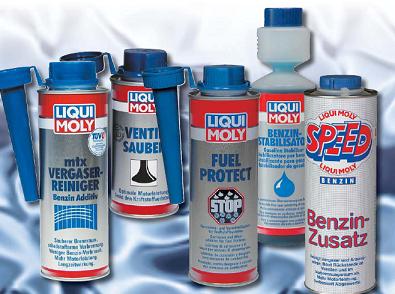
For some car owners, engine additives are pointless: they drove for years without them and nothing happened, so why bother? Less conservative drivers do the opposite. They use additives quite successfully and are often happy with the results. So what exactly are additives, and does it make sense to use them?
First, let's sort out what kinds of additives exist and where they are used. Today the market offers a whole range of additives, treatments, and similar products whose main purpose is to extend the life of an engine or transmission. The main difference between them is how they are used. The main groups are fuel additives, engine oil additives, and additives for transmission (gearbox) oil.
The first group, fuel additives, is most often made up of products that remove moisture from the fuel (so-called water removers or fuel dryers), engine cleaners, fuel system cleaners, and octane boosters, which make fuel more resistant to knock (detonation). Many drivers have used these additives for years with good results. Fuel water removers are undoubtedly useful, since water can end up in the tank of almost any car. It can arrive with the fuel itself, or form through condensation caused by temperature swings. Incidentally, to remove water from the tank you can simply add ethyl alcohol to the fuel. It absorbs the water and burns off along with the fuel. Alcohol also helps clean carbon deposits off the spark plugs. Specialists recommend about 100 grams of alcohol per 20 liters (about 3.5 oz per 5 gallons) of gasoline.
Products that improve gasoline quality, such as octane boosters, can also be useful, especially if the fuel quality at your local stations is poor, and even more so if you often have to fill up at unfamiliar stations with a questionable reputation.
Complex (multi-purpose) fuel additives deserve a mention too. These products clean the fuel system, remove carbon deposits from the engine, and take water out of the fuel. Products of this class made in Japan are generally considered the highest in quality. Although many drivers who have used gasoline additives are satisfied with the positive effect, there are also those who are very unhappy with them. Most often, problems come from low-quality, cheaper additives. We'll come back to that below.
What do we get by pouring an additive into the engine or gearbox? Manufacturers promise increased engine power, better resistance to heavy loads, slower wear of the cylinder-piston group and other engine parts, longer oil life, reduced carbon buildup, lower fuel consumption, and so on. Is that really the case? Additives can indeed help old, worn engines and push back a major overhaul for a while. With the right additives you can raise engine compression, reduce knock, and make the engine run more smoothly. But some drivers see no need for additives in a new engine, and others are neutral about them, considering them unnecessary but harmless. Quite a few drivers also speak negatively about additives, and they give logical arguments. They believe additives do more harm than good: after improving engine performance at first, they eventually lead to more expensive repairs. They also feel additives aren't worth the money, and that the effect usually doesn't match what the manufacturer promised. And if additives are so effective, why don't the world's leading oil makers use them in this way, and why does the whole automotive world spend so much on engine repairs and replacing worn parts when it could just use additives?
So do you really need to feed your car with various promising products, often of dubious origin? Perhaps it's better to spend that money on changing the engine or transmission oil more often and paying more attention to timely maintenance. In any case, more frequent oil changes will extend engine life, and no one doubts that.
As for using additives, everyone has to decide for themselves whether they need them. The situation is similar to dietary supplements and our bodies. A huge number of people live long, happy lives without ever taking any supplements, while some take them regularly and are very pleased with the result. And some take them but see no result. The same goes for additives, so the decision is yours.
If you do decide to use additives, here is some advice: never use additives of unknown origin. If you're going to buy additives, buy only well-known brands. Remember that engine performance depends on the quality of the additive. Study the composition carefully. It should not contain water. Any engine additive should be tested for corrosive activity. If the formula includes H2O, it's better not to buy it. Also, if the formula includes MoS2 (molybdenum disulfide), it's best to skip that product too, as it can be harmful to engine parts.
Don't put too much faith in advertising promises. Don't take slogans like "buy our additive and your overhaul can wait" literally. In reality, mechanical wear of parts doesn't go away, no matter which additives you use. Either way, remember that additives do not replace scheduled maintenance.
Don't use additives if your car is new and under warranty. Any work should be done at an appropriate service center, and the oil should be changed according to the prescribed schedule, otherwise you could lose your warranty coverage.
Read the instructions for any additive carefully and follow them exactly. Do not exceed the recommended dosage.
What next