Car care & driving
How to Beat Rust on Your Car
Autopapyrus
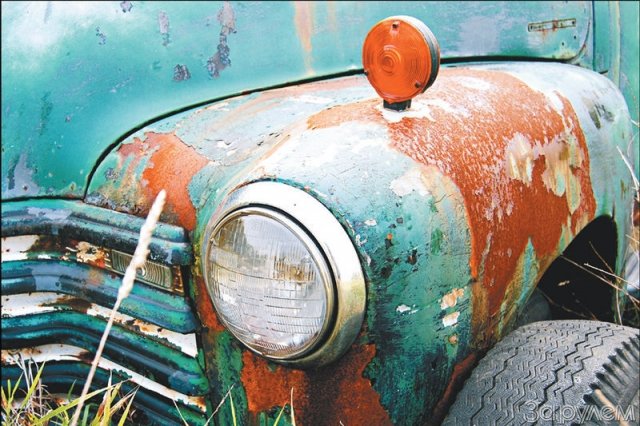
It's a well-known fact that the body of virtually any car is prone to corrosion sooner or later. Some cars resist it for a long time, while others show symptoms after just one year on the road. But is it possible to stop or prevent body corrosion? Let's take a closer look.
It's clear that preventing rust is much easier than fighting it once the body is already damaged. Even if your car is brand new and has only recently been treated with anti-corrosion products, it's still worth taking preventive measures.
First, wash your car more often and polish all body panels thoroughly so you can spot any mechanical damage as early as possible. The fenders and the underbody are the most vulnerable parts of the car, since they take the brunt of sand, gravel and the de-icing chemicals used on roads in winter. Don't rule out human error, either: a factory may accidentally skip applying protective treatment to a fender, which happens especially often with panels around the headlights. The preventive measures are straightforward, but what should you do if rust has already appeared on the body? Is there a way out?
You can certainly deal with this problem, but it takes considerable effort. For the job you will need a wooden scraper, a wire brush, sandpaper, a degreaser and a brush, undercoating or mastic, rags, and a rust converter.
Before you start removing rust, wash the car thoroughly and degrease the entire surface. Then inspect the car carefully to judge how badly the body is damaged. If the damage isn't deep, you can simply scrape the spots off with a wire brush, sand them further with sandpaper, and then degrease with mineral spirits. Thanks to modern chemistry, auto parts stores carry rust converters that quickly turn rust into a compound that is harmless to the metal. After that, the cleaned and treated surface is fully prepared for specialized undercoatings and mastics. Today's market offers a huge variety of anti-corrosion products, each with its own advantages and drawbacks, so which parts to treat with a bitumen-based compound and which with a wax-based one is up to you.
Rust most often attacks areas with high humidity and dirt buildup that are quite hard to reach. That is exactly why special products with a liquid consistency were developed: using a spray bottle, a hand pump or a spray gun, they can easily be applied not only to exposed surfaces but also to hard-to-reach areas.
When you start on the underbody, first wash the dirt out of the wheel wells with a strong jet of water, then dry them as quickly as possible. Compressed air works best for this. To be completely sure every hard-to-reach spot gets treated, the most reliable approach is to take the wheels off and put the car on a lift or jack stands. Wrap anything that isn't part of the body, such as wheels, brake drums and other parts, in paper, and then you can start work with confidence. Don't forget about chrome body parts either, since they are also prone to corrosion to some extent. There are special products for them, but while they remove the buildup, they also damage the top layer, so repeated use is not recommended. Also keep in mind that body panels corrode not only on the outside but on the inside as well, which is why every part needs to be treated completely.
Now you know how to deal with a problem as unpleasant as corrosion. If your car has fallen victim to some other ailment, a repair manual for your make and model can help you tackle almost any breakdown quickly and properly.
It's clear that preventing rust is much easier than fighting it once the body is already damaged. Even if your car is brand new and has only recently been treated with anti-corrosion products, it's still worth taking preventive measures.
First, wash your car more often and polish all body panels thoroughly so you can spot any mechanical damage as early as possible. The fenders and the underbody are the most vulnerable parts of the car, since they take the brunt of sand, gravel and the de-icing chemicals used on roads in winter. Don't rule out human error, either: a factory may accidentally skip applying protective treatment to a fender, which happens especially often with panels around the headlights. The preventive measures are straightforward, but what should you do if rust has already appeared on the body? Is there a way out?
Removing Corrosion
You can certainly deal with this problem, but it takes considerable effort. For the job you will need a wooden scraper, a wire brush, sandpaper, a degreaser and a brush, undercoating or mastic, rags, and a rust converter.
Before you start removing rust, wash the car thoroughly and degrease the entire surface. Then inspect the car carefully to judge how badly the body is damaged. If the damage isn't deep, you can simply scrape the spots off with a wire brush, sand them further with sandpaper, and then degrease with mineral spirits. Thanks to modern chemistry, auto parts stores carry rust converters that quickly turn rust into a compound that is harmless to the metal. After that, the cleaned and treated surface is fully prepared for specialized undercoatings and mastics. Today's market offers a huge variety of anti-corrosion products, each with its own advantages and drawbacks, so which parts to treat with a bitumen-based compound and which with a wax-based one is up to you.
Rust most often attacks areas with high humidity and dirt buildup that are quite hard to reach. That is exactly why special products with a liquid consistency were developed: using a spray bottle, a hand pump or a spray gun, they can easily be applied not only to exposed surfaces but also to hard-to-reach areas.
When you start on the underbody, first wash the dirt out of the wheel wells with a strong jet of water, then dry them as quickly as possible. Compressed air works best for this. To be completely sure every hard-to-reach spot gets treated, the most reliable approach is to take the wheels off and put the car on a lift or jack stands. Wrap anything that isn't part of the body, such as wheels, brake drums and other parts, in paper, and then you can start work with confidence. Don't forget about chrome body parts either, since they are also prone to corrosion to some extent. There are special products for them, but while they remove the buildup, they also damage the top layer, so repeated use is not recommended. Also keep in mind that body panels corrode not only on the outside but on the inside as well, which is why every part needs to be treated completely.
Now you know how to deal with a problem as unpleasant as corrosion. If your car has fallen victim to some other ailment, a repair manual for your make and model can help you tackle almost any breakdown quickly and properly.
What next