Car care & driving
Useful Information About Airbags
Autopapyrus
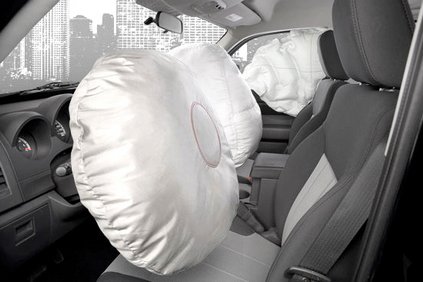
One of the main measures of any car's quality is its safety. For many decades, special belts have been used to improve it. According to statistics, your chances of surviving a crash increase many times over if you buckle up beforehand. That is why seat belts are now a mandatory part of every car.
Over time it became clear that you can never have too much safety, so engineers began working on additional safety systems. The result was the first airbag: a soft cushion that deploys when a vehicle is in a collision. In the United States, a regulation was passed that required every new car to come equipped with airbags.
The statistics are clear: airbags have reduced road fatalities by roughly 30%. That is why some manufacturers equip their cars with a generous set of airbags. In some vehicles there are as many as six or even eight. Airbags protect not only the driver and front passenger but also the rear passengers. They are also built into the doors and seats.
If you look in your owner's manual, you will hardly find an answer to this question, even though it is quite important. As the laws of physics tell us, objects inside a car move at the same speed as the car itself. In a collision, they keep moving at the same speed even after the car has been stopped by the crash. This can lead to injury or even death, so the body's motion has to be stopped. That is exactly what airbags are for.
An airbag effectively brings a person's speed to zero after a collision, with almost no harm to the person. To do this, the airbag needs some distance between the dashboard or steering wheel and the occupant, as well as a minimal amount of time (usually a fraction of a second). These conditions should be enough to stop the body's motion, not with a sudden jolt but smoothly and evenly.
An airbag system usually consists of three parts that work together to stop the occupant's motion:
• The bag itself. It is made of thin nylon fabric and is stored in the dashboard, steering wheel, seat, or door.
• The sensor, which tells the airbag when to deploy. An airbag usually deploys when the force of the impact is equivalent to hitting a brick wall at about 10-15 mph (16-24 km/h). In a sudden deceleration, a special electrical contact closes, and this lets the system "know" that a crash has occurred. The switch then triggers, and the airbag inflates.
• The inflation system. Its job is to ignite a mixture of sodium azide (NaN3) and potassium nitrate (KNO3), which is the chemistry used in airbags. This produces a small explosion of hot nitrogen gas, which inflates the bag.
The system is a bit like a rocket booster. A solid propellant is ignited, and as it burns it produces a lot of gas that fills the bag. As it inflates, the airbag moves at up to 322 km/h (200 mph). Once it is inflated, the gas quickly escapes through tiny vents in the bag, the airbag deflates, and the occupant can move freely again. As you can see, just a few fractions of a second are enough to prevent serious injury and even death. That is why the value of airbags is simply immense.
Remember that, despite their high effectiveness, airbags should be used only together with seat belts. Make sure there is at least 25 cm (10 in) between the airbag and the occupant. Otherwise, the airbag itself can cause injury. You can increase the distance in the following ways:
• Move the seat as far back as possible while still being able to reach the pedals comfortably.
• Recline the seatback slightly. If that gets you the 25 cm (10 in), you don't need to slide the seat back. If reclining reduces your view of the road, you can raise the seat a bit.
• Aim the airbag at the center of your chest, never at your head or neck. To do this, you can tilt the steering wheel down, provided your car has an adjustable steering wheel.
Remember that an airbag can harm a child sitting in the front seat. To avoid this, children under 12 should ride only in the back seat, in a proper child seat or restraint.
In some cases, a switch that lets you turn off the airbags can be installed at a service center. However, this is appropriate only if you fall into one of the categories below:
• People with medical conditions for whom the risk of airbag deployment is greater than the risk of having no airbag. The airbag can be turned off on either the driver's or the passenger's side.
• People who cannot sit so that their chest is at least 25 cm (10 in) from the center of the airbag cover. Only the driver's airbag can be turned off.
• People who must carry a child under 12 in a rear-facing child seat in the front because the vehicle has no back seat or the back seats are too small, or because a medical condition requires them to monitor the child constantly. The passenger airbag can be turned off.
• People who must carry children under 12 in the front seat because the vehicle has no rear seats, because there are too many children to fit in back, or because a child's medical condition requires constant monitoring. The passenger airbag can be turned off. By following these simple rules, and the advice in your owner's manual, you will get the maximum safety for yourself and your loved ones.
Over time it became clear that you can never have too much safety, so engineers began working on additional safety systems. The result was the first airbag: a soft cushion that deploys when a vehicle is in a collision. In the United States, a regulation was passed that required every new car to come equipped with airbags.
The statistics are clear: airbags have reduced road fatalities by roughly 30%. That is why some manufacturers equip their cars with a generous set of airbags. In some vehicles there are as many as six or even eight. Airbags protect not only the driver and front passenger but also the rear passengers. They are also built into the doors and seats.
How an Airbag Works
If you look in your owner's manual, you will hardly find an answer to this question, even though it is quite important. As the laws of physics tell us, objects inside a car move at the same speed as the car itself. In a collision, they keep moving at the same speed even after the car has been stopped by the crash. This can lead to injury or even death, so the body's motion has to be stopped. That is exactly what airbags are for.
An airbag effectively brings a person's speed to zero after a collision, with almost no harm to the person. To do this, the airbag needs some distance between the dashboard or steering wheel and the occupant, as well as a minimal amount of time (usually a fraction of a second). These conditions should be enough to stop the body's motion, not with a sudden jolt but smoothly and evenly.
How the Airbag Inflates
An airbag system usually consists of three parts that work together to stop the occupant's motion:
• The bag itself. It is made of thin nylon fabric and is stored in the dashboard, steering wheel, seat, or door.
• The sensor, which tells the airbag when to deploy. An airbag usually deploys when the force of the impact is equivalent to hitting a brick wall at about 10-15 mph (16-24 km/h). In a sudden deceleration, a special electrical contact closes, and this lets the system "know" that a crash has occurred. The switch then triggers, and the airbag inflates.
• The inflation system. Its job is to ignite a mixture of sodium azide (NaN3) and potassium nitrate (KNO3), which is the chemistry used in airbags. This produces a small explosion of hot nitrogen gas, which inflates the bag.
The system is a bit like a rocket booster. A solid propellant is ignited, and as it burns it produces a lot of gas that fills the bag. As it inflates, the airbag moves at up to 322 km/h (200 mph). Once it is inflated, the gas quickly escapes through tiny vents in the bag, the airbag deflates, and the occupant can move freely again. As you can see, just a few fractions of a second are enough to prevent serious injury and even death. That is why the value of airbags is simply immense.
Airbag Safety Precautions
Remember that, despite their high effectiveness, airbags should be used only together with seat belts. Make sure there is at least 25 cm (10 in) between the airbag and the occupant. Otherwise, the airbag itself can cause injury. You can increase the distance in the following ways:
• Move the seat as far back as possible while still being able to reach the pedals comfortably.
• Recline the seatback slightly. If that gets you the 25 cm (10 in), you don't need to slide the seat back. If reclining reduces your view of the road, you can raise the seat a bit.
• Aim the airbag at the center of your chest, never at your head or neck. To do this, you can tilt the steering wheel down, provided your car has an adjustable steering wheel.
Remember that an airbag can harm a child sitting in the front seat. To avoid this, children under 12 should ride only in the back seat, in a proper child seat or restraint.
When You Can Turn Off an Airbag
In some cases, a switch that lets you turn off the airbags can be installed at a service center. However, this is appropriate only if you fall into one of the categories below:
• People with medical conditions for whom the risk of airbag deployment is greater than the risk of having no airbag. The airbag can be turned off on either the driver's or the passenger's side.
• People who cannot sit so that their chest is at least 25 cm (10 in) from the center of the airbag cover. Only the driver's airbag can be turned off.
• People who must carry a child under 12 in a rear-facing child seat in the front because the vehicle has no back seat or the back seats are too small, or because a medical condition requires them to monitor the child constantly. The passenger airbag can be turned off.
• People who must carry children under 12 in the front seat because the vehicle has no rear seats, because there are too many children to fit in back, or because a child's medical condition requires constant monitoring. The passenger airbag can be turned off. By following these simple rules, and the advice in your owner's manual, you will get the maximum safety for yourself and your loved ones.
What next