Car care & driving
Getting Your Car Ready for Winter
Autopapyrus
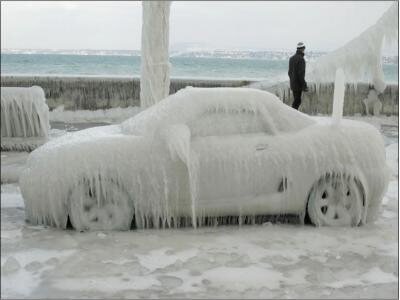
Every car needs to be prepared for winter. On frosty days, ice builds up on the glass, a door freezes firmly shut, a lock won't open, or the car won't start at all. It's best to get ready for all of this ahead of time.
In freezing weather, diesel fuel turns thick or gel-like. To prevent this, add a special additive to the tank: an anti-gel. Some of these additives also help keep the fuel filter from clogging and reduce deposits in the fuel system. Consumption is low: one 325 ml (11 fl oz) bottle treats about 170 liters (45 US gal) of diesel fuel.
You walk up to your car on an icy morning and it's covered in a layer of ice. A de-icer spray can help here. Spray it on the glass, and after a short while the wipers will clear your view easily. You can clean headlights and mirrors the same way. Even a frozen lock can be thawed like this. If the ice layer is thick, you'll still need to do some work with a plastic scraper after spraying.
Some places on a car are hard to keep free of moisture, such as door locks and the ignition system. A water-displacing product like WD-40 can help keep moisture out of these areas, though it can't deal with ice.
In winter, fill the washer reservoir with a special washer fluid that has a very low freezing point. It won't freeze in the cold, and it will also remove road salt and the film of grime from the wiper blades and glass. The main ingredient of such fluid is isopropyl alcohol. Never buy washer fluid made with methanol (technical alcohol), because it is highly toxic.
If your car's battery is dead, you should keep a set of jumper cables on hand so you can start the car from another vehicle. Here's how: connect the positive terminals of both batteries with one cable. Connect the other cable to the negative terminal of the charged battery, and then to a ground point on the car with the dead battery. Choose an unpainted metal part, away from the battery and the fuel line, as the ground point. Start the engine of the donor car and let it idle for a couple of minutes, then start the car with the dead battery. After it starts, remove the cables in the reverse order.
What next