Car care & driving
Car Audio: What to Know Before You Upgrade
Autopapyrus
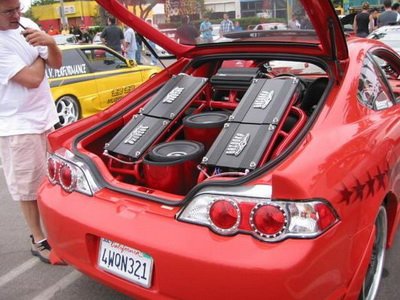
Before you buy car audio equipment, work out how much you can spend, both now and later on. Installation doesn't depend on whether your car is old or new. It depends on how much you care about sound quality and power. Only then should you start choosing and buying a system, and it's best to do that together with whoever will install it. To help you avoid some common pitfalls in choosing and installing the equipment, here are a few tips.
Whatever its type and price, a car audio system is built around a layout with two pairs of speakers and a head unit. It may also include a subwoofer, amplifiers, a CD changer, mounting hardware and wiring.
Common misconceptions:
1. Drop the idea that perfect car speakers come from only one brand. Every manufacturer has good models in a given price range.
2. The head unit and the speakers can come from different brands. A speaker is a speaker, no matter who made it, so feel free to buy a head unit from one brand and speakers from another.
3. If music in the cabin is just background noise for you, don't sweat the budget for the audio system. Here are the main budget setups:
Setup 1
This setup consists of a CD receiver (head unit) plus front and rear speakers. Advantage: low cost. Drawback: at maximum volume the speakers will rasp. That's not because the speakers are weak. It's because the head unit's signal is distorted. There's also no point in buying expensive speakers for this setup, since they need a subwoofer and amplifiers to perform. So if you choose this setup, buy the speakers and the head unit in the same price range. Otherwise it's like connecting brand-new, expensive speakers to an old transistor radio, or the other way around.
More misconceptions:
1. "The more powerful speakers should go in the back." At a concert you wouldn't sit with your back to the performers, so if you only have two speakers, put them in front.
2. Drop the idea that the loudness and quality of the speakers and head unit depend on their power rating. Other specifications determine that. To improve the sound, you can use front speakers with separate midrange and tweeter drivers. If you have a bigger budget in mind, go with a Hi-Fi setup.
Hi-Fi and Hi-End setups. Setup 2
This setup consists of a head unit, front component speakers driven by a dedicated 2-channel amplifier, and rear speakers driven directly by the head unit. Advantage: a modest investment and the ability to listen at maximum volume. Drawback: the frequency range isn't fully reproduced, so there's no deep bass. For this setup the head unit needs at least one line-level (RCA) output.
Setup 3
This includes a head unit, front component speakers, a subwoofer and an amplifier. Advantage: good sound quality. Drawback: because the speakers are driven by the head unit, they will rasp at maximum volume, though at moderate volume all frequencies are reproduced.
Setup 4
This setup uses a head unit with at least two line outputs for connecting amplifiers. Either one four-channel amplifier or two two-channel amplifiers then drive a subwoofer and the front component speakers. There's one drawback: the system requires paying for professional installation, which includes:
- choosing a suitable combination of components;
- providing the power supply the equipment needs and the right acoustic conditions in the cabin;
- tuning the audio system's settings.
Setups 5, 6 and 7
These are made for true audiophiles and involve custom-selecting the system's components to suit the owner's taste. They're fairly complex and expensive.
Hi-End
This is flawless sound that makes you feel fully present at the performance and lets you hear the smallest details.
The head unit and its features
Models differ in their features and design, in whether they have an FM band, a built-in equalizer, and the ability to connect amplifiers and a CD changer. Your choice therefore depends on the setup you plan to install.
Speakers also have their own characteristic "coloration" of sound, beyond what the numbers show. But the main criterion is value for money.
Coaxial speakers have a tweeter built into a full-range driver. Advantage: they cost less than component speakers. Drawback: noticeable sound distortion, so they suit only inexpensive head units.
Component speakers consist of small tweeters plus a separate full-range driver. Thanks to built-in crossovers, they deliver good sound at moderate volume for a fairly low price.
Crossovers can be active or passive. They consist of a capacitor and an inductor tuned to a specific frequency to split the frequency spectrum in coaxial and component speakers. They use filters from first to fourth order, and the higher the order, the faster the signal drops off outside the working band.
Amplifiers reduce distortion. The ones built into an ordinary head unit don't deliver a proper level of sound.
Subwoofers. Signals in the 20-150 Hz range have no effect on the stereo image, so they are sent to a single channel and housed in one enclosure.
Installation kit for car audio:
A capacitor is used to stabilize the amplifiers' power supply. Under heavy load it smooths out the whole system's operation, and fuses are installed to protect the power circuits.
The arteries of the sound. During installation, don't use cheap, low-quality wiring and accessories. They hurt sound quality, and under heavy load the amplifiers may even shut down.
The signal from the head unit to the amplifier travels through an RCA interconnect cable, so it must be well shielded against electrical interference.
Speaker cables carry the signal to the speakers and are made of multi-strand wire.
Power cables supply the system's power components with electricity from the car's electrical system.
TV: for about $1,500 you can install not only the car audio and a video player but also a color TV to entertain your passengers.
Sound deadening: do you need it?
For extra comfort in the cabin, you can cut noise by 4-5 decibels and raise the speaker system's efficiency by up to 20%. This is especially worth doing if you've installed a Hi-Fi system.
Why professional installation matters
If you chose a budget setup, a DIY installation can void the warranty on your equipment and even damage it. If you chose an expensive setup, sound quality depends directly on installation quality. So if you're spending a large sum on speakers, don't skimp on the installation.
What next