Car care & driving
How to Choose a Dash Cam
Autopapyrus
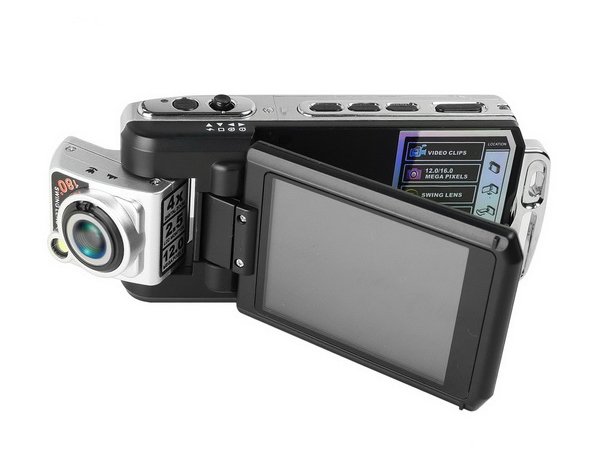
Today's car electronics market offers a huge range of devices for recording video on the move, from minimalist budget models to expensive, feature-packed gadgets, some of whose functions you may never use. If you're buying a dash cam for the first time, choosing one can be difficult. To build your own list of requirements, it helps to understand the specifications that set one model apart from another.
Let's start with the mounting methods. The simplest is a universal suction cup mount. Cameras with this type of mount are extremely easy to install, but there's no guarantee the device will stay put during temperature swings or hard braking. Double-sided adhesive tape or a adhesive pad holds the camera more securely. An excellent, though more expensive, option is a dash cam built into the rearview mirror.
The dash cam is powered by the car's electrical system. You don't need to visit a repair shop to connect it. The camera's instruction manual and your vehicle's owner's manual will walk you through it. When the car's power is cut, a built-in battery should keep the camera running. A battery is highly desirable: besides acting as a backup power supply, it lets the camera keep recording on its own, for example after a collision. Naturally, the larger the battery capacity, the better.
The viewing angle determines how much of the scene appears in the frame. In the specifications you may see a vertical, horizontal, or diagonal value. The diagonal figure is the most common. The wider the viewing angle, the smaller objects appear in the frame, so experts recommend choosing a dash cam with a horizontal viewing angle of 80 to 100 degrees, or a diagonal angle of 100 to 140 degrees. Be especially careful when shopping, because the viewing angle claimed by the manufacturer may not hold true at every recording resolution.
Two parameters, sensor resolution and recording resolution, should not be confused. The first refers to the number, type, and density of the light-sensitive elements that form the image. The higher the sensor resolution, the better the quality of the video. The second is the number of pixels (dots) that make up the image, vertically and horizontally. The higher the recording resolution, the sharper the picture and the greater the level of detail.
What next