Car care & driving
How to Tow a Vehicle Safely
Autopapyrus
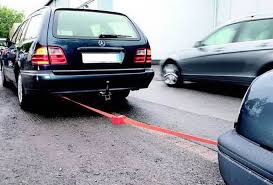
Sometimes a car's controls or drivetrain fail without any warning. In these situations, a tow rope or a tow truck comes to the rescue. If the breakdown happens in your own town, you can call friends who can help or phone a service center. But there are times when help is nowhere to be found, a tow truck is only a dream, and you can rely only on yourself. In that case, towing with a rope or strap is the answer, a time-tested method that has been getting drivers out of trouble for decades.
There are two ways to tow a vehicle: a rigid connection (a tow bar, used when the brakes don't work) and a flexible connection using a rope or strap. Some drivers prefer a polypropylene rope, which is reliable and light, and doesn't cause damage if the cars bump into each other. Others favor a nylon rope, which is elastic, strong, and compact.
If you don't have a tow rope, you can use seat belts. Using a steel cable can lead to trouble: torn-out tow hooks, or, if the cable snaps, dents in the hood. But if a steel cable is all you have, experienced drivers recommend passing two cables, each folded in half, through an old tire and securing them to both vehicles to avoid these problems.
The rope should be 4-6 meters (13-20 ft) long. A rope that is too long will snag in turns, while one that is too short makes it hard to steer and brake properly. You also need to show other road users that the cars are connected, so hang red flags on the rope.
The rope attaches to the tow hooks. If your car doesn't have them, you can use the leaf springs or, if accessible, the torque rod bracket. The connection must never come loose on its own. The ideal solution is to use carabiners. Don't use pry bars or wrenches as pins to hold the connection, because they will slip out quickly.
Towing a car takes good teamwork between the drivers of both vehicles. If it's done wrong, both cars may end up needing repairs. Both drivers need to be patient, follow safety rules, and agree in advance on signals they will use while driving. All their actions must be coordinated. The driver of the tow vehicle must remember that they are not just driving their own car but also pulling another one, so it should move smoothly, without sudden maneuvers. The driver of the towed car must constantly watch the tension in the rope and brake slightly whenever it goes slack.
If you own a car with an automatic transmission and it has serious damage, use a tow truck. Only as a last resort can such a car be towed at speeds up to 30 km/h (19 mph) to the nearest repair shop. Manufacturers limit the towing distance to 50-100 km (30-60 miles). Over longer distances, the lack of lubrication causes dry friction, which will almost certainly destroy the gears in the automatic transmission.
One method works only for front-wheel-drive cars with an automatic transmission: you disconnect the outer CV joints from the drive axles and secure them with whatever is on hand. After that, the car can be towed on a rope over any distance without harming the vehicle.
Before leaving the garage, check that you have a tow rope in the trunk. In practice, it's best to keep it in the car at all times.
What next