Car care & driving
How Does Climate Control Work in Winter?
Autopapyrus
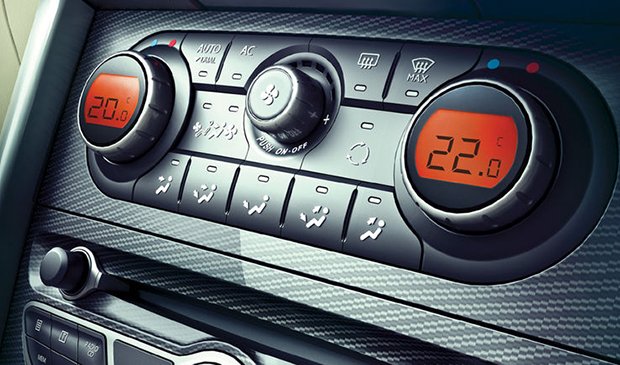
Virtually all modern vehicles come with a climate control system. Designed to keep the cabin comfortable, it works reliably in both scorching summer heat and freezing winter weather. The driver no longer has to spend time and attention adjusting the cabin temperature by hand. You simply program the climate control, and from then on the system works automatically. All you need to do is pick the temperature that suits you best. You'll notice how well climate control works in winter once you set your preferred temperature and take a drive. You can count on a comfortable cabin even when it's bitterly cold outside.
How does a climate control system work?
The climate system in a modern car is a complex device. It consists of several key components:
— the air conditioner removes excessive heat and excess humidity from the cabin;
— the heater takes its heat from the engine coolant, which the engine has already warmed up;
— the blower fan circulates air through the cabin;
— special intakes and air ducts direct the airflow to the right places in the cabin;
— the air intakes have flaps that are moved by electric actuators;
— if the cabin is warm enough or no heat is needed, the heater core is shut off by electric heater valves;
— temperature sensors measure the air temperature at various points in the cabin;
— newer cars also have a humidity sensor as part of the climate control system;
— the "brain" of the system, a programmable controller, receives the sensor readings and, based on its analysis, switches the actuators on and off.
How does a car's climate control system work in the cold season?
— First, the user sets the temperature to be maintained in the cabin, for example 22 °C (72 °F), and switches the system to automatic mode;
— the controller receives data from the cabin temperature sensors and compares it with the set value;
— if the cabin is warmer than needed, the air conditioner kicks in (though this is unlikely to happen in winter);
— if the cabin is cooler than required, the electric valves open and the coolant (antifreeze) from the engine cooling system flows into the heater core;
— the controller also sets the fan speed based on the difference between the current and target temperatures, taking into account how hot the coolant in the heater core is;
— once the job is done and the programmed cabin temperature is reached, the airflow slows down and the system switches to maintenance mode to hold the set conditions.
Special considerations for cold-weather use.
Above is a generalized description of how a car's climate system works. In reality, how climate control behaves also depends on the specific manufacturer, and the controller software varies as well. Modern electronic climate systems even let the user program some of the settings.
Manual control of the climate system can come in handy in winter, when the outside temperature is below freezing. For example, if the windows are covered in frost after a long time parked outdoors. First you need to quickly clear the ice from the areas you need for visibility. Ideally, the windows would be pre-heated automatically ahead of time, but not every climate control system has this feature, or the preset heating time wasn't long enough. In this case, cancel automatic mode, turn on the defrost airflow manually, and choose the fan speed yourself. Once the ice on the windows is gone, switch the system back to automatic mode.
Not every driver remembers to wear proper winter footwear, counting on the cabin being warm. But sometimes your car is buried in snow and you have to dig it out. As a result, you spend some time out in the cold, and by the time you get behind the wheel, your feet are wet. In this case, the most sensible thing to do is to override the climate control and direct a stream of warm air onto your feet.
Traffic jams on winter roads caused by blizzards and icy conditions can eat up a lot of time. The "Recirculation" mode in the climate system helps keep exhaust fumes from the other cars crowded around you from getting into the cabin. This mode is usually switched on manually, unless you have one of the most advanced climate systems available today, which has an automatic CO sensor.
How can you reduce the humidity inside the cabin?
It's no secret that while cooling the air, an air conditioner also makes it considerably drier. In winter, a car's climate control can use this to its advantage. How does it work?
The controller receives data from a dedicated humidity sensor. If it's cold outside, there's no need to dry the air, since the heater core takes care of the moisture. But when a thaw begins, sleet is falling, and the outside temperature is near freezing, the windows fog up badly. To fix this, the car's climate system follows this sequence:
— the humidity sensor tells the controller that there is too much moisture;
— the controller signals the heater and the air conditioner to run at the same time;
— condensation or frost forms on the fins of the heat exchanger as humid air passes through the A/C evaporator;
— after passing the evaporator, the air is dried again as it flows toward the heater core.
With climate control in use, the car's windows don't fog up in winter, and the cabin automatically stays at the most comfortable conditions for driving.
The cabin air filter.
Before you start using climate control in winter, read the owner's manual for your car model. It should give exact instructions on replacing the cabin air filter.
The filter plays an important role in the climate system. If it's clogged and gray with dust, both dehumidifying and heating lose their effectiveness: the windows will fog up anyway, and the right cabin temperature will take much longer to reach than it should.
There are three types of filter elements:
— the cheapest and simplest: paper;
— more effective: activated carbon;
— antibacterial filters, which prevent harmful bacteria from multiplying in the climate control's air ducts.
Replace the cabin air filter at least twice a year, and sometimes more often, for example if you drive a lot on unpaved dirt roads.
What next