Car reviews
Toyota C-HR Review
Autopapyrus
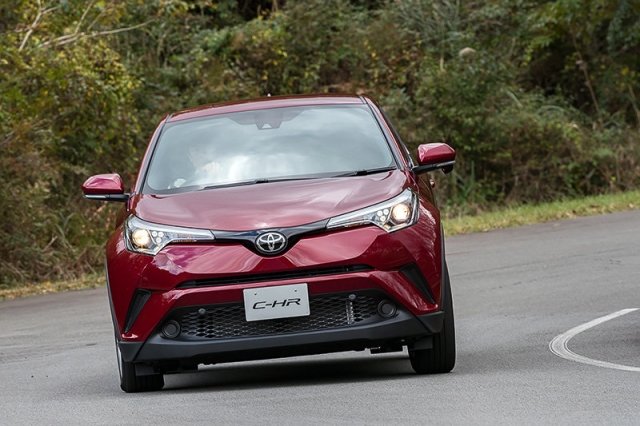
Lifestyle-oriented vehicles are in high demand in Europe, America and Japan. Compact crossovers confidently roam big-city streets and country roads alike. The newcomer from Toyota, the compact sport utility vehicle (SUV) C-HR, belongs to exactly this class. A few years ago the model appeared at several auto shows, including Paris, Frankfurt and Tokyo.
For the first time, the name of a new model from the Japanese automaker is an abbreviation. "C-HR" stands for "Compact High Rider," meaning a combination of a compact body and generous ground clearance. The ground clearance is indeed increased thanks to the TNGA platform that the chassis is based on. This platform significantly increases body rigidity, helped by a new laser welding method. As a result, Toyotas with internal combustion engines become about a quarter more fuel-efficient.
Not all of the C-HR's technical data has been released yet, but we know the body is 436 cm (171.7 in) long, 179.5 cm (70.7 in) wide and 155 cm (61.0 in) tall. The wheelbase is 264 cm (103.9 in), and the minimum turning radius is 5.2 m (17.1 ft).
The hybrids will come in G and S trims, while models with a conventional engine are offered as G-T and S-T. Safety features are especially well thought out. Even the base version has the Safety Sense system and six airbags, and if you go for the G or G-T trim, you also get blind-spot monitoring and a special technology that alerts the driver to obstacles behind the car.
Powertrain
The hybrid model has a 1.8-liter engine making 98 horsepower and 141 Nm (104 lb-ft) of torque. The electric motor is slightly more modest in power, at 72 horsepower, but it produces 163 Nm (120 lb-ft) of torque. Tailpipe emissions are 35 percent below the European standard. Environmental friendliness is not the least of the reasons to buy, especially combined with low fuel consumption. The gasoline SUV uses just 5.7 liters per 100 km (about 41 mpg US), and the hybrid uses even less, at 3.7 liters per 100 km (about 63 mpg US).
Interior
The dashboard of the new Toyota, with its pair of main gauges and plenty of buttons, is carefully thought out down to the smallest details, so the driver gets full comfort behind the wheel. In the hybrid, there is also a power meter. Add a modern multimedia system with a large display, advanced climate control, a rearview camera and the ability to listen to music through six full-size speakers!
The sport-style leather seats are very comfortable, and the windows have an automatic closing assist when you raise or lower them. Under the new design theme called Sensual Tech, the comfort and refinement of the cabin come together in an ideal new balance.
Black fabric and leather look great on the G-T seats, and the rear seats fold down, which significantly increases cargo space, since the trunk is not very large to begin with, at 370 liters (13.1 cu ft).
On the road, the driver is assisted by various systems, such as adaptive cruise control, lane departure monitoring, a collision warning system and others, depending on trim.
The gasoline Toyotas will be sold with either a six-speed manual transmission or a CVT, a continuously variable transmission with no fixed gears.
Experts' opinions of the Toyota C-HR
Although the car is not yet officially on sale in volume, the press has already begun to publish favorable reviews from experts in the field.
For example, Japanese automotive expert Koichiro Okamoto noted that the new Toyota C-HR successfully combines traits of a sports car and a city crossover. Reviewers also point out the SUV's distinctive style, its uniqueness and its memorable look.
Attractive lights, a stylish grille and sculpted, voluminous shapes emphasize the car's emotional character. The TNGA platform was first used on the Toyota Prius, from which this newcomer "grew."
The interior is also ideally thought out. The instrument panel works very well and has excellent viewing angles. There isn't a single unnecessary button, yet everything the user needs is there.
Which of the tested cars was quicker?
The hybrid has a 1.8-liter powertrain and a 2WD (front-wheel-drive) layout. The gasoline version has a 1.2-liter turbo engine and 4WD (all-wheel drive). The test cars also differed in wheel size: 18 inches on the hybrid versus 17 inches on the gasoline model.
Naturally, on city roads the hybrid launches and accelerates more quickly. The gasoline-powered Toyota accelerates a bit more slowly, with speed building more smoothly. But it would be wrong to say the hybrid is ahead in everything.
The thing is, while the gasoline C-HR builds speed progressively, the hybrid feels as if it quickly accelerates to its limit. In short, it is too early to draw firm conclusions about which version will outrun the other. It is clear, though, that in acceleration to 100 km/h (62 mph), the hybrid C-HR is about 5% quicker than its gasoline sibling.
The Toyota Prius, which has a similar system, by the way, does not accelerate as smoothly as the hybrid C-HR and responds to the accelerator pedal less well than the newcomer. The likely cause is a lower gear ratio chosen to suit the heavier car and larger wheel radius. But comparing the C-HR hybrid with the Prius again, the 0-100 km/h time of the two models is almost the same.
Like other Toyota hybrids, the new model starts to make a droning sound when accelerating, while the gasoline C-HR is almost silent. But this drawback applies only to driving at top speed on closed tracks. On city roads, both models are equally quiet.
Driving characteristics
The new Toyota C-HR inherited the TNGA architecture first used on the Prius, which guarantees resistance to body twisting.
Toyota's engineers paid maximum attention to the crossover's handling, so the newcomer stands out for excellent controllability. The sporty direction in which this crossover was shaped shows not only in its distinctive looks and sport-style seats, but also in how the car reacts in corners. It feels as if you are driving a full-fledged sports car rather than a compact SUV.
Compared with the Prius, the car responds better to steering input, takes sharp bends with ease and maneuvers without the slightest strain even on very narrow roads.
The suspension also performs superbly, instantly smoothing out bumps and noise even on rocky, uneven roads. This Toyota will surely appeal to drivers who don't like excess but are very demanding about the quality of their car.
The gasoline C-HR is 30 kg (66 lb) heavier than its hybrid sibling. In the hybrid, the traction battery sits at the rear, while in the all-wheel-drive gasoline Toyota that spot holds the unit that transfers drive power to the rear axle. Both versions handle equally easily.
All in all, the new Toyota SUV will make any trip enjoyable. The crossover handles superbly, its well-designed dashboard inspires only positive impressions, and its specifications are on par with any modern competitor.
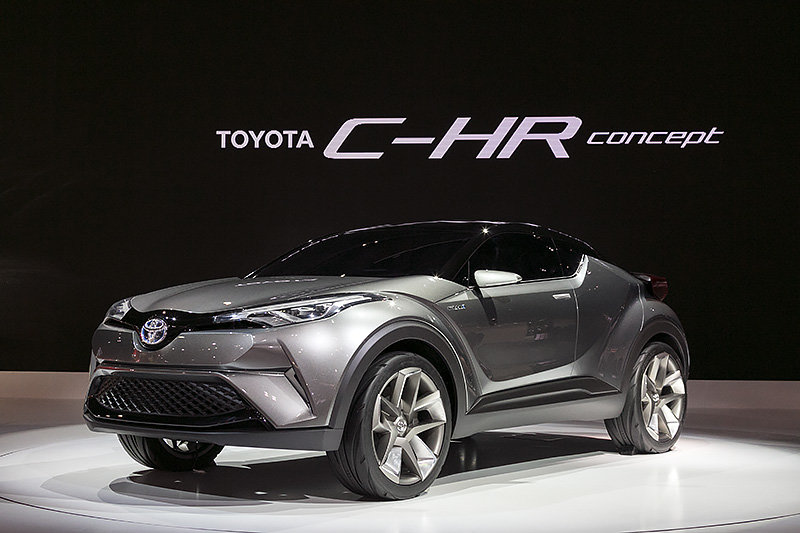
For the first time, the name of a new model from the Japanese automaker is an abbreviation. "C-HR" stands for "Compact High Rider," meaning a combination of a compact body and generous ground clearance. The ground clearance is indeed increased thanks to the TNGA platform that the chassis is based on. This platform significantly increases body rigidity, helped by a new laser welding method. As a result, Toyotas with internal combustion engines become about a quarter more fuel-efficient.
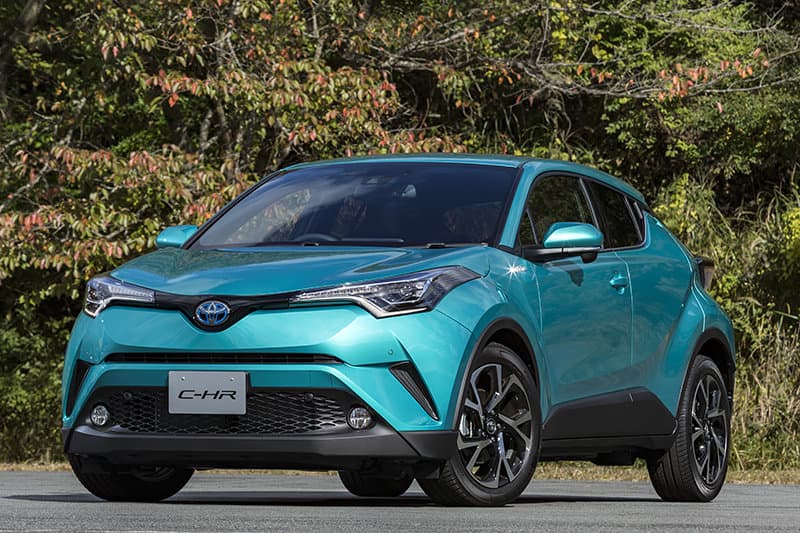
Not all of the C-HR's technical data has been released yet, but we know the body is 436 cm (171.7 in) long, 179.5 cm (70.7 in) wide and 155 cm (61.0 in) tall. The wheelbase is 264 cm (103.9 in), and the minimum turning radius is 5.2 m (17.1 ft).
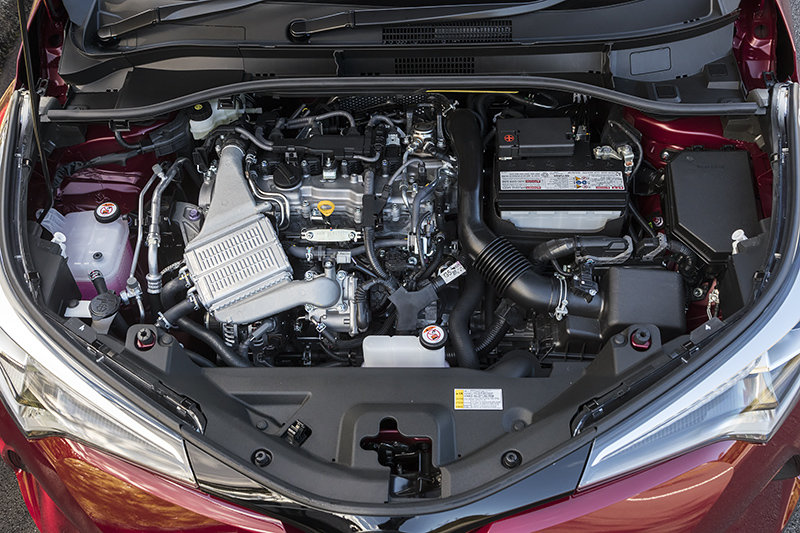
The plan is for a hybrid model with a 1.8-liter engine (a 1.2-liter option was also mentioned) making up to 98 horsepower, plus an electric motor rated at 72 horsepower. The turbocharged version of the new Toyota has a 116-horsepower engine and 185 Nm (136 lb-ft) of torque.
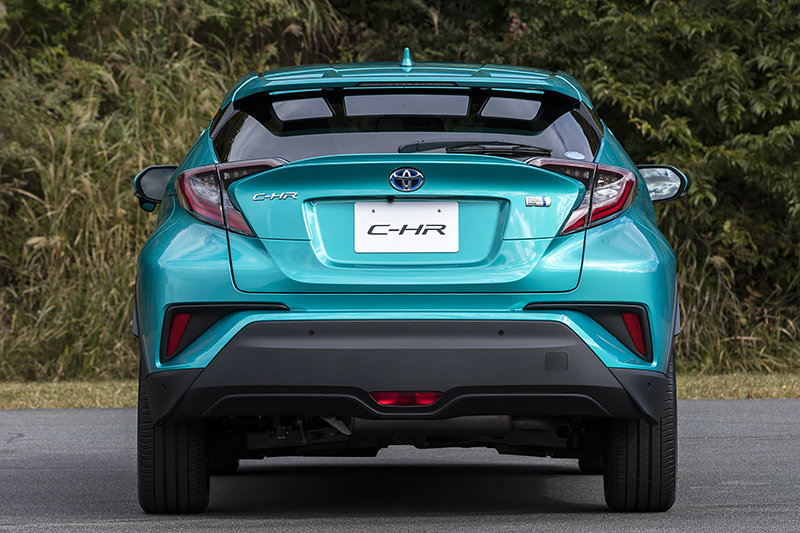
The hybrids will come in G and S trims, while models with a conventional engine are offered as G-T and S-T. Safety features are especially well thought out. Even the base version has the Safety Sense system and six airbags, and if you go for the G or G-T trim, you also get blind-spot monitoring and a special technology that alerts the driver to obstacles behind the car.
A look at the Toyota C-HR hybrid in G trim
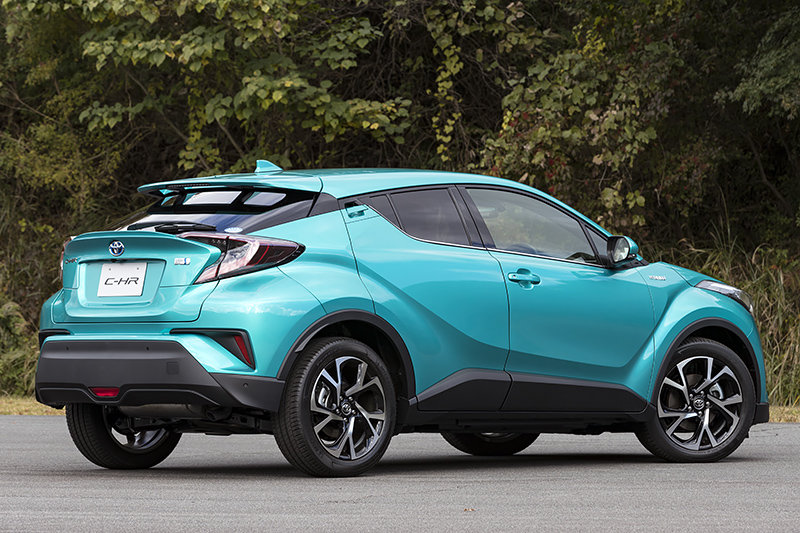
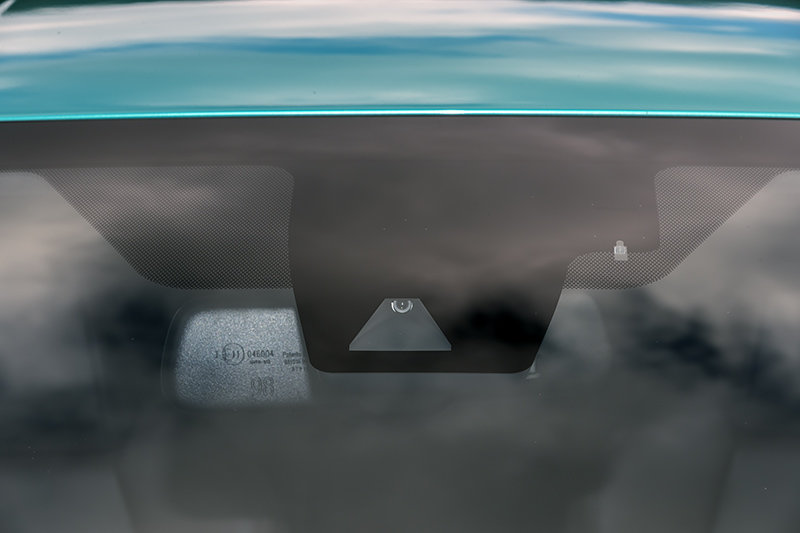
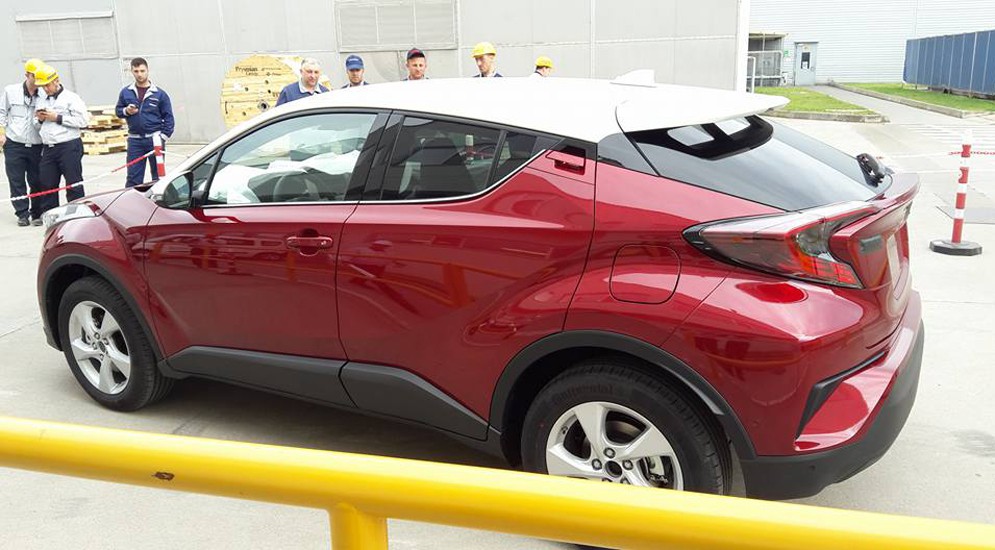
The car is equipped with Safety Sense, which uses a compact camera and a sensitive radar. The rear lights and mirrors have fins with a special aerodynamic design. The unusual design of the projector-type halogen headlights is memorable. Interestingly, the rear door handle is placed at the top of the right-hand corner of the door rather than in the usual spot.
Powertrain
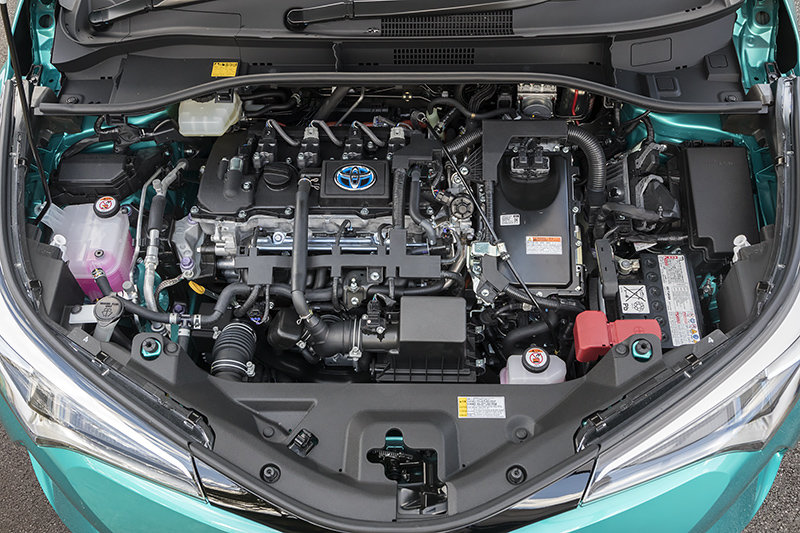
The hybrid model has a 1.8-liter engine making 98 horsepower and 141 Nm (104 lb-ft) of torque. The electric motor is slightly more modest in power, at 72 horsepower, but it produces 163 Nm (120 lb-ft) of torque. Tailpipe emissions are 35 percent below the European standard. Environmental friendliness is not the least of the reasons to buy, especially combined with low fuel consumption. The gasoline SUV uses just 5.7 liters per 100 km (about 41 mpg US), and the hybrid uses even less, at 3.7 liters per 100 km (about 63 mpg US).
Interior
The dashboard of the new Toyota, with its pair of main gauges and plenty of buttons, is carefully thought out down to the smallest details, so the driver gets full comfort behind the wheel. In the hybrid, there is also a power meter. Add a modern multimedia system with a large display, advanced climate control, a rearview camera and the ability to listen to music through six full-size speakers!
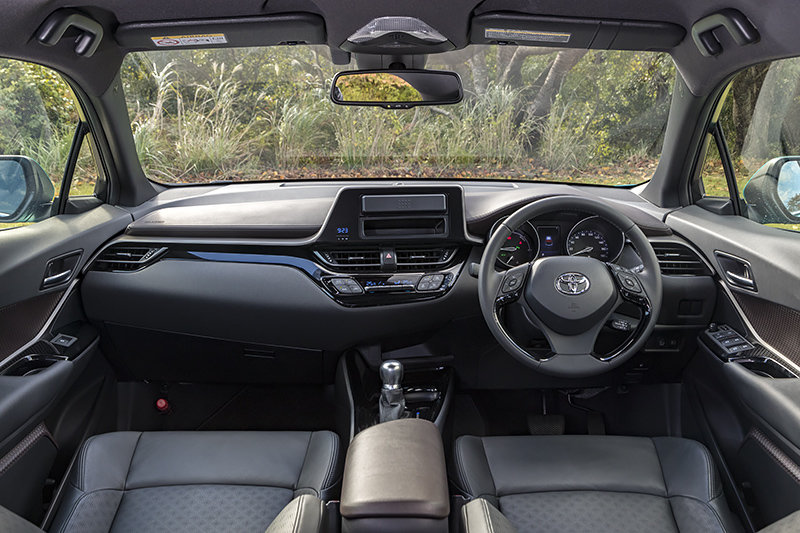
The sport-style leather seats are very comfortable, and the windows have an automatic closing assist when you raise or lower them. Under the new design theme called Sensual Tech, the comfort and refinement of the cabin come together in an ideal new balance.
The gasoline Toyota C-HR in G-T trim
The 1.2-liter turbo engine produces 116 horsepower and 185 Nm (136 lb-ft) of torque. The instrument panel in this version differs little from the hybrid's. The steering wheel gets a new Piano Black finish, and you shift gears with a lever that has an attractive metallic finish. Not every trim offers such luxury, though.Black fabric and leather look great on the G-T seats, and the rear seats fold down, which significantly increases cargo space, since the trunk is not very large to begin with, at 370 liters (13.1 cu ft).
On the road, the driver is assisted by various systems, such as adaptive cruise control, lane departure monitoring, a collision warning system and others, depending on trim.
The gasoline Toyotas will be sold with either a six-speed manual transmission or a CVT, a continuously variable transmission with no fixed gears.
Experts' opinions of the Toyota C-HR
Although the car is not yet officially on sale in volume, the press has already begun to publish favorable reviews from experts in the field.
For example, Japanese automotive expert Koichiro Okamoto noted that the new Toyota C-HR successfully combines traits of a sports car and a city crossover. Reviewers also point out the SUV's distinctive style, its uniqueness and its memorable look.
Attractive lights, a stylish grille and sculpted, voluminous shapes emphasize the car's emotional character. The TNGA platform was first used on the Toyota Prius, from which this newcomer "grew."
The interior is also ideally thought out. The instrument panel works very well and has excellent viewing angles. There isn't a single unnecessary button, yet everything the user needs is there.
Which of the tested cars was quicker?
The hybrid has a 1.8-liter powertrain and a 2WD (front-wheel-drive) layout. The gasoline version has a 1.2-liter turbo engine and 4WD (all-wheel drive). The test cars also differed in wheel size: 18 inches on the hybrid versus 17 inches on the gasoline model.
Naturally, on city roads the hybrid launches and accelerates more quickly. The gasoline-powered Toyota accelerates a bit more slowly, with speed building more smoothly. But it would be wrong to say the hybrid is ahead in everything.
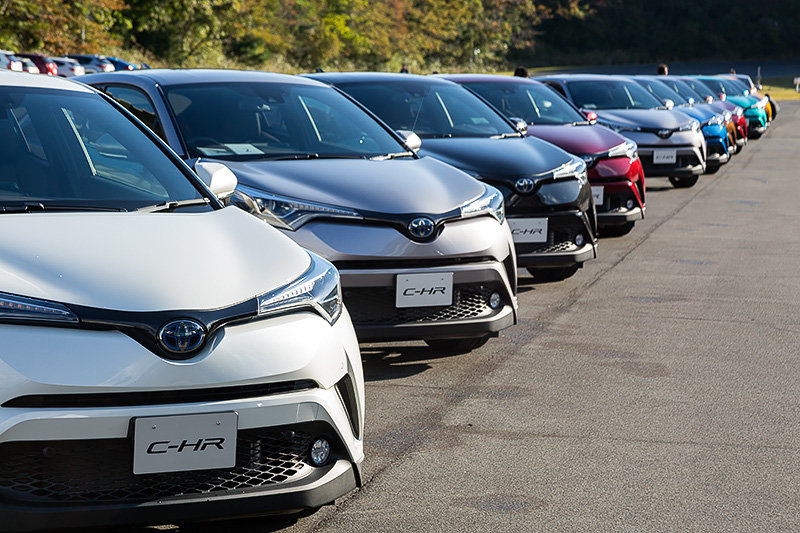
The thing is, while the gasoline C-HR builds speed progressively, the hybrid feels as if it quickly accelerates to its limit. In short, it is too early to draw firm conclusions about which version will outrun the other. It is clear, though, that in acceleration to 100 km/h (62 mph), the hybrid C-HR is about 5% quicker than its gasoline sibling.
The Toyota Prius, which has a similar system, by the way, does not accelerate as smoothly as the hybrid C-HR and responds to the accelerator pedal less well than the newcomer. The likely cause is a lower gear ratio chosen to suit the heavier car and larger wheel radius. But comparing the C-HR hybrid with the Prius again, the 0-100 km/h time of the two models is almost the same.
Like other Toyota hybrids, the new model starts to make a droning sound when accelerating, while the gasoline C-HR is almost silent. But this drawback applies only to driving at top speed on closed tracks. On city roads, both models are equally quiet.
Driving characteristics
The new Toyota C-HR inherited the TNGA architecture first used on the Prius, which guarantees resistance to body twisting.
Toyota's engineers paid maximum attention to the crossover's handling, so the newcomer stands out for excellent controllability. The sporty direction in which this crossover was shaped shows not only in its distinctive looks and sport-style seats, but also in how the car reacts in corners. It feels as if you are driving a full-fledged sports car rather than a compact SUV.
Compared with the Prius, the car responds better to steering input, takes sharp bends with ease and maneuvers without the slightest strain even on very narrow roads.
The suspension also performs superbly, instantly smoothing out bumps and noise even on rocky, uneven roads. This Toyota will surely appeal to drivers who don't like excess but are very demanding about the quality of their car.
The gasoline C-HR is 30 kg (66 lb) heavier than its hybrid sibling. In the hybrid, the traction battery sits at the rear, while in the all-wheel-drive gasoline Toyota that spot holds the unit that transfers drive power to the rear axle. Both versions handle equally easily.
All in all, the new Toyota SUV will make any trip enjoyable. The crossover handles superbly, its well-designed dashboard inspires only positive impressions, and its specifications are on par with any modern competitor.
What next