Car reviews
Volkswagen Atlas (Teramont) Review: A Big Family SUV Driven
Autopapyrus
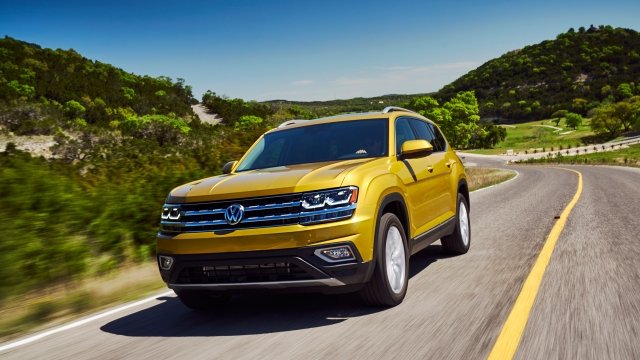
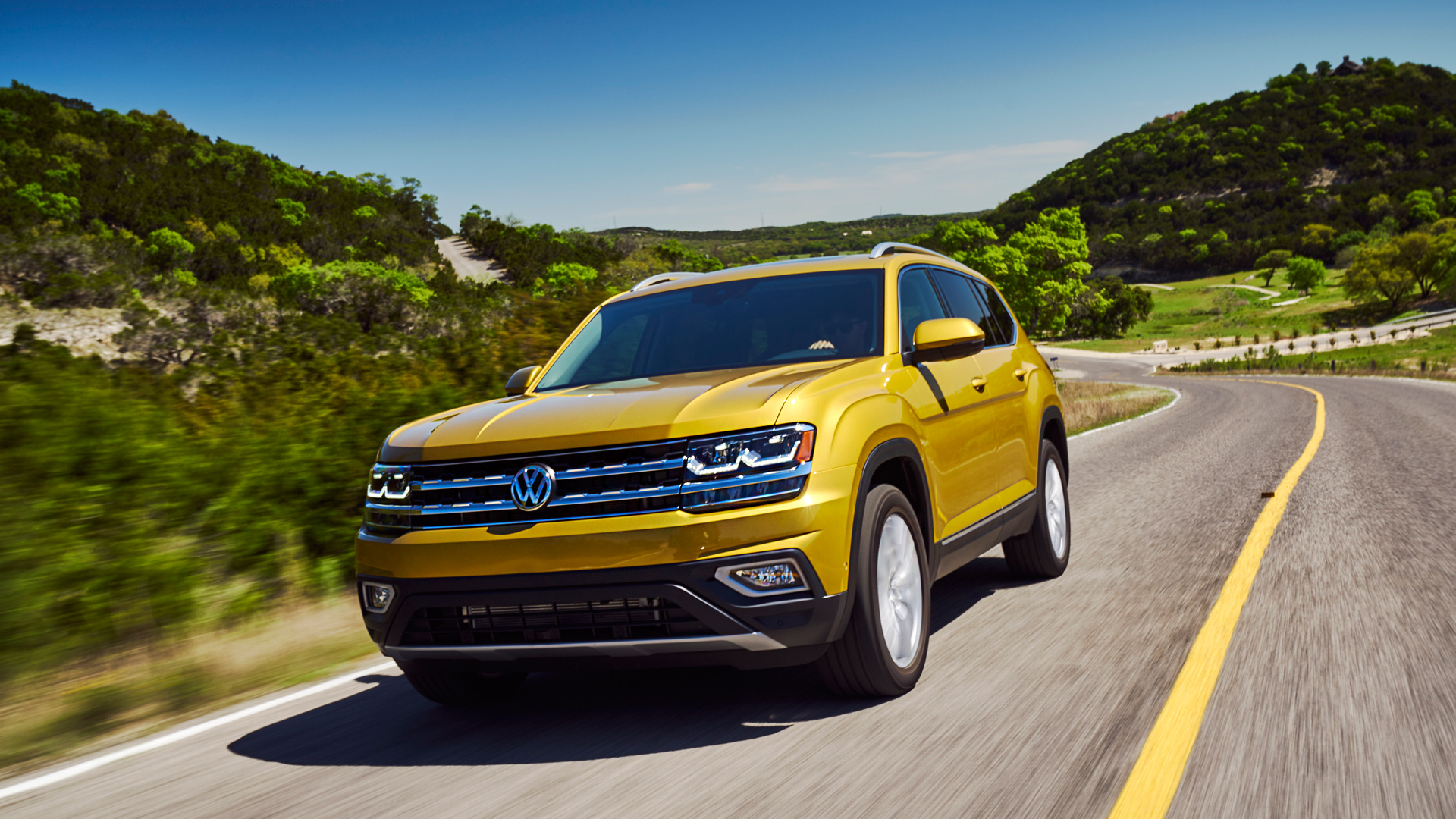
Clearly, Volkswagen is going through a rough patch. Its crossovers are slowly losing ground, and sales are falling short of the manufacturer's expectations and trail the competition by a wide margin. Consider this: the Ford Explorer sells dozens of times better than the Volkswagen Touareg, 249,000 vehicles versus 4,200. The new Volkswagen Atlas (Teramont) is meant to change the situation radically. VW put real effort into it and learned from its previous mistakes. Here are our impressions from behind the wheel of the Volkswagen Teramont. By the way, in America this SUV is called the Atlas, while in other markets it is sold as the VW Teramont. The names differ because in the US, VW wanted to set the new model apart from its existing lineup of models with names starting with "T" (Touareg, Tiguan).
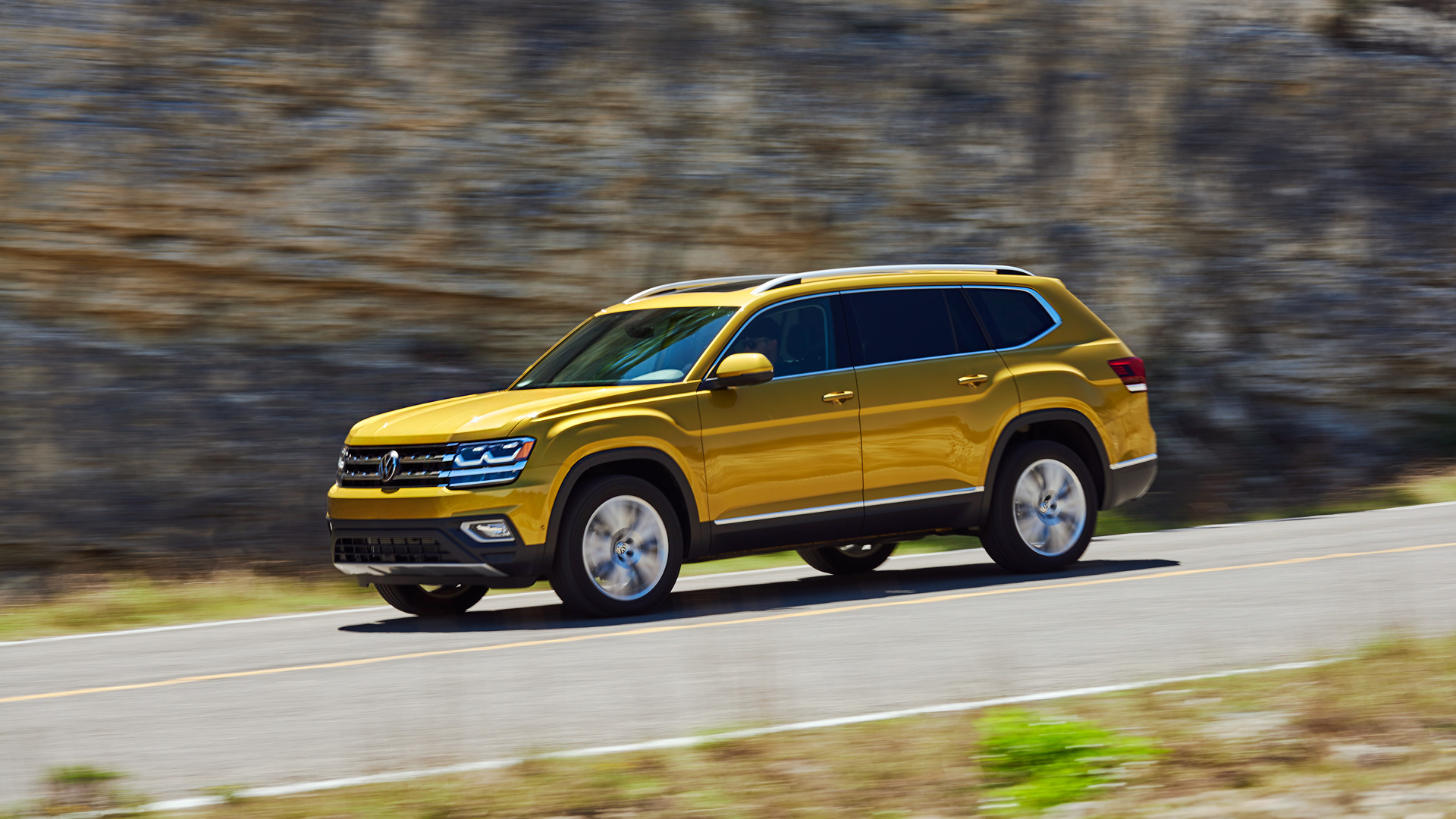
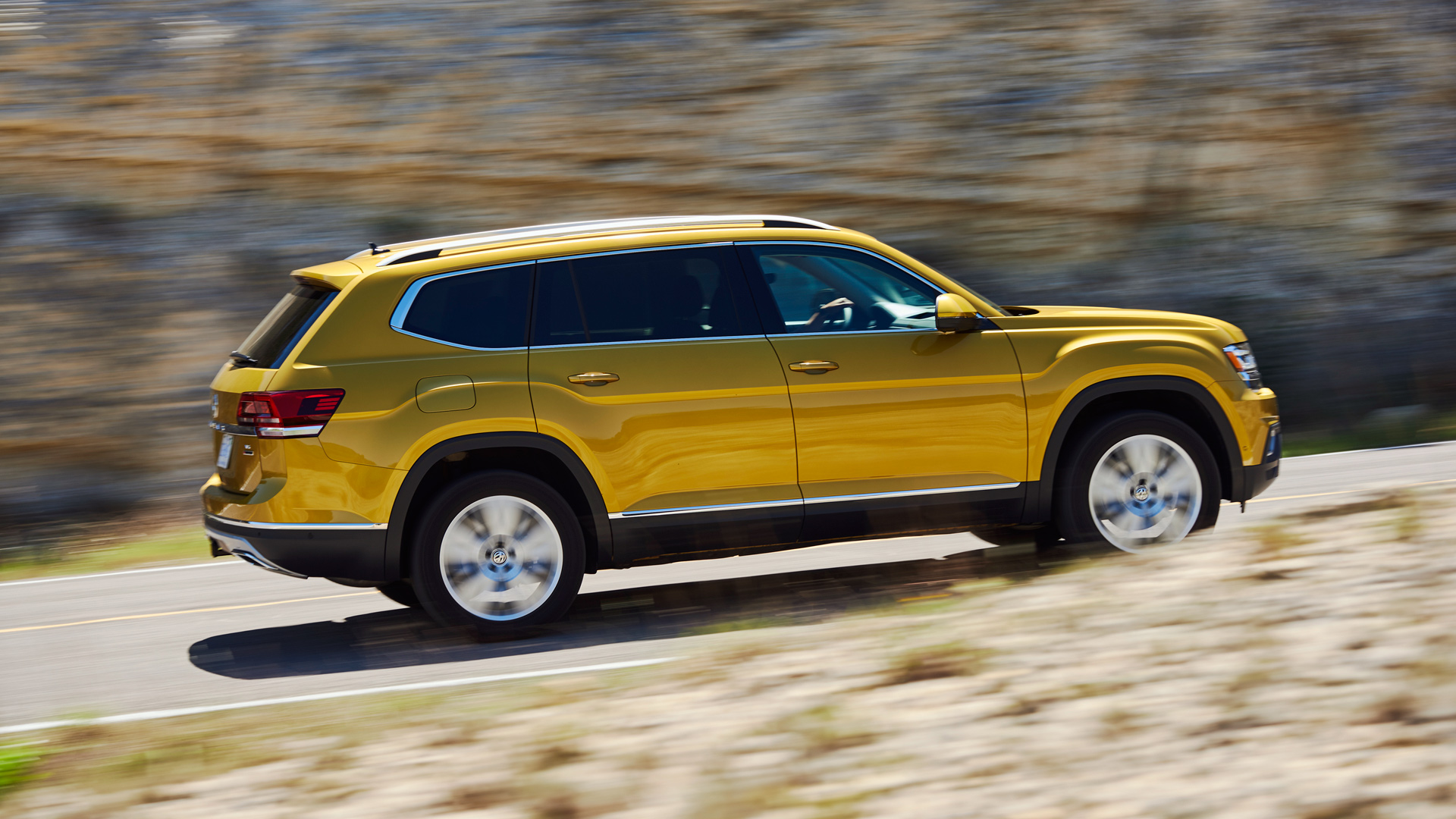
We tested the brightest color from the Teramont palette. The wine color is also attractive, while the gray, white and black options look rather dull.
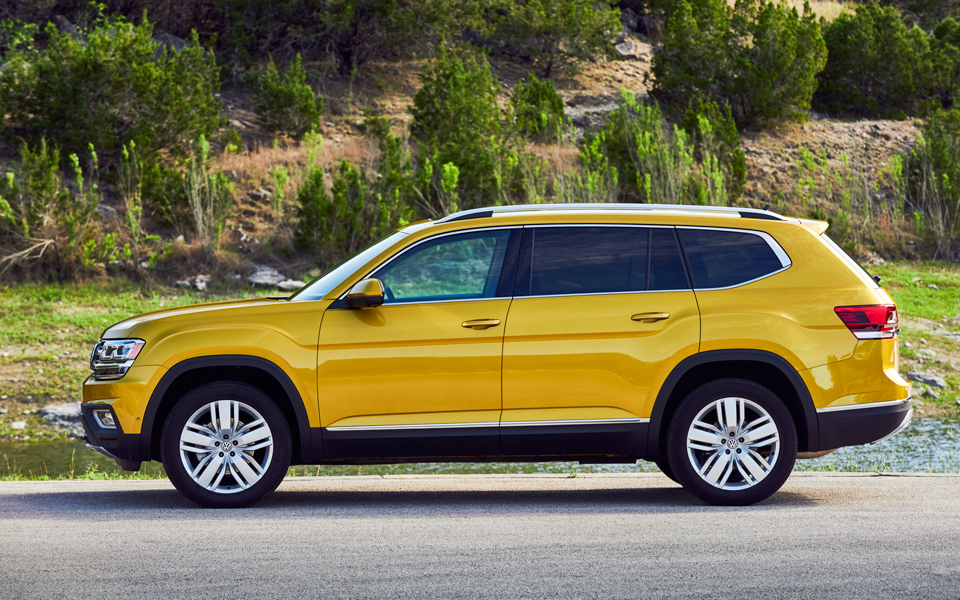
So what is the Volkswagen Atlas/Teramont like? First of all, its sheer size is impressive. It is the largest of all current Volkswagens. You could say the Teramont is a distant relative of models like the popular Audi A3 and other Volkswagens of the past decade, such as the Golf and Passat. It shares their underpinnings, but the dimensions are far bigger: a wheelbase of almost three meters (about 9.8 ft) and a length of more than five meters (over 16.4 ft). Even in the base trim the Teramont seats seven. The six-seat version costs more, because you pay extra to replace the second-row bench with two separate captain's chairs. Either way, there is no shortage of space in the rear of the cabin. Compared with a BMW 7 Series, the Teramont clearly has the advantage in interior room.
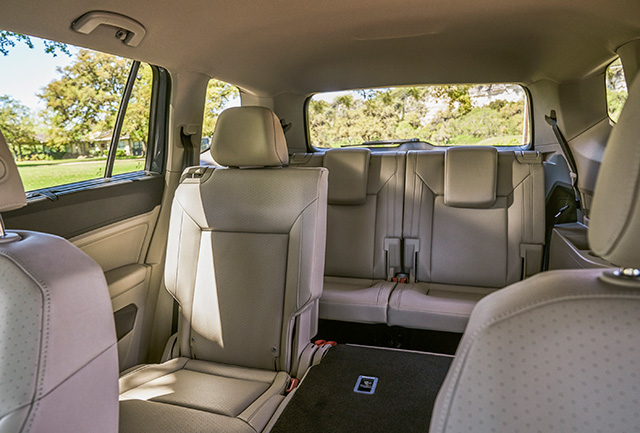
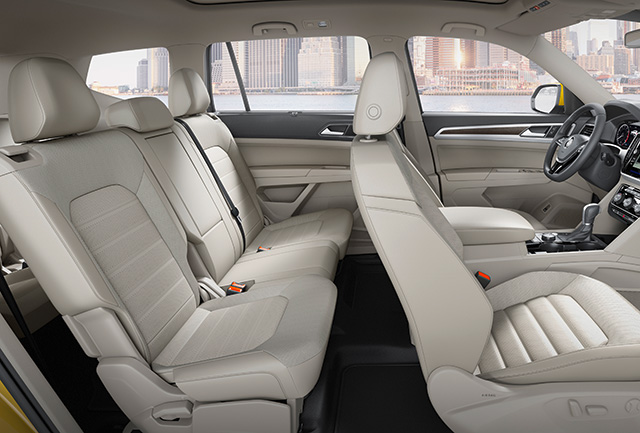
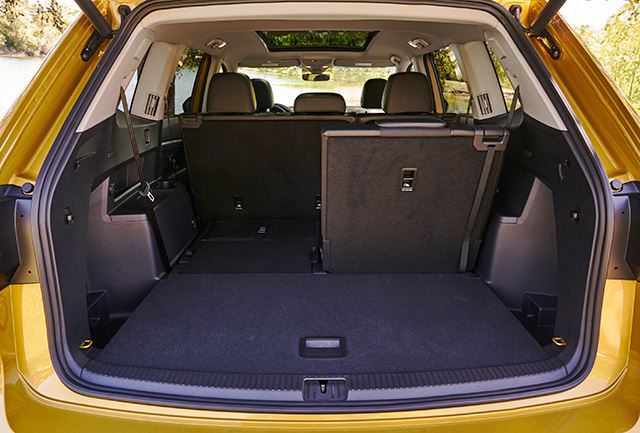
Even tall passengers will be comfortable in the third row. The only flaw is the low seat height, but an hour or two on the road is no problem, and kids and teens will have plenty of room back there. The cargo area of the seven-seat VW Teramont holds 566 liters (20 cu ft) behind the third row, which is impressive. Fold the rear row down and you get 1,500 liters (53 cu ft) of cargo space, enough that only an elephant wouldn't fit.
The driver and front passenger are well looked after too. The dashboard is done in the recognizable Volkswagen style, with familiar details if you have driven other VW models. As in other Volkswagens and Skodas, the driver faces a touchscreen (6.5 or 8 inches), the steering wheel, a digital instrument cluster whose gauges are not physical but "virtual", shown on a 12-inch display, and the climate control panel.
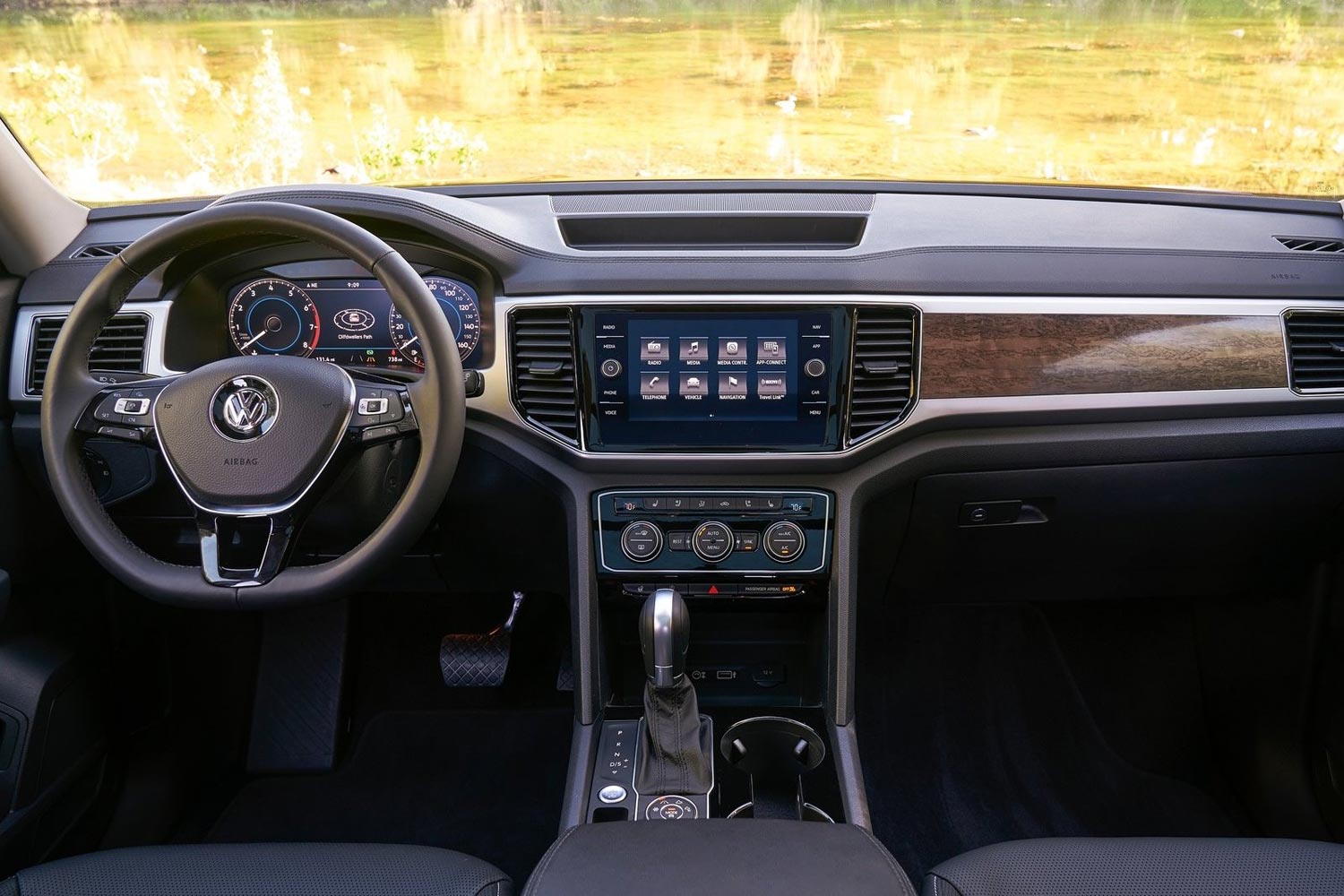
Some details clearly give away the Teramont's American roots. The top of the dashboard and the door panels imitate leather stitching (though they are soft-touch plastic), while the lower areas use hard, hollow-sounding materials. Still, the cars built in Tennessee did well in testing, which is reassuring.
Outside the US, the Teramont is offered with all-wheel drive based on a multi-plate clutch on the rear axle, with a choice of engines: 2.0 or 3.6 liters.
The transmission is an eight-speed automatic, paired with a passive (non-adaptive) suspension, on all markets except China, where the Teramont is positioned as a luxury model with more interesting specifications, including a powerful 2.5-liter turbo engine.
It was this passive suspension that bothered us most during our test drive on Texas roads. The steering is beyond criticism, since the Teramont is descended from the platform of the iconic VW Golf and VW Passat. The wheel responds well and has the right feel. If it seems too light, just select Sport mode, and the onboard electronics will firm up the steering and quicken the throttle response.
In general, the huge size of the car is barely noticeable when driving. Body roll is hardly perceptible, and the steering responds quickly and smoothly. Even at top speed, the Volkswagen Teramont stays composed and under control.
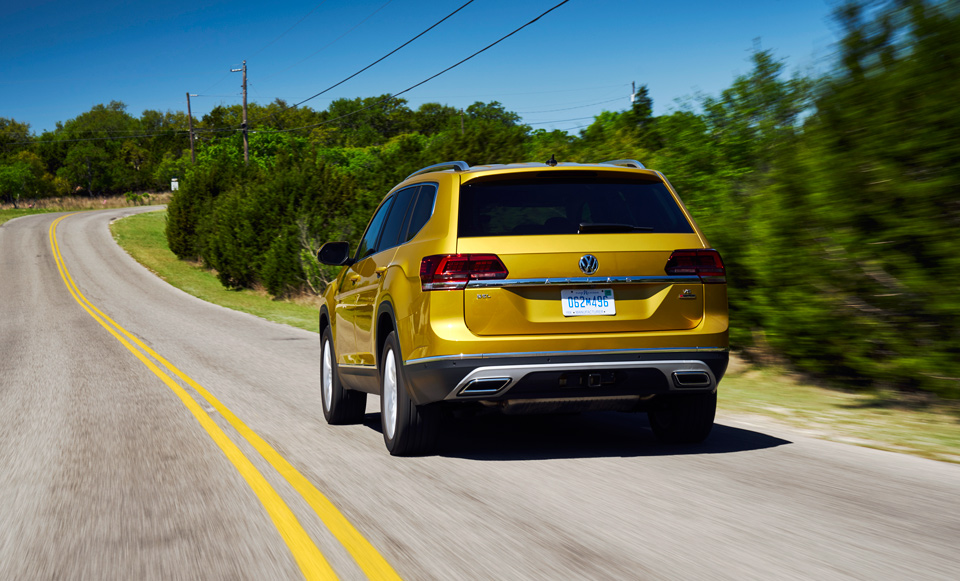
The main shortcomings concern ride comfort. On smooth pavement the ride is quiet and soft, but on rough roads you hear tire noise in the cabin. The passive suspension gives the ride good control over big bumps and humps, but over small bumps and expansion joints it becomes too harsh.
Overall, the plump 18-inch tires on the base trim work well with the suspension, and small road flaws barely affect ride comfort. The 20-inch 255/50 R20 wheels, on the other hand, improve the Volkswagen's handling, but they immediately expose the mediocre damping. So we won't draw firm conclusions about how well the Teramont suits rough roads.
It is also unclear how the all-wheel-drive crossover with the 2.0-liter turbo engine will perform. The US test used only models with the six-cylinder naturally aspirated engine. It is a good one, and the Touareg uses similar, though less powerful, units. These engines are very quiet, deliver smooth power and, importantly, are not too thirsty: consumption is under 12 liters per 100 km (more than 19.6 mpg US).
How popular the six-cylinder will be is hard to say. The 2.0-liter turbo with all-wheel drive is just as economical and smooth, offers higher torque, and is good enough to rival the bigger engine.
It is also hard to say anything definite about diesel versions. In the US, diesel Volkswagens are understandably not welcome, though VW representatives in some markets have not ruled out adding diesel variants a bit later.
The biggest Volkswagen is competitive: good-looking and roomy, with all-wheel drive and the latest technology. Add a brand with a proven track record. It is an ideal choice for a family crossover at a reasonably affordable price. Sales figures will show how closely the tastes and needs of drivers elsewhere match those of Americans.
What next