Car reviews
Peugeot 5008 Second-Generation Review
Autopapyrus
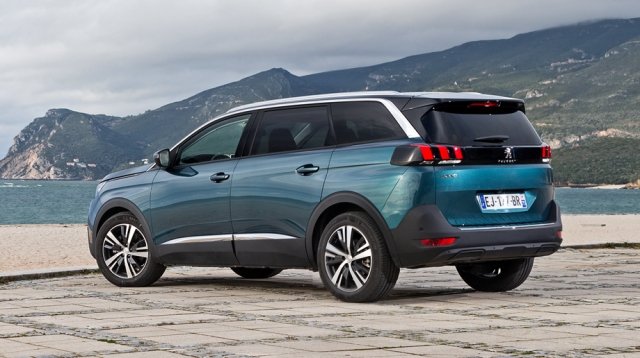
The Peugeot 5008 crossover: don't mix up the numbers!
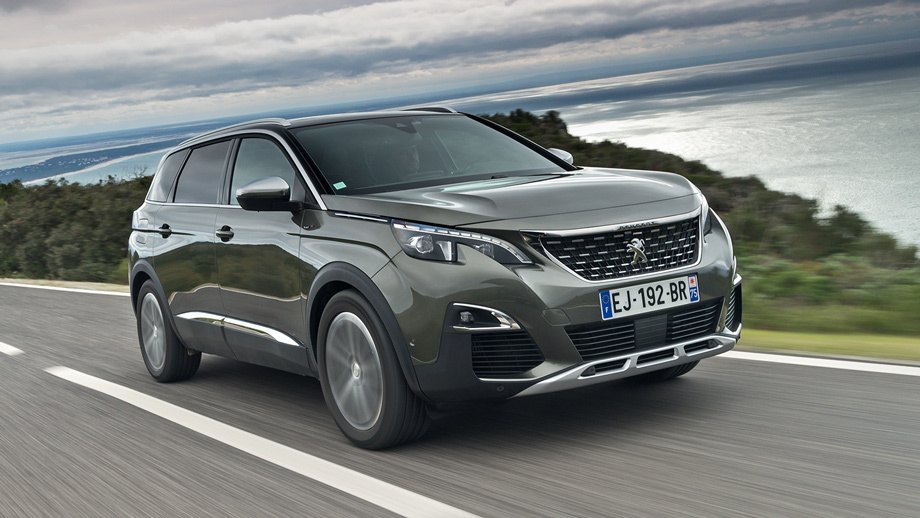
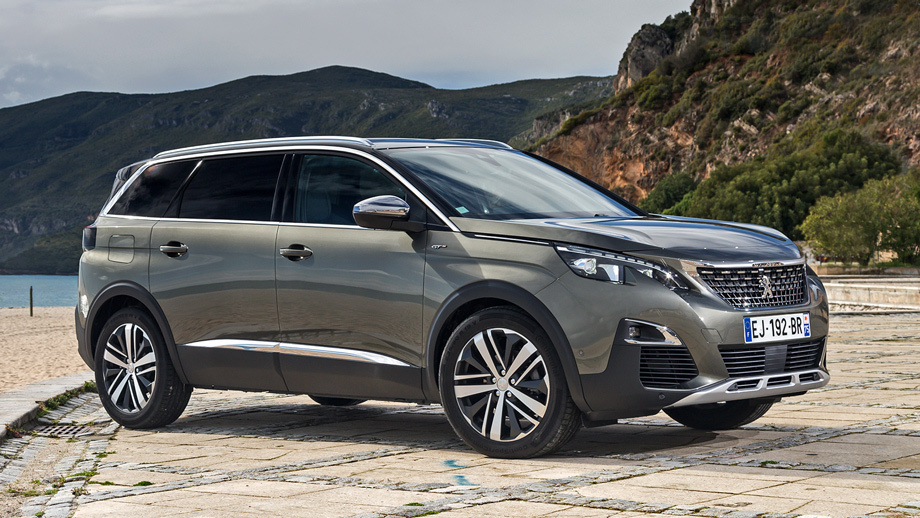
Peugeot's "double-zero" models, the 3008, 4008 and 5008, look so much alike that it's easy to mix them up. The main difference is the wheelbase, which grows from one model to the next. That makes the 5008 the largest in the lineup: 4,641 mm (182.7 in) long, with a 2,840 mm (111.8 in) wheelbase versus 2,675 mm (105.3 in) for the 3008.
The Peugeot 3008 is often described as a halfway point between a minivan and a crossover, and the 5008 also evolved from a monospace, a one-box body that combines the passenger, cargo and engine compartments in a single volume.
Peugeot did everything it could to stress how special its new model is, and it played skillfully with the numbers. There's a distinctive ratio of body length to cargo volume, and of length to wheelbase, and the ground clearance is officially listed at 23 centimeters (9.1 in). In practice it's only about 16 centimeters (6.3 in). The manufacturer stands its ground, saying the measurement was taken under the sills, and that every automaker chooses its own way of measuring.
The Peugeot 5008 is designed for the global market. It will be built not only at the Citroën plant in France but also at a Chinese factory in Chengdu, a picturesque and densely populated city.
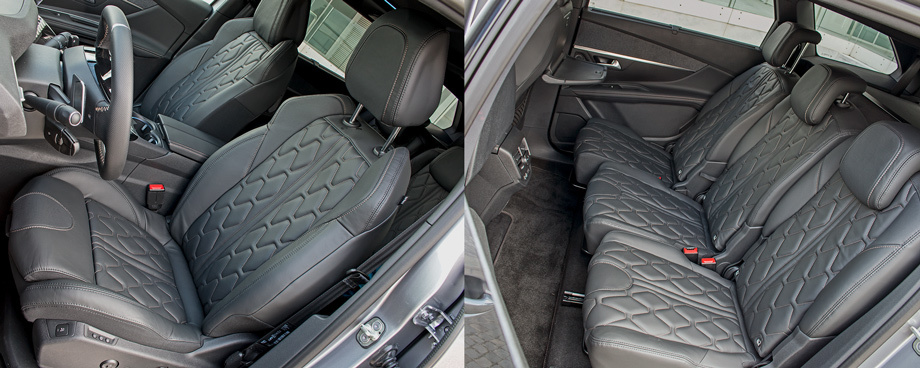
This crossover was never planned with all-wheel drive. There is not even a tunnel in the floor for a driveshaft, the kind you usually feel with your feet in the back seat, so you won't find one here in the future either. As a result, the cabin floor is perfectly flat and there's no shortage of space. Where the 3008 had a standard one-piece rear bench, the 5008 has three individual seats that slide, recline and fold as you like. If you move these seats forward a little or fold them, it's easy to climb into the third-row seats, which rise up out of the cargo floor.
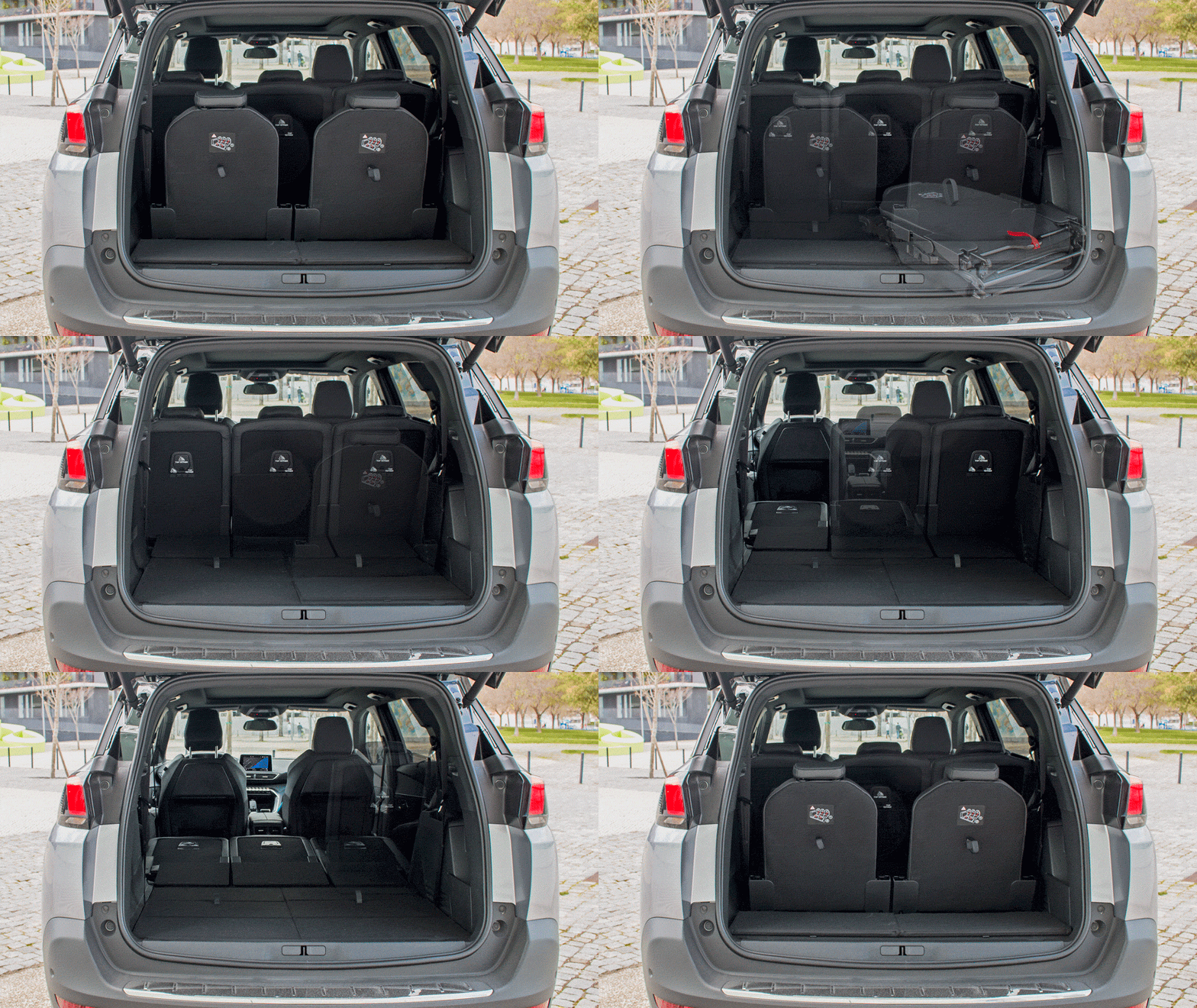
The Peugeot 5008's cargo area can hold up to 780 liters (27.5 cu ft) of luggage, which is a lot. The main thing is not to make a mistake when folding the third-row seats back down. It's best to check the owner's manual to secure everything properly, otherwise the straps won't give, no matter how hard you tug. Take care when removing the third-row seats from the crossover too, so the seat doesn't unfold at the worst possible moment. Here again, the manual will help.
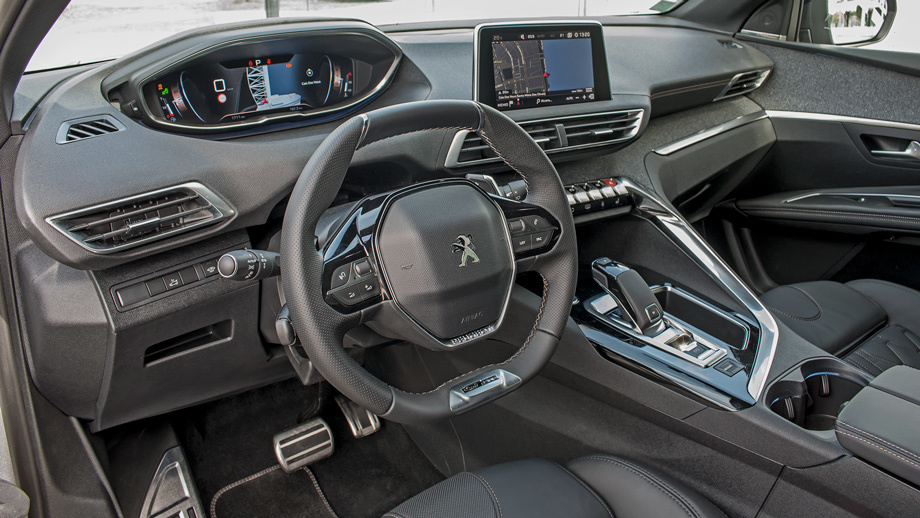
The driver's area is especially well thought out, and it really is top-notch with no complaints. As soon as you buckle up, any shortcomings in the cabin's transformability are quickly forgotten! You get a small, hexagonal steering wheel and stylishly placed gauges above it, and you can pick the color scheme and theme of the display from two presets. After the engine starts, the central display is rather slow to "wake up," but then it works flawlessly. The controls are easy to get used to and the ergonomics are good. The only thing that might cause some trouble is adjusting the climate control settings.
The Peugeot 5008 uses a quite decent six-speed Aisin automatic transmission, which works well with any engine. Take the 1.6-liter turbocharged gasoline engine with 165 horsepower, for example. It picks up speed confidently, responds well to the throttle and runs quietly. The 1.2-liter turbocharged PureTech engine with 130 horsepower gives almost as pleasant a result.
Another option is the pairing of the 5008 with the DW10FC diesel, which makes 180 horsepower in this crossover. However, this powerful engine is the noisiest of the lot and doesn't mesh very well with the transmission. It jerks during shifts and hesitates in transitional modes. In general, the 5008 doesn't invite you to push this engine to its limit, because the model has a stiffer chassis, and with 19-inch wheels, hurrying along uneven dirt roads feels uncomfortable.
The ride is softer with the 1.6-liter gasoline engine and 18-inch tires. The chassis smooths out rough pavement, but on a broken dirt track you can hear thumps from the wheels. The shock absorbers will most likely be fine, but you'll still find yourself slowing down to protect your car.
The Peugeot 5008 comes with different suspension setups depending on the engine. The softest is meant for the 1.2-liter engines, the second, firmer one is for the 1.6-liter gasoline or diesel engines, and the stiffest is for crossovers with the 2.0-liter diesel.
The handling of the Peugeot 5008 is rather contradictory. The car reacts quickly and smoothly to inputs on the small steering wheel, but the rear axle with its semi-independent torsion beam can be felt tightening up in fast corners. Steering effort is light and there's no noticeable body roll. Behind the wheel, you may get the feeling that the drive isn't quite real, as if you were playing a computer game rather than traveling in a big car on a real road. Still, there is always feedback from the car that brings you back to reality.
As for off-road driving, the Peugeot 5008 handles firm ground well, but a soggy, rutted track can become a serious obstacle. Even the Grip Control function, which selectively brakes the wheels, doesn't always help. It's good to see that the French manufacturer has promised steel engine protection for some markets, which means some obstacles can be crossed under momentum. Other extras include a heated windshield, a pre-start heater for the diesel version, and a larger washer fluid reservoir.
Overall, the Peugeot 5008 may not be doomed to success, but it can certainly hope for it. Since last autumn, 80,000 units of the 3008 have been sold, and at home it is recognized as the segment leader. Sales of the Chinese version of the 4008 have also far exceeded the plan.
Without all-wheel drive it's unlikely to become a hit, since rivals like the Nissan X-Trail and Toyota RAV4 are hot on its heels. But you can truly fall in love with the Peugeot 5008 once you get behind the wheel. That is a far better reason to buy a crossover than the contrived ground clearance figures the manufacturer boasts about.
Peugeot's "double-zero" models, the 3008, 4008 and 5008, look so much alike that it's easy to mix them up. The main difference is the wheelbase, which grows from one model to the next. That makes the 5008 the largest in the lineup: 4,641 mm (182.7 in) long, with a 2,840 mm (111.8 in) wheelbase versus 2,675 mm (105.3 in) for the 3008.
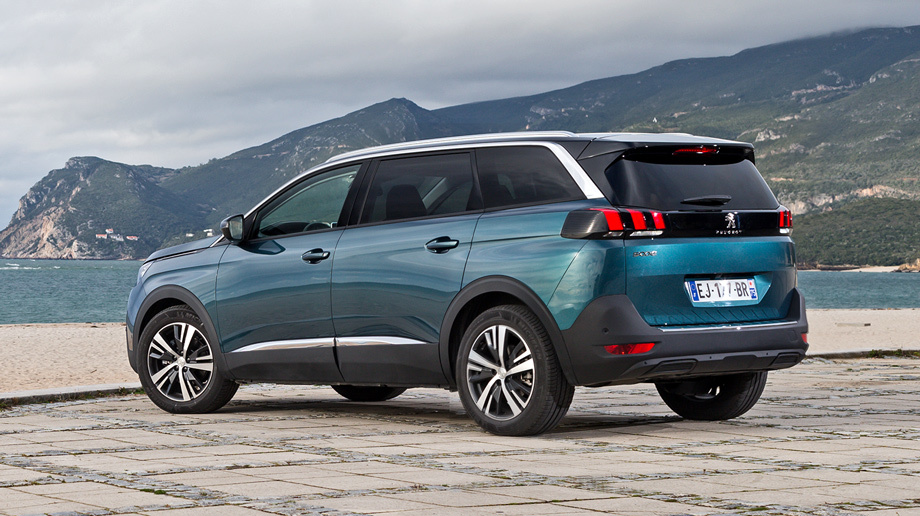
The Peugeot 3008 is often described as a halfway point between a minivan and a crossover, and the 5008 also evolved from a monospace, a one-box body that combines the passenger, cargo and engine compartments in a single volume.
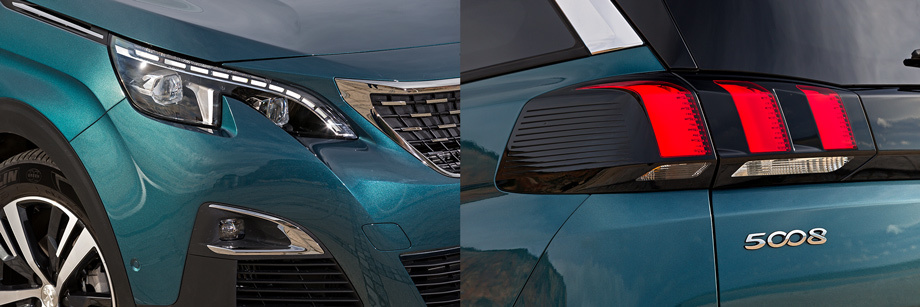
Peugeot did everything it could to stress how special its new model is, and it played skillfully with the numbers. There's a distinctive ratio of body length to cargo volume, and of length to wheelbase, and the ground clearance is officially listed at 23 centimeters (9.1 in). In practice it's only about 16 centimeters (6.3 in). The manufacturer stands its ground, saying the measurement was taken under the sills, and that every automaker chooses its own way of measuring.
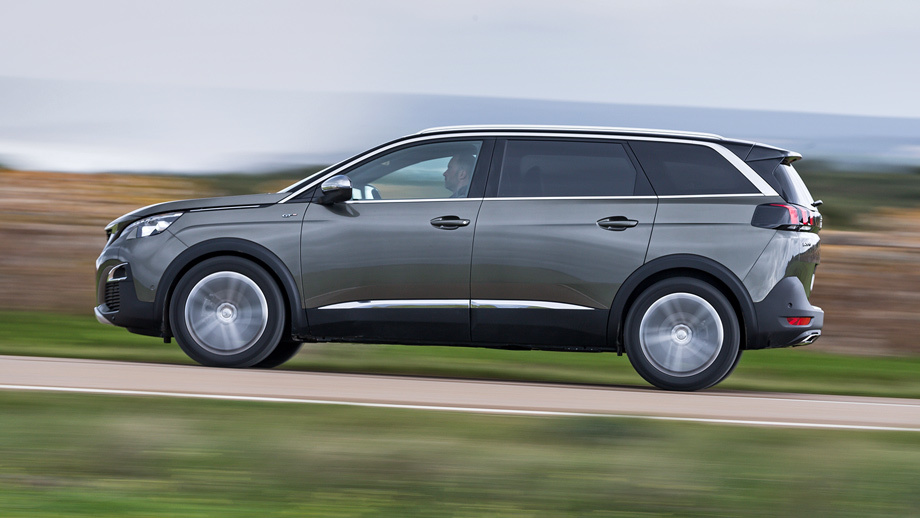
The Peugeot 5008 is designed for the global market. It will be built not only at the Citroën plant in France but also at a Chinese factory in Chengdu, a picturesque and densely populated city.
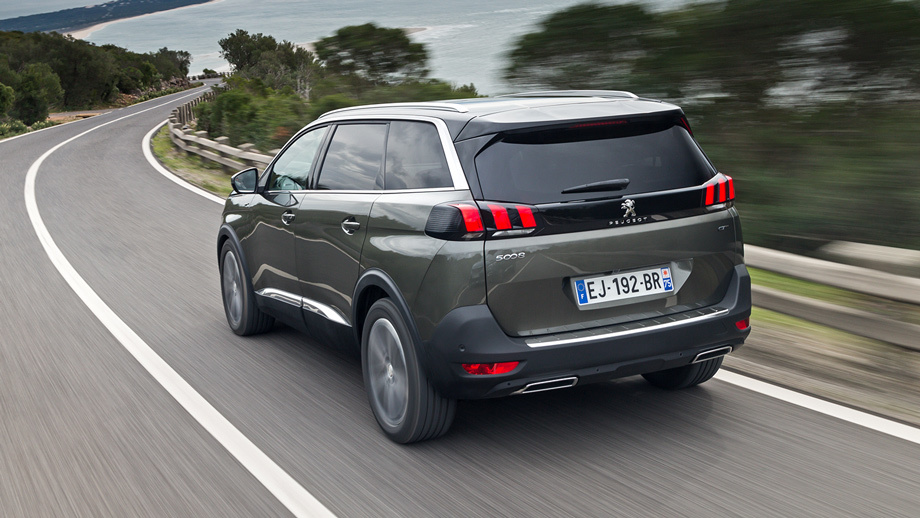
This crossover was never planned with all-wheel drive. There is not even a tunnel in the floor for a driveshaft, the kind you usually feel with your feet in the back seat, so you won't find one here in the future either. As a result, the cabin floor is perfectly flat and there's no shortage of space. Where the 3008 had a standard one-piece rear bench, the 5008 has three individual seats that slide, recline and fold as you like. If you move these seats forward a little or fold them, it's easy to climb into the third-row seats, which rise up out of the cargo floor.
The Peugeot 5008's cargo area can hold up to 780 liters (27.5 cu ft) of luggage, which is a lot. The main thing is not to make a mistake when folding the third-row seats back down. It's best to check the owner's manual to secure everything properly, otherwise the straps won't give, no matter how hard you tug. Take care when removing the third-row seats from the crossover too, so the seat doesn't unfold at the worst possible moment. Here again, the manual will help.
The driver's area is especially well thought out, and it really is top-notch with no complaints. As soon as you buckle up, any shortcomings in the cabin's transformability are quickly forgotten! You get a small, hexagonal steering wheel and stylishly placed gauges above it, and you can pick the color scheme and theme of the display from two presets. After the engine starts, the central display is rather slow to "wake up," but then it works flawlessly. The controls are easy to get used to and the ergonomics are good. The only thing that might cause some trouble is adjusting the climate control settings.
The Peugeot 5008 uses a quite decent six-speed Aisin automatic transmission, which works well with any engine. Take the 1.6-liter turbocharged gasoline engine with 165 horsepower, for example. It picks up speed confidently, responds well to the throttle and runs quietly. The 1.2-liter turbocharged PureTech engine with 130 horsepower gives almost as pleasant a result.
Another option is the pairing of the 5008 with the DW10FC diesel, which makes 180 horsepower in this crossover. However, this powerful engine is the noisiest of the lot and doesn't mesh very well with the transmission. It jerks during shifts and hesitates in transitional modes. In general, the 5008 doesn't invite you to push this engine to its limit, because the model has a stiffer chassis, and with 19-inch wheels, hurrying along uneven dirt roads feels uncomfortable.
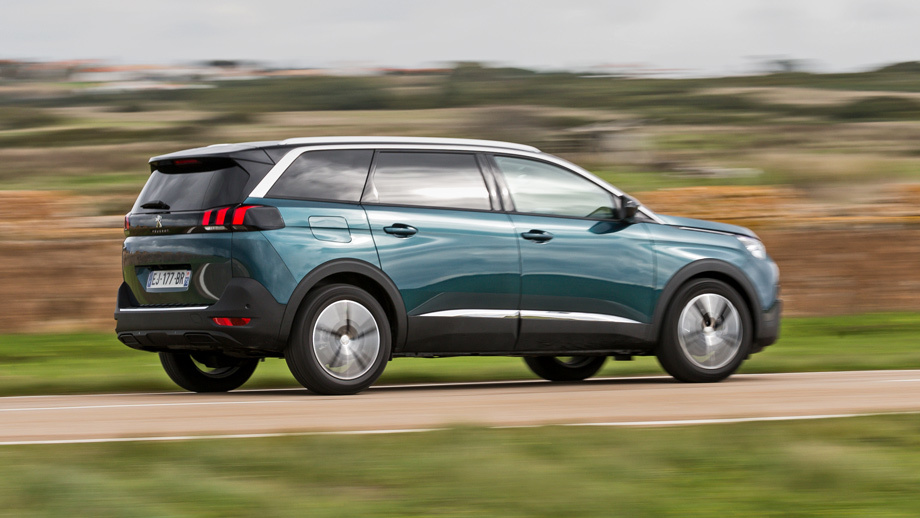
The ride is softer with the 1.6-liter gasoline engine and 18-inch tires. The chassis smooths out rough pavement, but on a broken dirt track you can hear thumps from the wheels. The shock absorbers will most likely be fine, but you'll still find yourself slowing down to protect your car.
The Peugeot 5008 comes with different suspension setups depending on the engine. The softest is meant for the 1.2-liter engines, the second, firmer one is for the 1.6-liter gasoline or diesel engines, and the stiffest is for crossovers with the 2.0-liter diesel.
The handling of the Peugeot 5008 is rather contradictory. The car reacts quickly and smoothly to inputs on the small steering wheel, but the rear axle with its semi-independent torsion beam can be felt tightening up in fast corners. Steering effort is light and there's no noticeable body roll. Behind the wheel, you may get the feeling that the drive isn't quite real, as if you were playing a computer game rather than traveling in a big car on a real road. Still, there is always feedback from the car that brings you back to reality.
Overall, the Peugeot 5008 may not be doomed to success, but it can certainly hope for it. Since last autumn, 80,000 units of the 3008 have been sold, and at home it is recognized as the segment leader. Sales of the Chinese version of the 4008 have also far exceeded the plan.
Without all-wheel drive it's unlikely to become a hit, since rivals like the Nissan X-Trail and Toyota RAV4 are hot on its heels. But you can truly fall in love with the Peugeot 5008 once you get behind the wheel. That is a far better reason to buy a crossover than the contrived ground clearance figures the manufacturer boasts about.
What next