Car reviews
Jaguar F-Pace: In-Depth Review
Autopapyrus
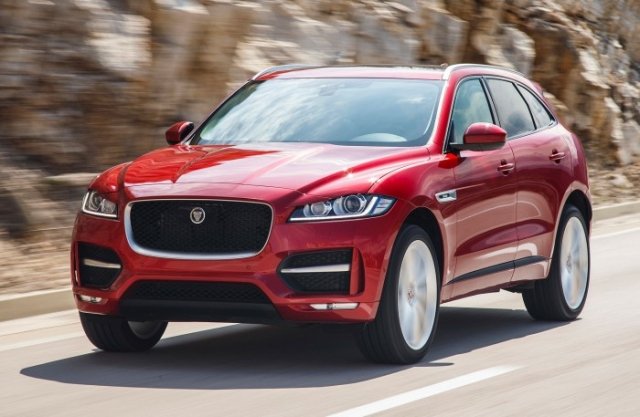
The first crossover in Jaguar's history is called the F-Pace. It features an aluminum body, a first in its segment, and a powerful lineup of engines. But the person who took on explaining the technical details and styling of the new model during the test drive in Montenegro wasn't an engineer, as you might expect, but designer Julian Thomson.

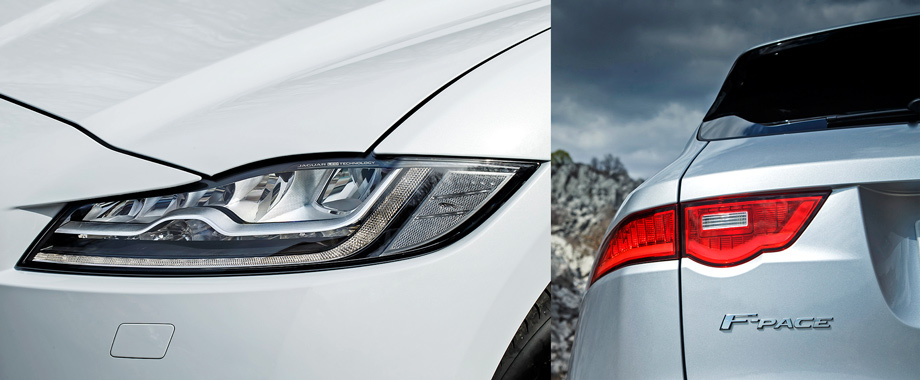
He points to the excellent proportions of Jaguar's debut crossover and its elongated, predatory headlights, which first appeared on the flamboyant F-Type. One look at the Jaguar F-Pace is enough to see that it's one of the most luxurious and striking-looking crossovers around. It's boldly beautiful, and people will buy it for that reason alone.
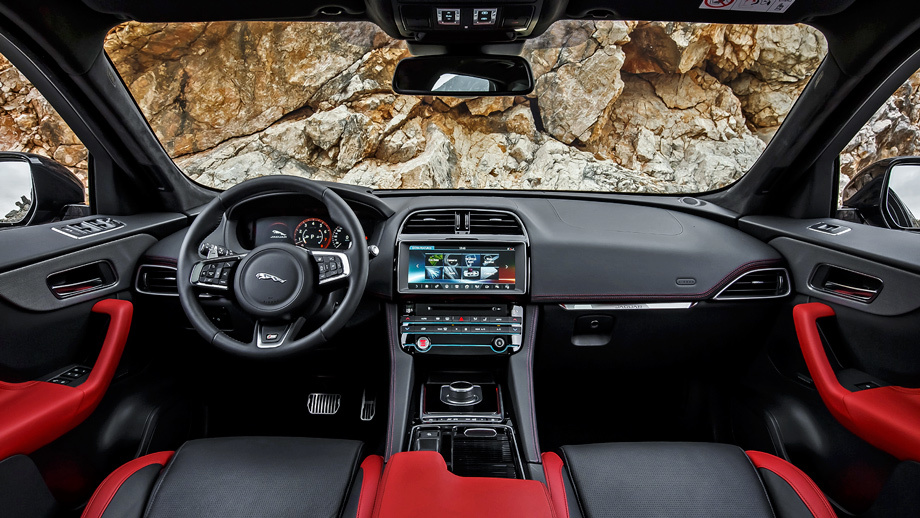
The front of the cabin follows the design of the XE, but this time without the awkward black trim strip that sat on the windshield and masked the line of the hood. The dash, which didn't quite suit the XE's body, was probably developed specifically for the F-Pace, which carries much higher sales expectations. Ideally, the F-Pace should become the brand's best seller.
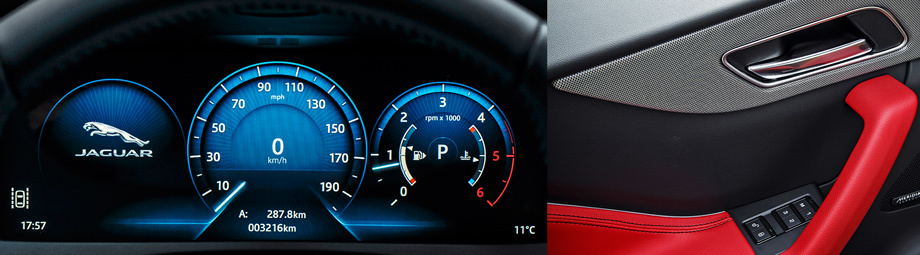
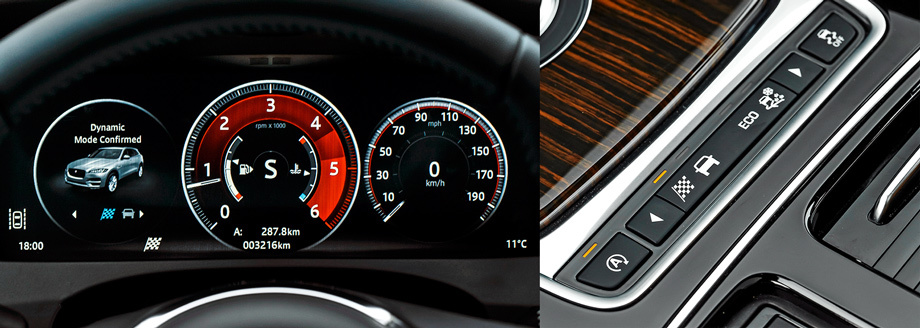
The placement of the buttons on the door panels isn't very convenient: to raise or lower a window, you have to reach down toward the sill. The controls for seat heating and cooling aren't well thought out either. You have to use not only the physical buttons but also figure out the virtual keys on the screen.
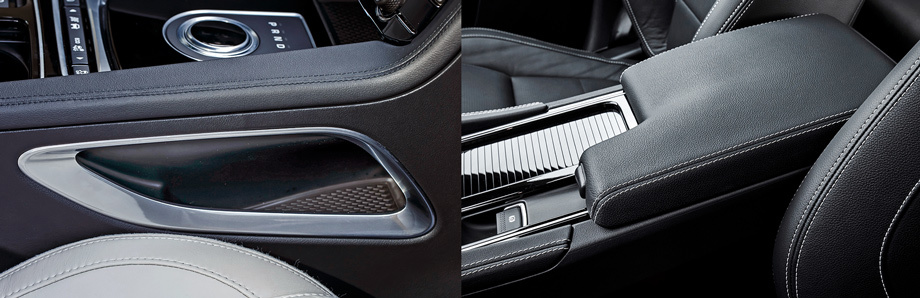
Higher-trim F-Pace versions boast leather seats and a leather-covered dashboard. There is some creaky plastic too, but it's well hidden where you won't touch it. In general, the manufacturer planned a wide choice of versions from the start so you can personalize your Jaguar. You can order the car with different metal and wood trim options, different seat designs and upholstery, and you can also choose the leather and stitching colors. Still, owners of the Porsche Macan or BMW X3 are unlikely to be very impressed, as there are more upscale interiors out there.
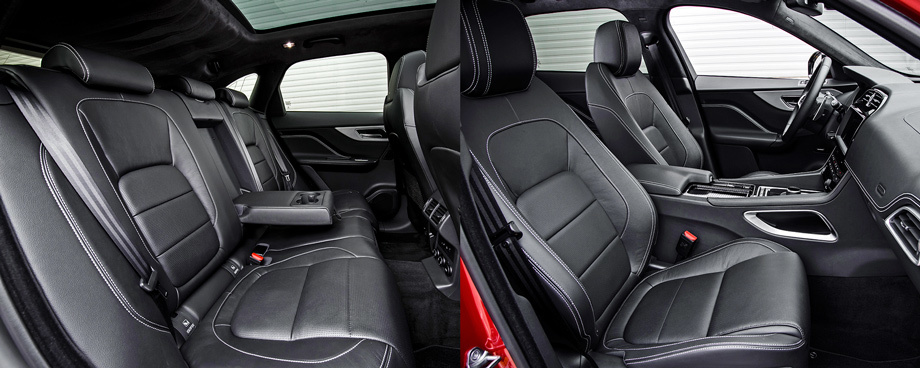
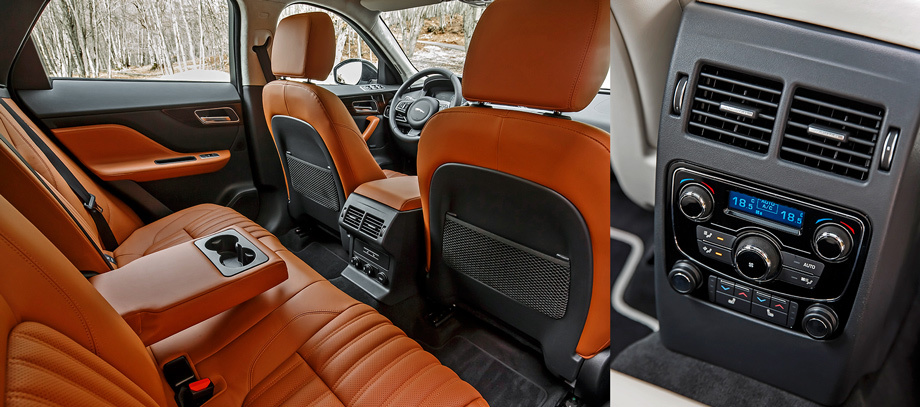
Speaking of competitors: the F-Pace's wheelbase is larger than that of the BMW X3 and Mercedes GLC, but the front and rear rows feel about the same as theirs, roughly one to one. The Porsche Macan, which costs almost as much as the powerful version of our Jaguar, is clearly tighter in the rear of the cabin. The English crossover also beats the Germans in cargo space, with a larger trunk.
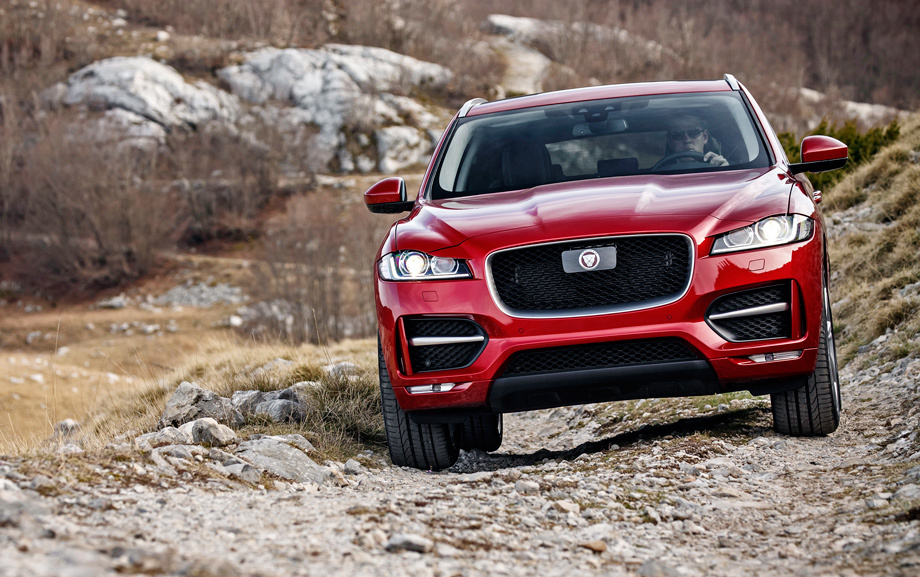
The top F-Pace S is rear-biased and delivers up to 380 horsepower. Interestingly, Jaguars with all-aluminum bodies have often turned out heavier than comparable models that use less of the metal. That doesn't apply to the F-Pace 2.0d with all-wheel drive and an automatic transmission, which came out several dozen kilograms lighter than its rivals (1,775 kg / 3,913 lb). Importantly, this light weight isn't just a number on paper. You can feel it in the airy way the F-Pace moves down the highway, as if the Pirelli P Zero tires put up no resistance to rolling and the oncoming air simply lifts the car along without hindering it.
The 2.0-liter, 180-horsepower turbodiesel is a decent choice for the F-Pace, and the crossover stays quite lively with it. Launches are fairly modest, but once the engine reaches 2,000 rpm, the crossover picks up speed confidently under the control of the eight-speed ZF automatic. In general, this Jag accelerates freely and smoothly across a wide speed range.
An experienced driver will like the F-Pace with the base diesel engine most, as it's the most obedient to drive. Even on mountain roads, the two-liter F-Pace flows along like a bird, responding smoothly and quickly to light steering inputs, with a response that is always precise and soft. As you pick up speed, you feel the car becoming more and more intuitive. The necessary connection with the crossover is there, and it's not hard to get used to the Jaguar's all-wheel drive. The crossover's strongest suit is fast, fluid cornering, which it takes at a blistering pace without ever slipping out of the driver's control.
However, more engine power doesn't change the picture. Get behind the wheel of the version with the 3.0-liter twin-turbo six-cylinder diesel under the hood, and you get aggressive driving and instant acceleration from a standstill. But as soon as you shift gears, this powertrain loses pace, as if it had dropped into turbo lag. It's no accident that the manufacturer quotes a 0-100 km/h (0-62 mph) time of 6.2 seconds, which is actually slower than some heavier competitors.
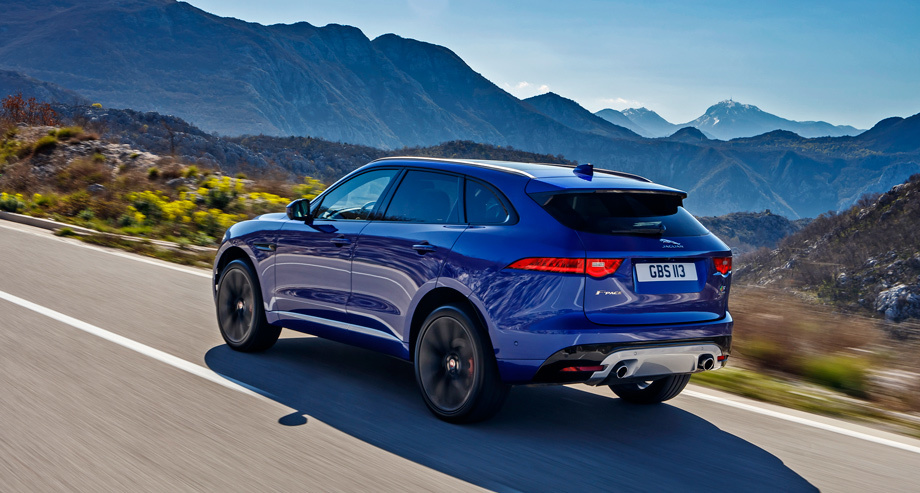
The considerable weight of the TDV6 engine also hurts the chassis. Stability and agility in fast corners and on straight roads are fine, but steering response has become somewhat less sharp.
There's good reason to choose a gasoline F-Pace, the most powerful of which is the V6 3.0 S. This version won't raise any questions for the driver, being comfortable and quick on gentle sweeping bends. The 3.0-liter six-cylinder gasoline engine makes 380 horsepower, so the Jaguar needs just five and a half seconds to reach 100 km/h (62 mph), with top speed limited to 250 km/h (155 mph). It's a whirlwind! The V6 3.0 S leaps off the line so hard it's surprising the asphalt under the wheels doesn't crease. Shift the automatic into a higher gear and enjoy the surge of acceleration. And the phrase about an engine's roar suits the "S" perfectly.
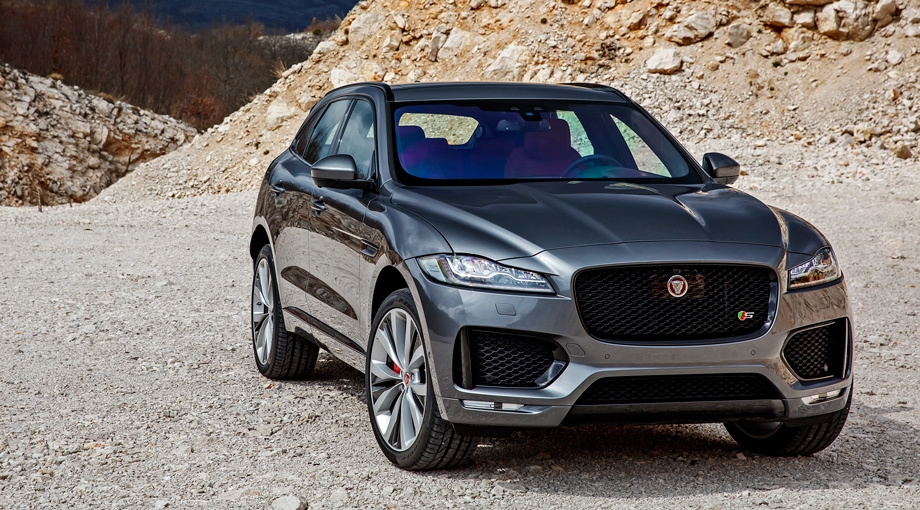
The Porsche Macan might beat our Jaguar on a twisty road, but only on smooth asphalt, because the F-Pace isn't fussy about road surfaces. Thanks to its electronically controlled dampers, it keeps a steady, soft ride on all kinds of roads. The body doesn't sway over small road imperfections either. Ride is firmer when you activate Dynamic mode: the crossover reacts more noticeably to bumps, and uneven asphalt makes itself felt to passengers as a buzz. Even so, ride comfort is largely preserved, and the sound insulation doesn't let you down.
Jaguar is ready to take on its rivals. Although the F-Pace is the first crossover from the famous brand, it has made a loud statement and won't give up ground: a beautiful, eye-catching look, a lightweight aluminum structure, a choice of engines to suit your needs, and a distinctive driving style that blends excitement with comfort.
What next