Autopapyrus · BMW X6 3.0 Turbo N55 (2008)
https://autopapyrus.com/guides/bmw/x6/timing-chain-tensioner-and-chain-guide-replacement/
https://autopapyrus.com/guides/bmw/x6/timing-chain-tensioner-and-chain-guide-replacement/
Compiled automatically from service literature and owner experience. Specs are for the typical configuration — check them against your exact car before you start.
BMW X6 3.0 Turbo N55 (2008): Timing Chain, Tensioner and Chain Guide Replacement
The N55 has a timing chain drive and is an interference engine. An error in valve timing or incorrect chain pre-tension will damage the engine. The job requires special locking tools, careful work and cleanliness. The chain, tensioner and guides are replaced as a set, because wear of the plastic guides and loss of pressure in the tensioner happen together.
Part
- 🔩 Timing kit: camshaft drive chain, hydraulic tensioner (BMW 11317584723, fits N52/N54/N55), chain guides and rails, valve cover gasket, spark plug tube seals, stretch-type timing and VANOS bolts (single-use), oil and oil filter
 There's a full repair manual for this car
Every system, wiring diagrams and torque specs — not just this job. Haynes AutoFix (online) and 2 more.
See manuals →
Step by step
14 steps- Disconnect the negative battery terminal. Drain the engine oil. Partially drain the coolant if hoses are in the way. Remove the engine cover, air ducts and air filter housing.
- Remove the ignition coils and spark plugs and set them aside in installation order. Remove the lines, connectors and wiring harnesses that are in the way on the valve cover. Take photos of their locations.
- Remove the cylinder head cover. Cover open passages with a clean cloth so that bolts and debris don't fall in.
- Turn the engine by the crankshaft bolt in the normal direction of rotation and bring cylinder 1 to TDC. Install the crankshaft locking tool. Install the template on the camshafts. If the template doesn't fit freely, turn the engine one more revolution.
- Remove the solenoids and VANOS units that block access. Note their positions and do not mix up intake and exhaust parts.
- Carefully unscrew the hydraulic tensioner and remove the upper cover. Secure the chain beforehand so it can't slip on the sprockets, and loosen the camshaft sprocket bolts while holding the shaft with the template.
- Remove the VANOS gears and camshaft sprockets. Remove the old chain and guides. Inspect the guides for cracks and worn plastic, and inspect the block and head for signs of chain wear.
- Install the new guides and rails. Tighten them with new bolts to the torque specified by the manufacturer.
- Fit the new chain onto the crankshaft sprocket and the camshaft sprockets, and use the marks and templates to verify that the timing is correct. Install the new tensioner.
- Pre-tension the chain with the special tool to the recommended torque (about 0.6 N·m (5.3 lb-in)), then tighten the sprocket bolts. Tightening is done in stages: first the initial torque, then the angle turn specified by the manufacturer.
- Remove the template and locking tool. Turn the engine by hand through two full revolutions and make sure the marks line up again and the engine turns without binding.
- Install the valve cover with a new gasket, applying sealant at the joints. Tighten the bolts in sequence from the center outward, in several passes.
- Reassemble in reverse order. Fill with oil and coolant, install a new oil filter, and bleed air from the cooling system.
- Start the engine. Listen to the chain on a cold start and check for leaks. Read the fault codes for camshaft timing and VANOS, and clear them. Take a test drive.
Common mistakes and warnings
- This is an interference engine: a chain installed just one tooth off is enough to bend valves. Do not turn the engine with the starter until you have verified the marks and turned it by hand. Replace single-use timing and VANOS bolts with new ones. Use the torque specifications from the manufacturer's manual for your specific engine, not generic values. If you don't have the special tools and experience, it is better to have a repair shop do the work. If chain noise comes with camshaft timing fault codes, first check oil pressure, oil condition and the sensors, because the cause may not be the chain alone.
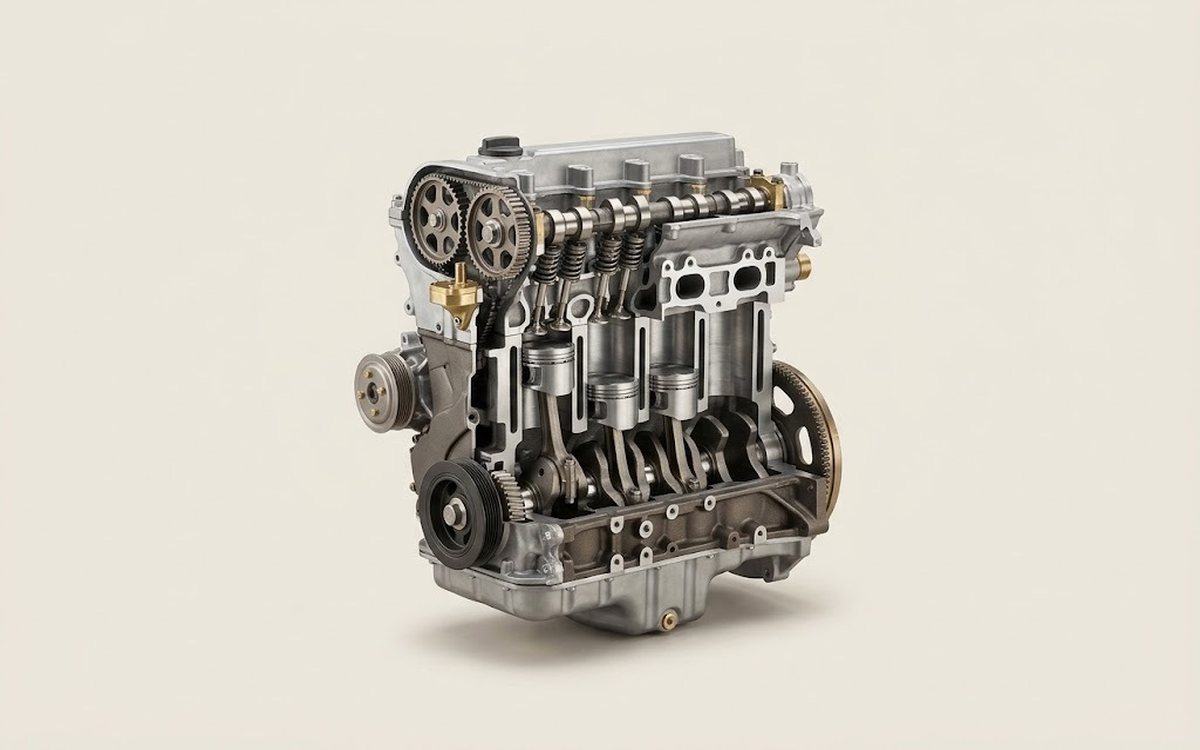 How it works · 3D
How a Car Engine Works
How the part you're working on actually works — in plain English, on a 3D model.
Open in 3D →