Autopapyrus · Chery Tiggo 4 1.5 Turbo (2024)
https://autopapyrus.com/guides/chery/tiggo-4/diagnosing-engine-misfires-rough-running/
https://autopapyrus.com/guides/chery/tiggo-4/diagnosing-engine-misfires-rough-running/
Compiled automatically from service literature and owner experience. Specs are for the typical configuration — check them against your exact car before you start.
Chery Tiggo 4 1.5 Turbo (2024): Diagnosing Engine Misfires (Rough Running)
On the 1.5T turbo engine, a misfire is most often caused by worn spark plugs and a faulty ignition coil. Next most likely are the fuel system (injectors, fuel quality) and an air leak. Start diagnosis by reading the trouble codes: code P0300 means misfires in multiple cylinders, and codes P0301-P0304 point to a specific cylinder.
Key figures
- Spark plug tightening torqueset this on the torque wrench in step 8; any higher and you risk stripping the threads in the head18-22 N·m (13-16 lb-ft)
- Spark plug replacement intervalwhen to replace the plugs so the misfire doesn't come back (step 7)about 60,000 km (40,000 km in hot climates)
- Engine cooling timehow long to wait before starting work, so you don't get burned or damage the threads (step 2)at least 2 hours
Check these values against the manufacturer’s specification for your vehicle before you start.
Parts
3| № | Part |
|---|---|
| 01 | Iridium spark plugs for the turbocharged 1.5T engineone per cylinder |
| 02 | Ignition coilsone per cylinder; replace only the faulty one, or as a set with the spark plugs if the plugs are worn |
| 03 | Fuel injectorsif faulty |
Tools
7- OBD II scanner
- spark plug socket
- ratchet with extension
- torque wrench
- socket for ignition coil bolts
- feeler gauge for checking the gap
- flashlight
Step by step
12 steps- Connect the scanner to the OBD II port and read the trouble codes. Write down which cylinder is named: P0301 is cylinder 1, P0302 is cylinder 2, and so on. If the Check Engine light is flashing, do not drive: unburned fuel mixture quickly destroys the catalytic converter.
- Shut off the engine and let it cool for at least two hours. Disconnect the negative battery terminal.
- Remove the decorative engine cover, if one is fitted.
- Disconnect the coil connectors, remove the coil bolts, and carefully pull out the coils. Inspect them: cracks, signs of arcing (electrical breakdown), or oil or moisture in the spark plug well are signs of a fault.
- Remove the spark plugs with a spark plug socket. Compare them with each other: the plug from the problem cylinder usually has carbon buildup, is melted, or has a heavily worn electrode.
- Quick coil check: swap the coil from the problem cylinder with the coil from a neighboring cylinder. Start the engine and read the codes. If the code has "moved" to the other cylinder, the coil is faulty and should be replaced.
- If the coil is good, replace all four spark plugs. Check the gap on the new plugs with a feeler gauge and, if necessary, bend the side electrode to the manufacturer's specification. Replacement interval is about 60,000 km, or about 40,000 km in hot climates and under severe-duty use (iridium plugs).
- First thread the plugs in by hand so you don't cross-thread them, then tighten with a torque wrench to 18-22 N·m (13-16 lb-ft). Tighten the coil bolts moderately; the torque is per the manufacturer's specification.
- Install the coils, connect the connectors, fit the cover, and reconnect the battery terminal. Clear the codes with the scanner, start the engine, and check how it runs at idle and under load.
- If the misfire persists, check for an air leak: inspect the intake pipes and hoses both before and after the turbocharger, the vacuum lines, and the clamps. Cracks and loose clamps cause an unstable air-fuel mixture.
- Next, check the fuel system: fill up with good-quality gasoline of the correct octane rating and test the injectors (cylinder balance diagnostics with the scanner or on a test bench). Questionable injectors are better tested on a bench than replaced at random.
- If the spark plugs, coils, intake and fuel are all fine but the code remains, the compression and the condition of the cylinders need to be checked. This is a job for a repair shop.
Common mistakes and warnings
- Do not drive with the Check Engine light flashing or with a noticeable loss of power: the catalytic converter and the engine can be damaged
- Do not overtighten the spark plugs; it is easy to strip the threads in an aluminum cylinder head
- If you have no experience with ignition and fuel systems, leave the diagnosis to a repair shop
- Check the exact spark plug gap and coil bolt torque against the manufacturer's specification
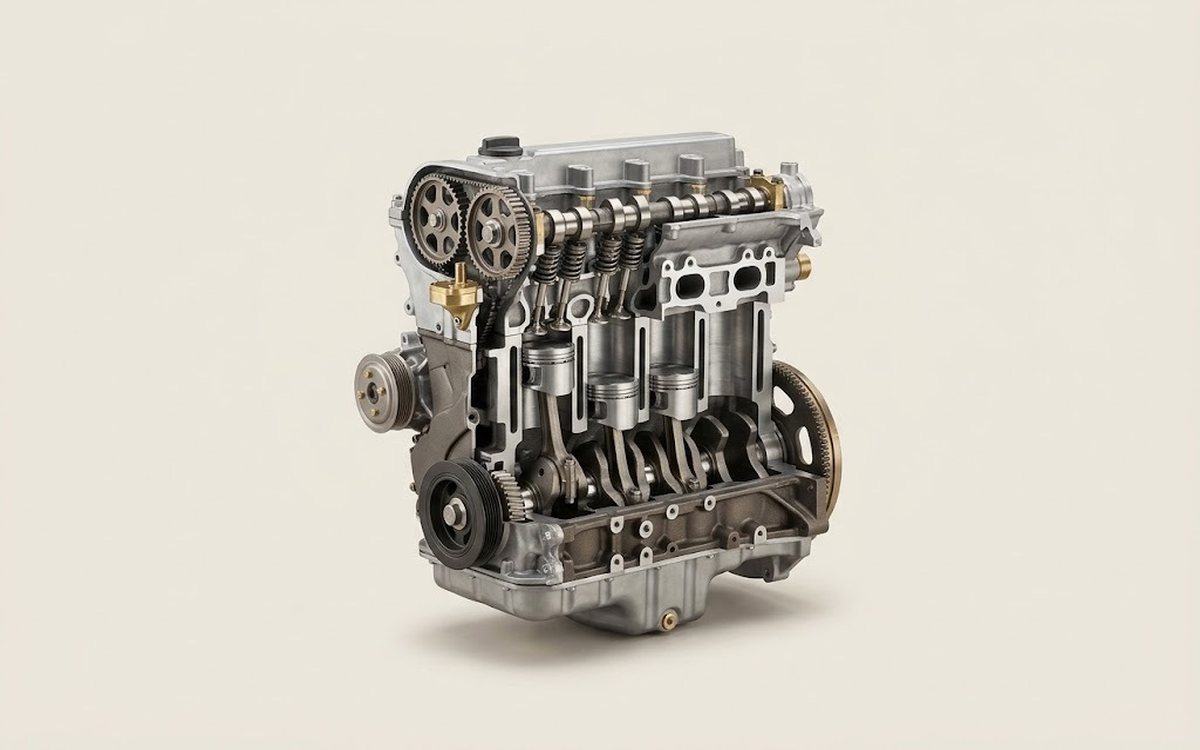 How it works · 3D
How a Car Engine Works
How the part you're working on actually works — in plain English, on a 3D model.
Open in 3D →