Autopapyrus · Hyundai Accent 1.4 16V G4EE (2006)
https://autopapyrus.com/guides/hyundai/accent/routine-engine-diagnostics/
https://autopapyrus.com/guides/hyundai/accent/routine-engine-diagnostics/
Compiled automatically from service literature and owner experience. Specs are for the typical configuration — check them against your exact car before you start.
Hyundai Accent 1.4 16V G4EE (2006): Routine Engine Diagnostics
The G4EE (1.4 16V) is a gasoline engine with a timing belt, fuel injection and an electronic control unit. Routine diagnostics consist of reading trouble codes, assessing the condition of wear items and measuring compression. They reveal wear before you notice a hunting idle, increased fuel consumption or loss of power.
Parts
7| № | Part | Genuine part no. |
|---|---|---|
| 01 | Spark plugs for G4EE (nickel or iridium)gap about 1.0-1.1 mm; set for all cylinders | 18814-11051 |
| 18823-11101 | ||
| 02 | Engine air filter | 28113-1G000 |
| 03 | Engine oil | |
| 04 | Oil filter | |
| 05 | Timing belt kit (belt, idler pulleys, tensioner)depends on diagnostic results | 24312-26001 |
| 24410-26000 | ||
| 24410-22020 | ||
| 06 | Oxygen sensordepends on diagnostic results | 39210-26620 |
| 07 | Ignition coildepends on diagnostic results | 27301-26600 |
Part numbers are from the manufacturer's original catalogue. Check them against your VIN before ordering.
Tools
7- OBD-II scanner (ELM327 or professional)
- compression tester
- 16 mm spark plug socket
- torque wrench
- feeler gauge set
- flashlight
- clean rags
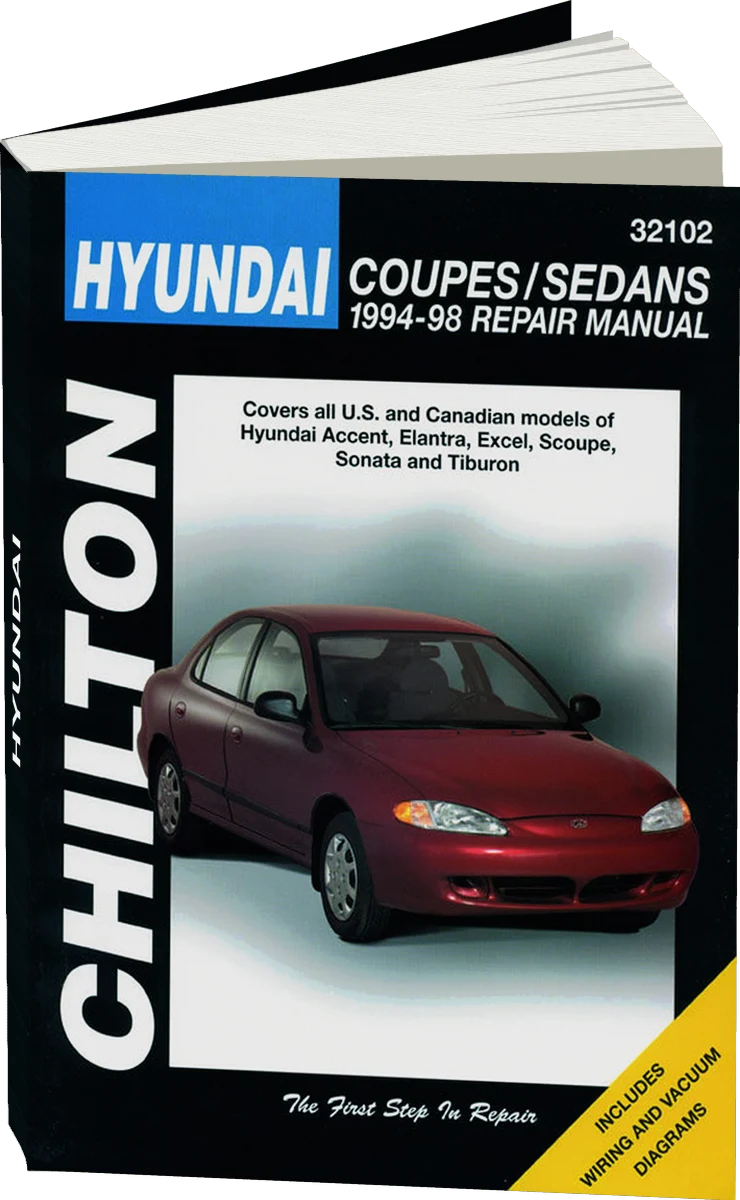 There's a full repair manual for this car
Every system, wiring diagrams and torque specs — not just this job. Chilton and 5 more.
See manuals →
Step by step
12 steps- Initial questions. Clarify the complaints: hard cold starts, hunting idle, hesitation during acceleration, increased fuel or oil consumption, smoke, or an illuminated Check Engine light. Write down the mileage and the date of the last timing belt replacement. For the G4EE, the timing belt interval is roughly every 60,000 km (about 37,000 miles). If the history is unknown, replace the belt right away.
- Under-hood inspection on a cold engine. Check the oil level and condition (black and thick oil, emulsion or a gasoline smell are warning signs), the coolant level, oil leaks from the valve cover, seals and oil filter, and the condition of the drive belt, wiring harnesses and vacuum hoses.
- Reading trouble codes. The OBD-II connector (16 pins) is under the dashboard, to the left of the steering column. Connect the scanner with the ignition on and read the trouble codes. Write them down, save the freeze frame data, and only then clear the codes.
- Live data on a warm engine. Evaluate the coolant temperature (operating temperature is about 85-95 °C), idle speed (target 700-900 rpm, steady), the STFT and LTFT fuel trims (normally close to zero; a constant deviation beyond 10% points to a vacuum leak, dirty injectors or a faulty sensor), oxygen sensor operation (it should switch quickly and rhythmically), and the mass airflow or MAP sensor readings.
- Checking the ignition system. Remove the coils one at a time and unscrew the spark plugs with the spark plug socket. Judge the deposit color: light brown is normal, dry black means a rich mixture, oily means oil consumption, and white means a lean mixture or overheating. Check the gap with a feeler gauge and replace the set if necessary. Spark plug torque is 15-25 N·m (11-18 lb-ft); do not overtighten. Inspect the coils and boots for cracks and arc-through.
- Compression test. Warm up the engine, remove all the spark plugs, disconnect power to the fuel pump (fuse or relay) and disconnect the coil connectors. Crank the engine with the starter with the throttle fully open for 4-5 compression strokes on each cylinder. The difference between cylinders should not exceed about 10-15%; check the absolute values against the manufacturer's specification. If one cylinder reads low, pour in 10-15 ml of oil and repeat the test. A rise in the reading points to worn rings; no rise points to the valves or the cylinder head gasket.
- Checking the air intake path and vacuum leaks. Inspect the air filter, the air duct bellows for cracks, the crankcase ventilation hose and the vacuum hoses. If the idle hunts, check the throttle body for carbon deposits (clean it with a dedicated cleaner) and check the idle air control valve.
- Valve clearances. On the G4EE, clearances are adjusted by selecting lifters or shims, and the check is done on a cold engine. If you hear ticking from the valves or power drops, check the clearances with a feeler gauge. Check the values for the intake and exhaust valves against the manufacturer's specification.
- Timing belt. Inspect the visible part of the belt and the covers for cracks, oil traces and delamination. Check the idler pulley and tensioner for noise and play. If the G4EE belt breaks, the valves may hit the pistons, so if in doubt, replace the belt together with the idler pulleys and tensioner as a kit.
- Cooling and lubrication systems. Check the thermostat operation (the radiator should get hot once the engine reaches operating temperature), fan activation and water pump sealing. If the oil pressure light comes on, shut off the engine immediately. Change the oil and filter every 10,000-15,000 km (6,000-9,000 miles), using 5W-30 or 10W-40 viscosity to ACEA or API gasoline engine standards (depending on the season).
- Listening to the engine at idle and under load. Whistling and howling point to the drive belt, alternator or water pump. A ticking sound points to the valves. A dull knock points to the rod or main bearings; in that case, stop driving the car.
- Test drive. Check throttle response and look for jerking, smoke and fuel consumption. Read the codes again, reset the adaptations if necessary, and make sure the Check Engine light does not come back on.
Common mistakes and warnings
- Do all compression measurements and inspections of the timing components with the engine off and the key removed from the ignition, and keep your hands and tools away from the fan and belts
- Clear codes only after writing them down, or you will lose information needed for diagnosis
- If you have no experience with timing belts and valve adjustment, leave these jobs to a repair shop, because a mistake in setting the timing marks will cause serious engine damage