Autopapyrus · Isuzu Rodeo (2nd generation)
https://autopapyrus.com/guides/isuzu/rodeo/brake-system-troubleshooting/
https://autopapyrus.com/guides/isuzu/rodeo/brake-system-troubleshooting/
Compiled automatically from service literature and owner experience. Specs are for the typical configuration — check them against your exact car before you start.
Isuzu Rodeo (2nd generation): Brake System Troubleshooting
On the 2000 Rodeo with the 6VD1 engine, the front brakes are discs and the rear brakes are drums. ABS acts on the rear wheels, and the warning light comes on when it has a fault. Typical complaints are vibration and pulsation when braking, reduced braking performance due to fluid loss, and ABS faults. Diagnosis goes from simple to complex: fluid and leaks, pedal, rotors and pads, drums, then ABS.
Part
- 🔩 Depends on the diagnosis. Typical candidates: front and rear brake pads/shoes, front brake rotors, caliper or caliper rebuild kit, brake master cylinder, brake booster, brake hoses and lines, ABS wheel speed sensor, DOT 3 or DOT 4 brake fluid. Consumables are relatively inexpensive, while major components (caliper, master cylinder, ABS unit) cost significantly more, so check the price with your supplier
Step by step
12 steps- Identify the symptom: soft or sinking pedal, hard pedal with no deceleration, vibration or pulsation, pulling to one side, grinding or squealing, ABS or brake warning light on. This immediately narrows down the suspects.
- Check the level and condition of the brake fluid in the reservoir. A falling level means worn pads or a leak. Dark fluid older than 2 years should be replaced. Moisture-contaminated fluid reduces braking performance and corrodes the cylinders from the inside.
- Inspect the brake lines and hoses along their entire length. Pay special attention to the lines along the rear axle and near the rear shock absorbers. On older vehicles the lines rust, and corroded shock absorber brackets can damage a line and lead to fluid loss and loss of braking. Signs of moisture, and swollen or cracked hoses, require replacement.
- Test the pedal with the engine running. With the engine off, press the pedal 5-6 times, hold it down, and start the engine: the pedal should drop slightly. If it does not, the brake booster, its check valve, or the vacuum hose is faulty. If the pedal slowly sinks under steady pressure, there is an internal or external leak, most often the master cylinder seals.
- If the pedal is soft or spongy but there are no leaks, bleed the system. Air in the lines and overheated or water-contaminated fluid cause the same effect. Bleed with two people, starting with the wheel farthest from the master cylinder.
- Raise the vehicle on jack stands and remove the wheels. Check the pad thickness: friction material under 3 mm must be replaced, and the pads on one axle should wear evenly. One-sided or tapered wear points to a seized caliper or guide pins.
- Inspect the front rotors for deep grooves, a lip at the edge, blue heat spots, and cracks. Vibration in the pedal and steering wheel when braking usually means rotor runout or uneven thickness. Measure the thickness at several points and compare it with the minimum thickness cast into the rotor. Replace overheated or cracked rotors in pairs.
- Check caliper movement: the piston should retract, the dust boot should be intact, and the guide pins should be lubricated and move freely. If the wheel is hot after braking and turns with difficulty, the caliper is seized.
- Remove the rear drums and check the shoes, springs, wheel cylinders (signs of fluid under the boots, moisture on the shoes), and the self-adjuster mechanism. Also check the parking brake: the cable should move freely, and the parking brake shoes must not be worn or contaminated with oil.
- ABS diagnosis. Turn the ignition on: the ABS light should come on and go out a few seconds after the engine starts. If it stays on, check the ABS fuses, connectors, and wheel speed sensors: the gap between the sensor and the tone ring, contamination, and wiring damage. Measure the sensor resistance with a multimeter and compare it with the service manual specification, since no exact value is given here. If the faults remain, read the trouble codes with a scan tool that supports Isuzu, then check the ABS unit. Resetting and in-depth diagnosis of the unit may require special equipment.
- False ABS activation on bumps or gravel, as well as pedal pulsation during normal braking without any skidding, can be caused by a dirty or damaged sensor, tone ring, or wiring. Check these first.
- After any work on the hydraulics, bleed the system, check the fluid level, and do a test drive in a safe area. Start with a few gentle stops at low speed, then gradually increase. The pedal should feel firm and braking should be straight.
Common mistakes and warnings
- The brake system is critical to safety. If you are not confident in your skills, do not drive the vehicle when there is any leak, pedal sinking, overheated wheels, or a persistent ABS fault, and contact a repair shop. Do not drive with a low fluid level. Replace pads and rotors as a set per axle. Check the exact values for minimum rotor thickness, sensor resistance, and caliper and wheel torque specifications against the manufacturer's service manual for your trim and model.
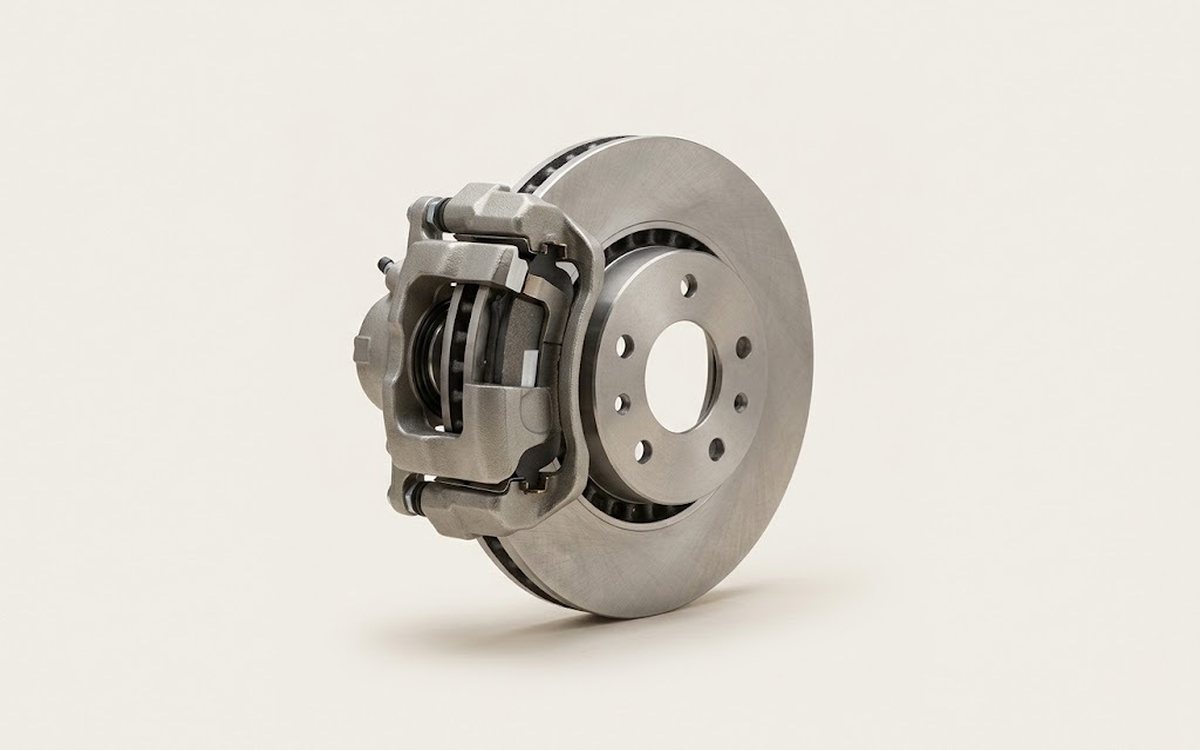 How it works · 3D
How Car Brakes Work
How the part you're working on actually works — in plain English, on a 3D model.
Open in 3D →