Autopapyrus · Subaru Impreza (VI, GR) 2.0 (2023)
https://autopapyrus.com/guides/subaru/impreza/full-machine-assisted-replacement-of-lineartronic-cvt-fluid/
https://autopapyrus.com/guides/subaru/impreza/full-machine-assisted-replacement-of-lineartronic-cvt-fluid/
Compiled automatically from service literature and owner experience. Specs are for the typical configuration — check them against your exact car before you start.
Subaru Impreza (VI, GR) 2.0 (2023): Full Machine-Assisted Replacement of Lineartronic CVT Fluid
The Impreza GR 2.0 uses a Lineartronic continuously variable transmission (CVT), not a conventional automatic, so a "machine-assisted exchange" here means pumping fresh fluid through the CVT cooler circuit. This replaces almost the entire fluid volume (unlike a partial drain-and-fill, which renews only about one third). The CVT is very demanding about fluid: use only approved fluid and set the level precisely at the correct temperature.
Part
- 🔩 Genuine Subaru Lineartronic CVT fluid (Subaru CVT Fluid). A machine-assisted exchange usually requires 12-16 L (12.7-16.9 qt). New sealing washers for the drain and level plugs, and if needed a pan gasket or sealant (check the pan design on your vehicle). Universal ATF and CVT fluids not approved by Subaru must not be used
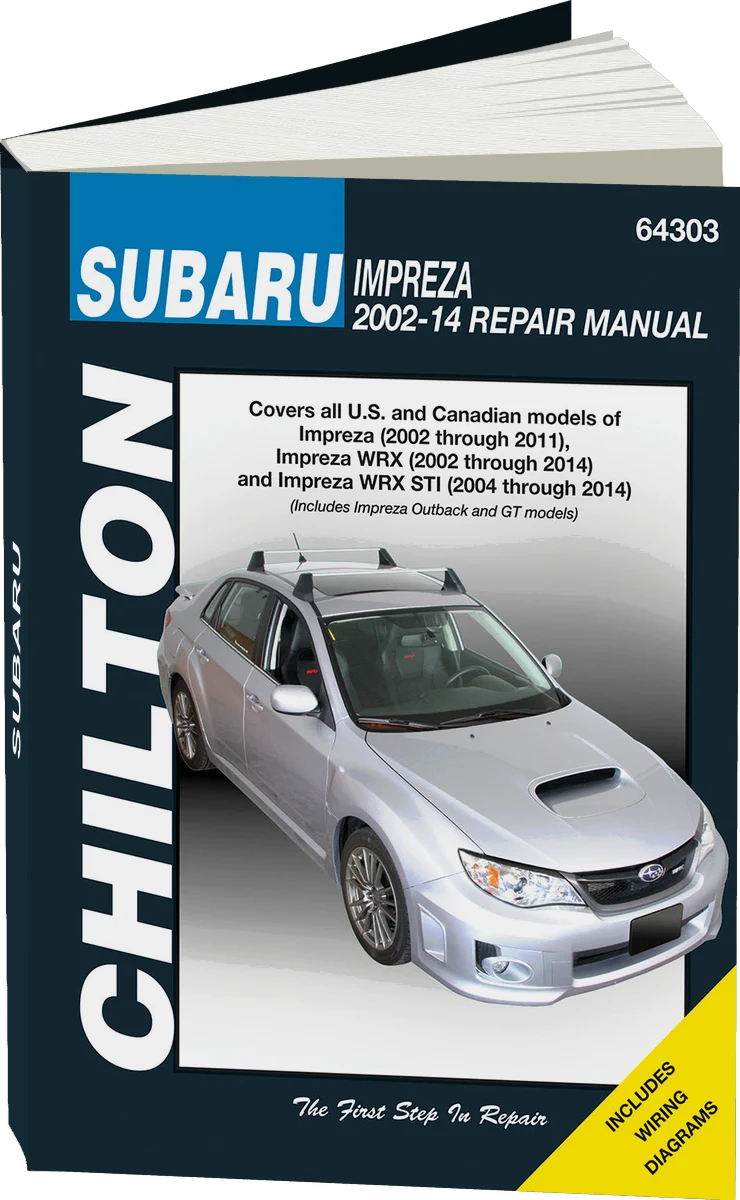 There's a full repair manual for this car
Every system, wiring diagrams and torque specs — not just this job. Chilton and 9 more.
See manuals →
Step by step
10 steps- Warm up the car with a short drive, park it on a level surface or a lift, and shut off the engine. Remove the underbody shield if it covers the CVT pan.
- Prepare the new fluid in the required quantity. Assess the condition of the old fluid: a dark color with a burnt smell or metallic particles in suspension mean you should be more careful with a machine-assisted exchange, and with serious wear it is better to go to a repair shop.
- To start, do a regular drain. Remove the CVT pan drain plug, drain the fluid into a graduated container, and note the volume. Install the plug with a new washer and tighten it to the torque specified by the manufacturer.
- Locate the CVT cooler (heat exchanger) lines at the radiator. Disconnect the return line and connect the machine using the "in-out" scheme according to the machine's instructions. Watch the flow direction: reversed hoses can damage the CVT.
- Start the engine with the selector in P (park). The machine displaces the old fluid and supplies new fluid in equal volumes. Pump through a volume of about 1.5-2 times the system capacity, until clean fluid of the correct color comes out of the outlet hose.
- Shut off the engine immediately when the machine has finished its cycle. Disconnect the machine and reconnect the factory radiator lines, using new clamps if necessary. Check the connections for leaks.
- Adjust the level. Connect a scan tool or thermometer so you can see the CVT fluid temperature. Remove the level (check) plug on the pan. The check is done with the engine running on a level surface within a narrow temperature range (approximately 35-45 °C (95-113 °F); verify the exact range in the manufacturer's service manual). If the level is low, no fluid comes out; if it is high, fluid runs out in a thin stream until the level matches the lower edge of the opening.
- Before checking the level with the engine running, shift the selector through all positions (P, R, N, D) several times, pausing 3-5 seconds in each, so the fluid distributes through the circuits.
- Close the level plug with a new washer and tighten it with a torque wrench. Wipe away any traces of leaks. Reinstall the underbody shield.
- Take a test drive of 5-10 km (3-6 miles), gently and without heavy loads. After the car cools down, check the underside and connections for leaks and recheck the level if necessary.
Common mistakes and warnings
- A CVT does not tolerate either too much or too little fluid, nor the wrong type of fluid: overheating, belt slip and costly repairs are possible. If you have no experience working on CVTs, or you have no machine and no scan tool for temperature monitoring, leave the job to a repair shop. Take exact capacities, the level-check temperature range and plug torque values from the manufacturer's service manual for your trim and model. For the actual fluid service life, follow Subaru's maintenance schedule and your operating conditions: with towing, city driving and hot weather, it is better to shorten the interval.
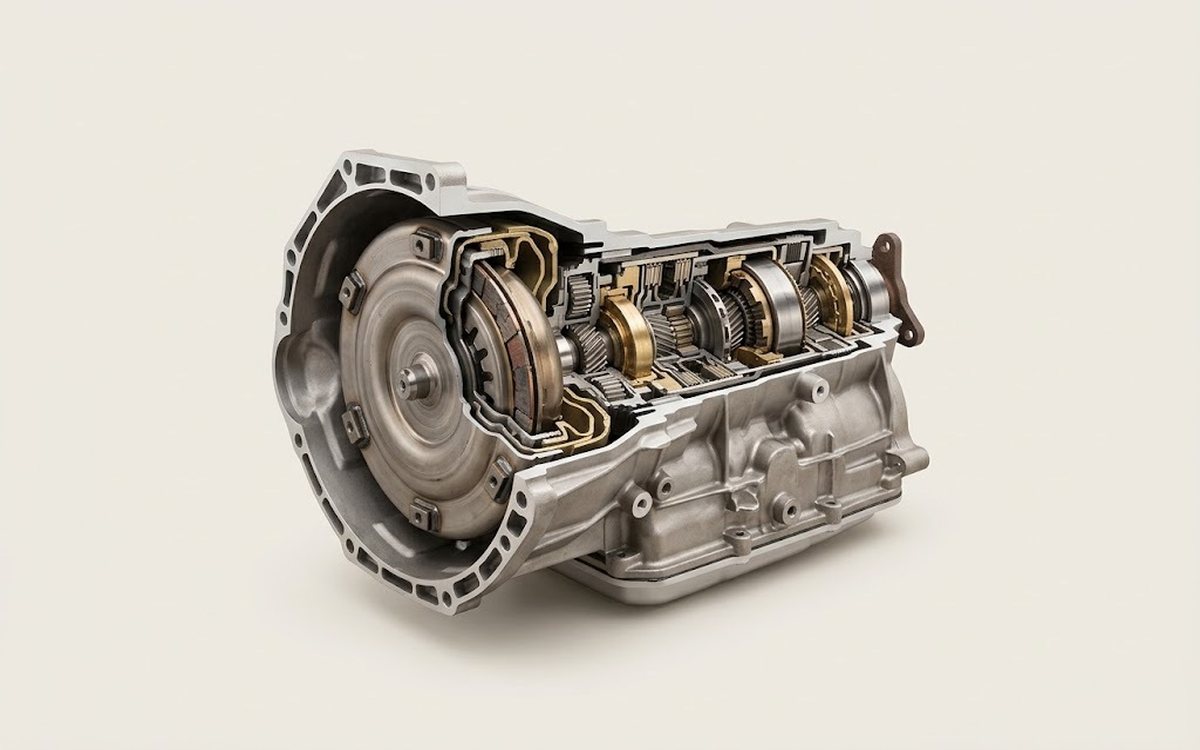 How it works · 3D
How an Automatic Transmission Works
How the part you're working on actually works — in plain English, on a 3D model.
Open in 3D →