Autopapyrus · Subaru Impreza 1.6 EJ16E (1998)
https://autopapyrus.com/guides/subaru/impreza/timing-belt-replacement/
https://autopapyrus.com/guides/subaru/impreza/timing-belt-replacement/
Compiled automatically from service literature and owner experience. Specs are for the typical configuration — check them against your exact car before you start.
Subaru Impreza 1.6 EJ16E (1998): Timing Belt Replacement
The timing belt on the 1.6 SOHC (EJ16E) is replaced by mileage, roughly every 90,000-100,000 km (56,000-62,000 mi), or every 5-6 years. The job is simple in principle, but it requires precise alignment of the timing marks. Do not turn the camshafts while the belt is removed, or the valves may contact the pistons. Exact torque specifications for your model are not confirmed in open sources, so the values below are only guidelines.
Part
- 🔩 Timing belt kit for the EJ16E: timing belt (about 211 teeth, 30 mm wide, 9.525 mm pitch), hydraulic tensioner with pulley, idler pulleys (toothed, smooth, flanged), crankshaft seal and two camshaft seals. Replace the belt, pulleys and tensioner as a single kit
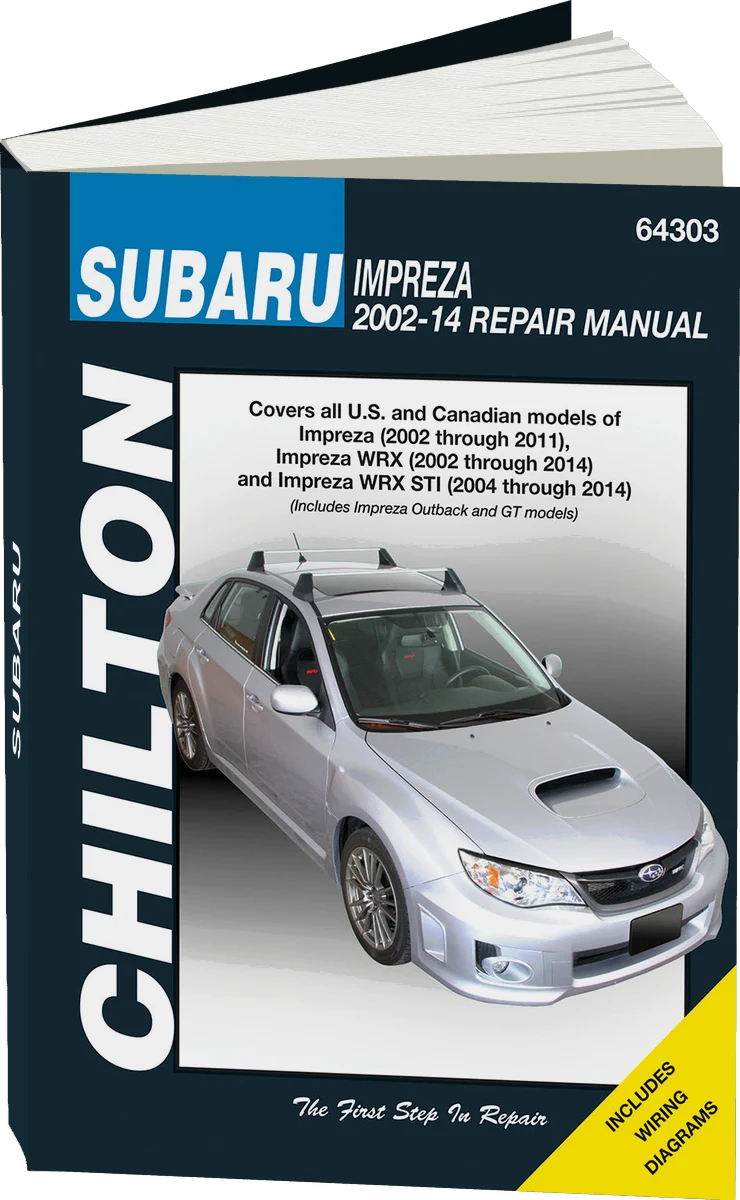 There's a full repair manual for this car
Every system, wiring diagrams and torque specs — not just this job. Chilton and 9 more.
See manuals →
Step by step
13 steps- Disconnect the negative battery terminal. Raise the front right side of the car on a jack stand and remove the wheel. Remove the engine undercover if one is fitted.
- Remove the accessory drive belts (alternator, power steering, A/C if equipped). Loosen the tensioners and take the belts off. Mark their direction of rotation if they will be reused.
- Remove the crankshaft pulley. The bolt is very tight, so hold the crankshaft with a holding tool or breaker bar. Do not lock it through the flywheel teeth unless necessary, as this makes it easier to damage the ring gear.
- Remove the upper and lower plastic timing covers. Keep the bolts organized by location, since their lengths differ.
- Turn the crankshaft in its normal direction of rotation until the marks line up. The mark on the crankshaft sprocket must align with the mark on the block, and the marks on both camshaft pulleys must align with the marks on the cover or block. If the marks on the old belt are hard to see, make your own. After this, do not turn the crankshaft or camshafts.
- Loosen the hydraulic tensioner bolt and remove the tensioner together with its pulley. Loosen and remove the idler pulleys. Remove the old belt.
- Inspect the camshaft and crankshaft sprockets. Chipped teeth, oil leaking from the seals or play in the pulleys mean the seals and pulleys need replacing. Replace the seals during this same disassembly so you don't have to take everything apart again later.
- Install the new pulleys and the new tensioner. Compress the hydraulic tensioner in the vise slowly and evenly, which takes a few minutes. Lock it in the compressed position with the pin. Never install a tensioner with the rod extended.
- Fit the new belt. The order is: crankshaft sprocket first, then the idler pulleys, the camshaft pulleys, and the tensioner last. The span between the crankshaft and the pulleys must be taut. Check that the marks have not shifted by a tooth.
- Tighten the tensioner and pulleys. Use the torque specified by the manufacturer; as a guideline, the idler pulley and tensioner bolts are about 20-40 N·m (15-30 lb-ft).
- Pull the pin out of the tensioner. Turn the crankshaft by hand two full turns in its normal direction of rotation (not with the starter) and check that the marks line up again. If they don't, remove the belt and repeat the installation.
- Install the timing covers, the crankshaft pulley and the accessory belts. Tighten the crankshaft pulley bolt to a high torque per the factory specification. As a guideline for this type of engine, 200-250 N·m (148-184 lb-ft); confirm the exact value before tightening. Then install the undercover and the wheel.
- Reconnect the battery, start the engine, let it idle and listen for unusual noises. After 500-1,000 km (300-600 mi), check the belt for shifting and noise.
Common mistakes and warnings
- If the timing marks are set incorrectly, valves and pistons may be damaged, so take your time and double-check the marks. Never turn the camshafts while the belt is removed. If you lack experience, leave the job to a repair shop.
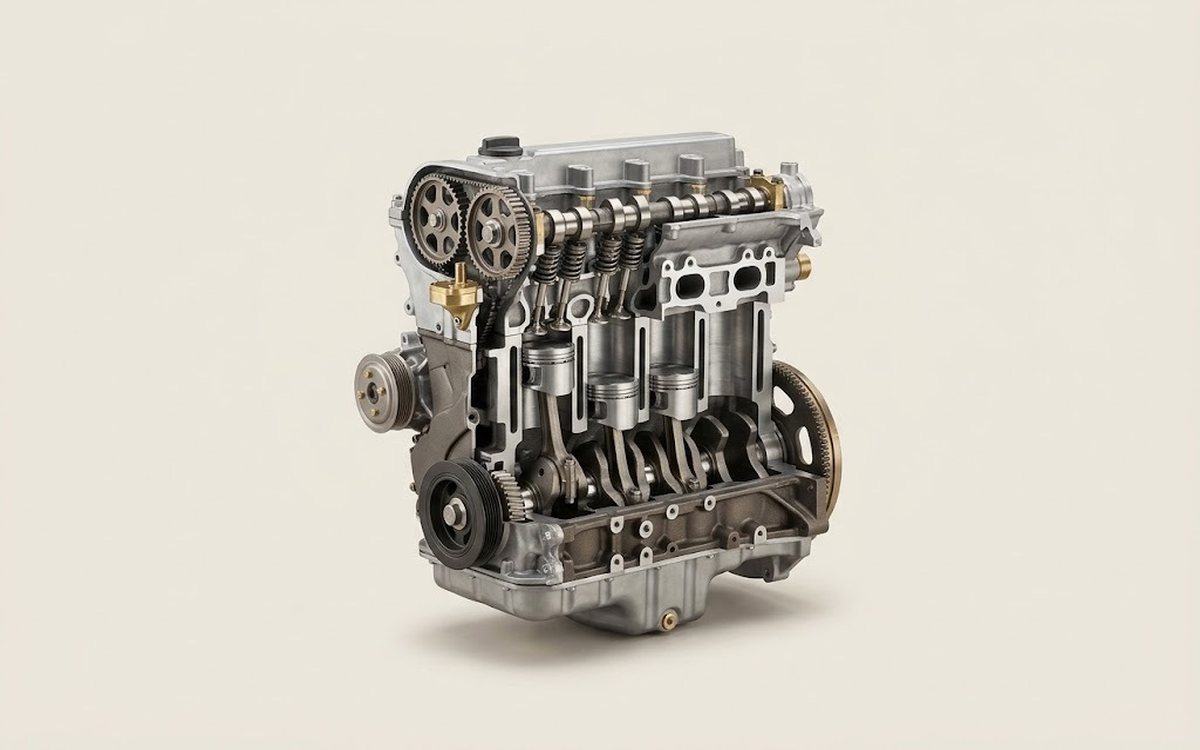 How it works · 3D
How a Car Engine Works
How the part you're working on actually works — in plain English, on a 3D model.
Open in 3D →