Car care & driving
All-Season Tires: Key Features, Differences, and Benefits
Autopapyrus
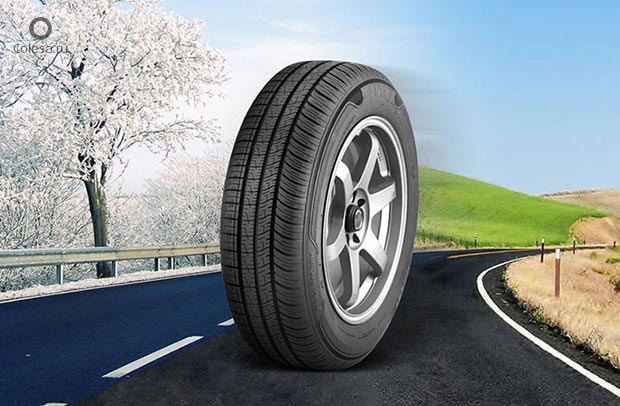
All-season tires are a separate category of car tires designed for year-round use. They can be a good alternative to seasonal tires for owners who want to save time and money. Still, whether they are worth buying remains a hot topic of debate among experts and everyday drivers alike. If you are thinking about buying all-season tires, we recommend reading this article.
Main Differences of All-Season Tires
Universal tires designed for year-round use have a number of features that set them apart as a separate segment.
Material. All-season tires are made from a special rubber compound of moderate hardness with a large amount of thermally active additives. This special formulation lets them stay flexible in the cold and keep the right stiffness in the heat, delivering excellent grip across a wide range of temperatures.
Tread. It usually has an asymmetric pattern of medium size. Typical features include rounded sidewalls, wide longitudinal grooves, and tread blocks cut by sipes. This design helps prevent hydroplaning on wet roads and allows safer driving on ice.
Benefits of All-Season Tires
Many manufacturers make all-season tires. If you like, you can find them for any type of vehicle: passenger cars, SUVs, and commercial vehicles. The strong demand for all-season rubber comes down to several factors:
• with these tires, you don't need to visit a tire shop twice a year, which saves a lot of time;
• all-season tires cost less than winter tires, and since you don't need to buy a second set, the savings are significant;
• in some regions, the weather rarely brings hard frosts or snow on the road, which makes winter tires unnecessary;
• compared with other tires, all-season tires are not as noisy.
Understanding All-Season Tire Markings
The standard sidewall markings include the manufacturer, tire size, speed and load index, production date, and other parameters. In addition, you may see the following abbreviations:
• "AS" (All Season) – the tire is suitable for all seasons;
• "R+W" (Road + Winter) – the tire is designed for use in cold regions;
• "AW" (Any Weather) – a universal all-season tire for any weather.
In addition, you may see the words "Aqua," "Aquacontact," "Water," "Rain," or simply an umbrella symbol, which indicate a rain tire.
Are All-Season Tires Worth Buying?
All-season tires have averaged-out characteristics, which you should keep in mind when buying them. They wear out quickly, and at extreme temperatures their physical properties can change. For example, in frost below -7 °C (about 19 °F) they stiffen, which reduces driving safety. What's more, the grip of this rubber becomes worse than that of seasonal tires.
Of course, owning two sets of tires (winter and summer) means paying for tire mounting twice a year, buying tire covers, finding a place to store them, and so on. However, when choosing between seasonal and all-season tires, you should be guided not only by financial savings but also by other factors that will affect your comfort and safety.
What next