Car care & driving
Driving at Night: Safety Tips
Autopapyrus
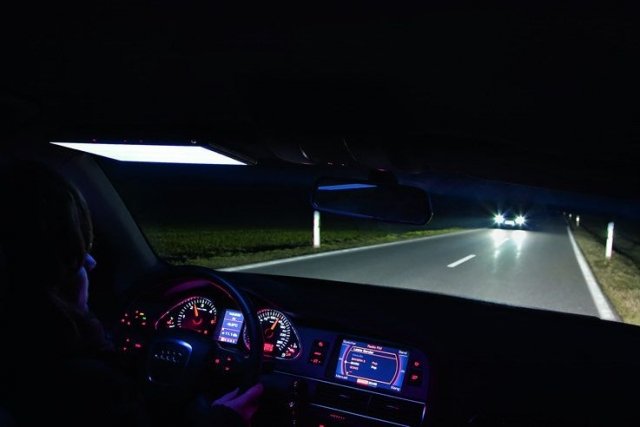
Night is the most dangerous time of day to be on the road, even though there are far fewer vehicles on the highway than during the day. Fatigue builds up over the course of the day, so drivers become less attentive, and visibility is worse. As a result, statistics show that roughly twice as many people are killed on the road at night as during the day.
At night a driver sees the road much less clearly and can only guess what obstacles lie ahead. It helps a lot if you know the road, because you already know where to speed up and where to slow down. But what if it's your first time on that route? There is also always a chance that pedestrians, animals, or a cyclist out for a night ride will suddenly appear in your path. And don't forget the risk of being blinded by another vehicle's headlights, which can make it impossible to control your car.
Here are a few recommendations that will help keep the risk of an accident at night to a minimum:
• Aim your headlights properly, because lighting at night is poor. At the same time, don't dazzle other drivers, since that creates an additional hazard. • Carry spare bulbs, since there is always a chance one will burn out at night. • Try to replace a bulb before it fails. The main sign that a bulb is about to burn out is dim light. • Your car should be clean, but if you can't wash it, at least wipe off the headlights, turn signals, and reflectors. • Don't forget to clean all the windows, including the windshield. • Don't wear sunglasses when driving at night. They won't help against glare, and they make visibility significantly worse.
Techniques for driving at night:
• Flashing your headlights, that is, switching from high beams to low beams. This is a good way to let other road users know that you are very close, or that a police patrol is waiting ahead. • It is important to time this correctly. If you dip your lights too early, your visibility drops. On the other hand, if you wait too long, it is dangerous for the oncoming car, because a blinded driver effectively has zero visibility. So make sure there are no pedestrians, obstacles, or animals nearby, and only then switch from high beams to low beams. When passing an oncoming vehicle, don't expect danger only from that vehicle: a cyclist or a traveler on foot may appear on the road unexpectedly, and your lights will pick them out too late. • The best speed at night is about 60 km/h (about 37 mph). Keep your eyes toward the right edge of the road to reduce the chance of being blinded by oncoming headlights. When overtaking, be careful with your high beams, because you may dazzle the driver you are passing. If you are blinded, turn on your hazard lights, slow down, and brake without leaving your lane.
What next