Car care & driving
Gas (LPG) Conversions: Myths and Facts. Article 1
Autopapyrus
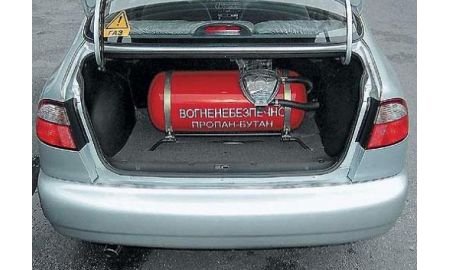
- A few facts.
Older drivers remember a time when gasoline was sold for next to nothing. Saving on it? Hardly. The real problem was finding it. Filling stations were few, and sometimes you could only fill up through connections. The authorities then made what they considered a wise decision: switch the vehicle fleet to gas fuel. The intention was good, but the realities of the system were not taken into account. Theft flourished in almost every vehicle depot. Managers padded the records, and drivers drained gasoline by the bucket to sell it to private buyers. But gas? You can't drain it or sell it.
That is exactly why the initiative was met with hostility by depot workers. Reports went up the chain that engines were breaking down and, scary to say, cars were catching fire (most of these cases were faked). The result: the switch to gas was canceled, but the scare stories are still being told today.
- Myth #1: Gas is more dangerous than gasoline.
It seems logical: outside the tank, the liquid gas boils off and forms an explosive mixture with air. In reality, an explosion requires a strictly defined ratio of gas to air. Gas is heavier than air and settles downward, forming an overly rich mixture that cannot ignite. Gasoline, on the other hand, burns in almost any form and ignites more easily.
Gas equipment is protected against accidents quite well. First, the tank is made of very thick steel, and only a extremely powerful impact can damage it. If a line breaks, a valve closes and shuts off the fuel supply completely. If a connection develops a leak, the smell will warn you. In that case, shut off the gas supply and keep driving on gasoline.
The takeaway: keeping the equipment in good working order and following safety rules will help you avoid any trouble.
- Myth #2: The engine burns out…
Exhaust valves are blamed most often. The logic goes like this: gas burns more slowly and keeps burning during the exhaust stroke. In reality, with correct ignition timing and valve clearances, this will not happen. Moreover, when an engine runs on gasoline, the same thing can happen with a lean mixture, late ignition, and incorrectly adjusted valves.
Myth #3: The smell.
Propane and butane, the components of the fuel, have no odor. For safety, an odorant is added that gives the gas its characteristic smell. There are only two reasons for a gas smell in the cabin. The first is a leak in the equipment. The second is a leaking exhaust system. Find the fault and fix it, simple as that.
If the engine runs on gasoline, an exhaust leak can go unnoticed, and you keep breathing the combustion products, including CO, without realizing it.
What next