Car care & driving
How ABS Helps You Behind the Wheel
Autopapyrus
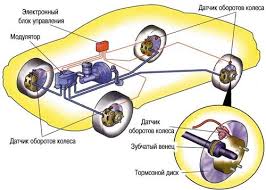
ABS is designed to keep the wheels from locking up completely during emergency braking, when an inexperienced driver often loses control of the car. Numerous tests have shown that, despite the many variables involved, such as road surface quality or the presence of ice or snow, the system keeps the car stable. It can also significantly shorten the braking distance on low-grip surfaces.
With ABS, you can keep control of the car even when the brake pedal is pressed all the way down.
The system includes sensors that monitor the vehicle's overall speed and compare it with the rotation speed of each wheel. If ABS detects that the car is still moving while one or more wheels have stopped rotating, it signals the braking system to reduce brake pressure so the wheels can spin freely again. The whole ABS cycle comes down to a simple sequence: brake, analyze, release. How well the braking system performs depends directly on how fast this cycle repeats.
Inexperienced drivers should keep in mind that on dry pavement, ABS activation can actually lengthen the car's stopping distance. This depends on the ABS calibration and its sensitivity, and it usually shows up at higher speeds. This may be why professional racing drivers often prefer not to use it. In everyday driving, however, you meet road surfaces of very different types and quality, so the preferences of professional racers are not a good example to follow.
If you are driving a car with ABS for the first time, be prepared to feel a slight pulsation in the brake pedal when the system kicks in. An inexperienced driver may ease off the brake pedal or even lift their foot completely. So before heading out on the highway, practice braking like this in an empty lot or on a closed course, so you know exactly what to expect when it matters.
In other words, ABS imitates a skilled, experienced driver who uses threshold or pulse braking on a slippery road to avoid locking the wheels. The electronic system, however, does this far better. It cycles much faster and more precisely than any person could, so a human driver can hardly match its performance.
The anti-lock braking system will not only shorten your stopping distance in difficult conditions but also let the car respond better to steering input. This is ABS's main and undeniable advantage. If the wheels lock up and can't respond to lateral force, the car will keep going straight ahead, even if you turn the steering wheel all the way. For more details on how ABS works in your particular car, check your owner's manual or the factory service manual for your model.
What next