https://autopapyrus.com/catalog/changan/uni-t/guides/diagnosing-engine-misfires-rough-running-on-the-1-5-turbo-2023/
Diagnosing Engine Misfires (Rough Running) on the 1.5 Turbo (2023)
On the 1.5 Turbo, rough running is most often caused by the spark plugs, ignition coils, fuel injectors or an air leak in the intake. Start by reading the trouble codes: they show which cylinder is misfiring. Then check the plugs and coils by swapping them between cylinders.
Key figures
- Spark plug replacement interval20,000 km or 2 years, per the maintenance schedule, whichever comes first. If it has been exceeded, replace all four as a set (step 7)
- Spark plug socket size16 mm socket, suitable for removing the plugs (step 6)
- Spark plug tightening torque15-20 N·m (11-15 lb-ft). Set it on the torque wrench so you do not strip the threads in the head (step 9)
- Spark plug gapabout 0.7 mm. Check it with a feeler gauge before installing (step 8)
Check these values against the manufacturer’s specification for your vehicle before you start.
Parts
2| № | Part | Alternatives |
|---|---|---|
| 01 | Iridium spark plugs, 16 mm hex, 12×1.25 thread, 27.5 mm thread lengthone per cylinderFind on Amazon → | AlternativesMasumaNGKDenso |
| 02 | Ignition coilif needed; single cylinder or full setFind on Amazon → |
Amazon links search by the part name; use Amazon's fit check for your car before ordering. We may earn a commission from qualifying purchases.
Tools
7Read the codes yourself
A scanner plugged into the OBD2 port under the dashboard shows which fault codes the car has stored, before you buy any parts. Cars sold in the US from 1996, and petrol cars in Europe from 2001 (diesels from 2004), have this port.
- Basic code reader, about $20–40: reads and clears engine codes Amazon →
- Bluetooth scanner with a phone app, about $30–100: live sensor data, and on many cars ABS and airbag codes too Amazon →
Check that the scanner lists your make and model year before you buy. We may earn a commission from qualifying purchases.
Step by step
14 steps- Connect the OBD scanner and read the codes. Codes P0301-P0304 point to a misfire in cylinders 1-4, and P0300 means random misfires across several cylinders. Write down the codes and save the data.
- If there is a code for a specific cylinder, note its number. If there is no code but the engine runs rough at idle, start the engine and disable the coils one at a time. Do this only through the scanner, without unplugging the connector on a running engine. For a start, the scanner's per-cylinder misfire data is enough.
- Shut off the engine and let it cool down. Remove the decorative engine cover (usually held by clips or bolts). Disconnect the negative battery terminal if you will be unplugging connectors.
- Blow off the dirt around the coils with compressed air, or wash it off, so it does not fall into the spark plug well.
- Unplug the connector of the problem cylinder's coil, remove the coil mounting bolt (usually an 8-10 mm socket) and pull the coil straight up. Inspect it for cracks, signs of arcing, oil seepage and a damaged rubber boot.
- Remove the spark plug with a 16 mm spark plug socket. Check its condition: heavy carbon deposits, oil, melted or badly worn electrodes, or a cracked insulator are signs of a faulty plug or a problem in the cylinder.
- Check the maintenance schedule: the manufacturer recommends replacing the spark plugs every 20,000 km or 2 years. If the interval has been exceeded, replace all four plugs as a set, regardless of which cylinder is misfiring.
- Check the gap on the new plugs with a feeler gauge. The guideline for this engine's iridium plugs is about 0.7 mm; for the exact value, follow the vehicle manufacturer's specification. Do not bend the electrodes on iridium plugs unless necessary.
- Thread the plugs in by hand until they stop, so you do not strip the threads in the aluminum head, then tighten them with a torque wrench. The approximate torque is 15-20 N·m (11-15 lb-ft); confirm the exact value against the manufacturer's specification.
- Install the coils, tighten the mounting bolts gently (use low torque: the bolts are small, and aluminum and plastic do not tolerate force), and plug the connectors back in.
- If the misfire remains in the same cylinder after replacing the plugs, swap the problem cylinder's coil with the one from a neighboring cylinder. Clear the codes, warm up the engine and check whether the code has moved. If the code followed the coil, replace the coil. If it stayed with the cylinder, look for the cause in the injector, compression or an air leak.
- If the plugs and coils are fine, check the intake and turbo hoses for cracks and loose clamps, the vacuum hoses, and the intake pressure sensor connector. An air leak causes an unstable idle and misfires.
- If you cannot find the cause, you need a compression test, a fuel pressure check and a bench test of the injectors. This is done at a repair shop.
- After the repair, clear the codes, drive for 15-20 minutes under varying loads, and check that the codes have not returned and the Check Engine light stays off.
Common mistakes and warnings
- Do not drive for long with a flashing Check Engine light: during heavy misfires, unburned fuel enters the exhaust and destroys the catalytic converter, and in a turbo engine it also washes oil off the cylinder walls
- Use gasoline with an octane rating no lower than the manufacturer recommends, because poor fuel can also cause misfires
- The engine and exhaust are hot after running, so wait for them to cool
- If the cause is not the spark plugs and coils, take the car to a repair shop
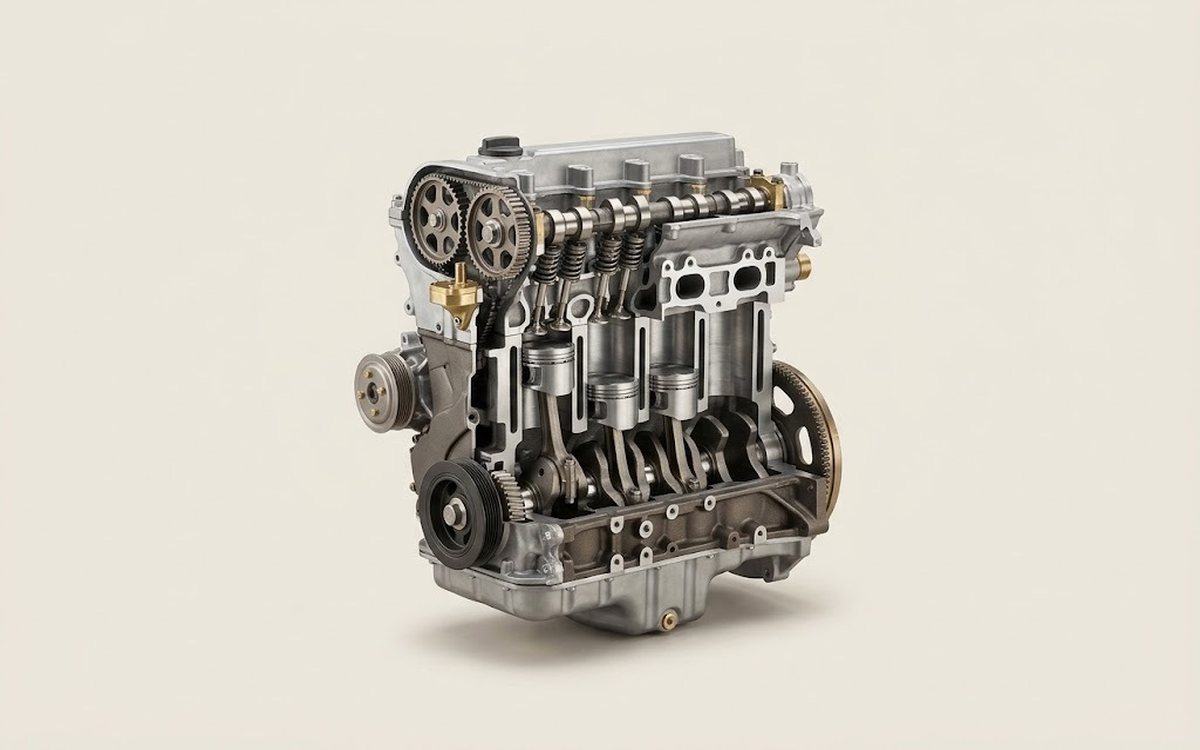 How it works · 3D
How a Car Engine Works
How the part you're working on actually works — in plain English, on a 3D model.
Open in 3D →