https://autopapyrus.com/catalog/haval/jolion/guides/dct-clutch-release-bearing-replacement/
Haval Jolion 1.5T (2024): DCT Clutch Release Bearing Replacement
The 2024 Haval Jolion is equipped with a 1.5-liter turbo engine (143-150 hp) and a 7-speed dual wet-clutch automated transmission (HYCET 7DCT450). In a DCT, the release bearing is integrated into the clutch assembly and is operated by hydraulic actuators inside the transmission. Replacement requires complete removal of the transmission and subsequent electronic clutch adaptation with a diagnostic scan tool.
Parts
2| № | Part |
|---|---|
| 01 | 7DCT clutch release bearingsold separately or as part of the dual-clutch assemblyFind on Amazon → |
| 02 | 7DCT transmission fluidFind on Amazon → |
Amazon links search by the part name; use Amazon's fit check for your car before ordering. We may earn a commission from qualifying purchases.
Tools
8Read the codes yourself
A scanner plugged into the OBD2 port under the dashboard shows which fault codes the car has stored, before you buy any parts. Cars sold in the US from 1996, and petrol cars in Europe from 2001 (diesels from 2004), have this port.
- Basic code reader, about $20–40: reads and clears engine codes Amazon →
- Bluetooth scanner with a phone app, about $30–100: live sensor data, and on many cars ABS and airbag codes too Amazon →
Check that the scanner lists your make and model year before you buy. We may earn a commission from qualifying purchases.
Step by step
23 steps- Disconnect the negative battery terminal, then raise the vehicle on a lift or place it on stands so the front wheels are off the ground.
- Remove the engine skid plate and the transmission pan guard, then drain the transmission fluid into a suitable container.
- Disconnect the driveshafts from the transmission (18 mm wrench; reinstallation torque 80-100 N·m (59-74 lb-ft)).
- Remove the starter (if it blocks access) and disconnect all connectors from the transmission (actuators, sensors, mechatronic unit connector).
- Remove the shift linkage (selector rod) and disconnect the transmission control cables.
- Support the engine from below with a jack, using a wooden block under the oil pan, then unbolt the transmission mounts from the subframe (17-19 mm wrench).
- Support the transmission with a transmission jack and remove the bolts securing the transmission housing to the engine block around the perimeter (usually 8-10 M10 or M12 bolts; reinstallation torque 50-70 N·m (37-52 lb-ft)).
- Carefully pull the transmission back. A DCT is heavy (about 80 kg), so do not let it tilt or hang on the input shaft.
- Once the transmission is out, you have access to the clutch housing. In a wet DCT, the release bearing is built into the dual-clutch assembly (two disc packs, two actuators).
- Remove the fasteners securing the dual-clutch assembly (usually 6-8 bolts around the circumference; torque when installing a new assembly is 20-30 N·m (15-22 lb-ft), exact value per the manufacturer's specification).
- Remove the dual clutch and inspect the friction discs, the support bearings (odd/even release bearings), the clutch basket and the flywheel.
- Replace the release bearing (in a wet DCT it may be an integrated unit, so confirm with your supplier what the kit includes) or the entire dual-clutch assembly if the discs are worn (the 7DCT450 clutch life is about 150,000 km under normal use).
- Clean the mating surfaces of the flywheel and the transmission housing of wear debris and wipe them dry (no oil may get on the friction surfaces).
- Install the new clutch assembly and apply a thin layer of high-temperature grease to the input shaft splines (do not overdo it, because any excess will get into the disc pack).
- Tighten the clutch assembly bolts in a crisscross pattern to 20-30 N·m (15-22 lb-ft) (confirm for your specific assembly).
- Raise the transmission with the transmission jack, align it with the engine block, and check that the input shaft seats properly in the splines.
- Install the bolts securing the transmission housing to the engine and tighten them to 50-70 N·m (37-52 lb-ft) (exact value per the specification).
- Bolt the transmission mounts to the subframe and reconnect the selector linkage and the actuator and sensor connectors.
- Install the starter (if it was removed) and the driveshafts (CV joint nut torque 80-100 N·m (59-74 lb-ft)).
- Fill with new wet-DCT transmission fluid (about 6-7 L (6.3-7.4 qt); exact quantity by dipstick or check plug).
- Install the pan guard and skid plate, then lower the vehicle.
- Connect the diagnostic scan tool and perform the clutch adaptation (the clutch touch point learning procedure takes 5-10 minutes, during which the transmission learns the clutch engagement points).
- Test-drive the vehicle and check the transmission operation: smooth shifts, no jerking, shuddering or slipping.
Common mistakes and warnings
- Replacing the release bearing in a DCT automated transmission requires specialized equipment (transmission jack, scan tool for adaptation)
- Without electronic clutch adaptation after the replacement, the transmission will operate incorrectly, with jerking, slipping and overheating
- If you have no experience with automated transmissions and no diagnostic equipment, we strongly recommend taking the vehicle to a specialist repair shop
- Note: The Haval Jolion is offered only with the 1.5-liter turbo engine (GW4G15K or GW4B15, 143-150 hp)
- Versions with the 1.6 Turbo 194 hp engine are not part of the model's official lineup
- If your vehicle has a non-standard engine, verify the transmission configuration and clutch assembly compatibility
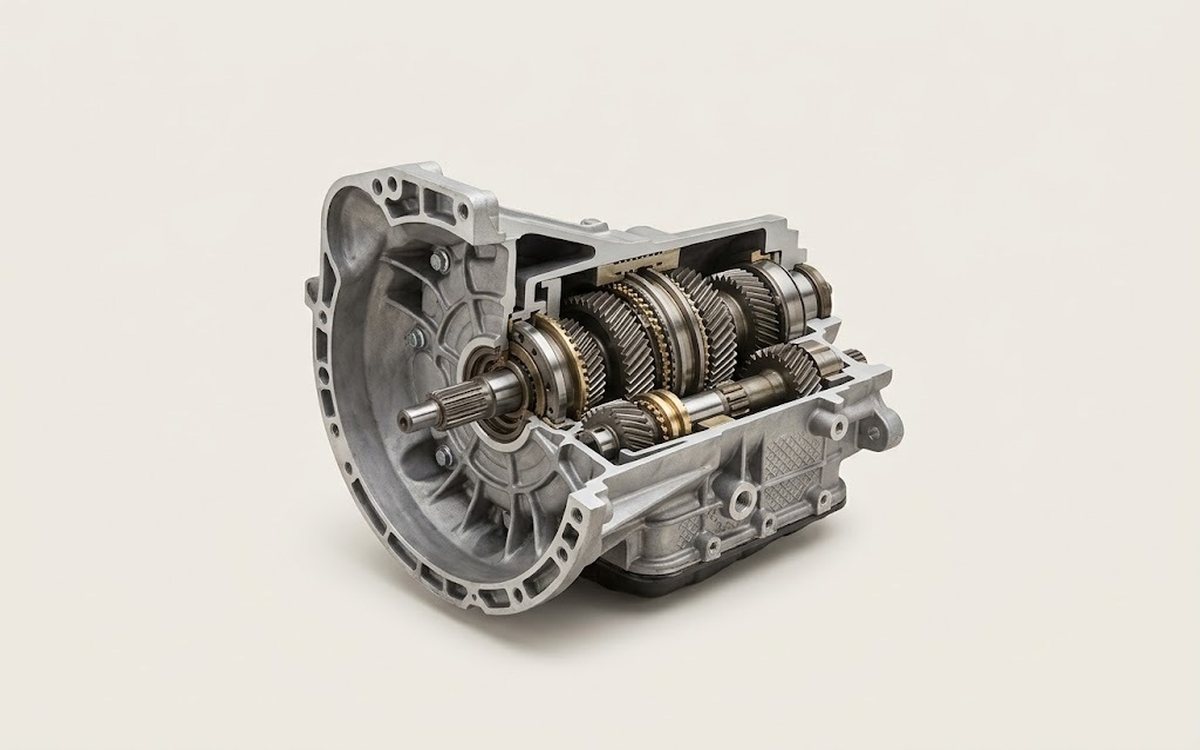 How it works · 3D
How a Manual Transmission Works
How the part you're working on actually works — in plain English, on a 3D model.
Open in 3D →
Spotted a mistake? Tell us →
Our articles
 News
The Week in Cars: Li Auto Hacking, October Sales, the Monjaro Rumour and the 2027 Recycling Fee
Li Auto owners in Russia are having their car accounts hacked, and the car will not start without a ransom. Plus…
Read →
 Before you buy
Used Haval Jolion: What Breaks and When — 5 Checks Before Buying
The Haval Jolion has no disastrous flaws, but plenty of small issues: what breaks before 100,000 km, a mileage scale…
Read →
 Before you buy
Which Used Chinese Crossover to Buy: Haval Jolion, Chery Tiggo 7 Pro, Geely Coolray or Monjaro
Engine and gearbox life of four used Chinese crossovers and what to check before buying: the pre-2023 Coolray's timing…
Read →