https://autopapyrus.com/catalog/peugeot/3008/guides/coolant-replacement/
Peugeot 3008 1.6 BlueHDi 120 (2016): Coolant Replacement
Replace the coolant every 120,000 km or 5 years, whichever comes first. The cooling system on the BlueHDi diesel is more complex than on older engines. It has bleed screws on the outlet housing and on the heater pipe, and newer engine versions also have a controlled valve. If air stays in the system after the change, the engine can overheat, so bleeding is the most important part of the job.
Key figures
- Coolant replacement interval120,000 km or 5 years, whichever comes first. Plan the job around this interval (see the description above).
- Coolant level in the tankup to the MAX mark. Top up to it after warm-up and after cooling (steps 9 and 11).
Check these values against the manufacturer’s specification for your vehicle before you start.
Parts
3| № | Part |
|---|---|
| 01 | PSA-spec organic additive technology (OAT) coolant (antifreeze), pink-red, ready-mixed or concentratekeep 5-6 L (5.3-6.3 qt) on hand; dilute concentrate 50/50 with distilled waterFind on Amazon → |
| 02 | Distilled water for diluting concentrateif using concentrateFind on Amazon → |
| 03 | Cooling system O-rings and plugsif removedFind on Amazon → |
Amazon links search by the part name; use Amazon's fit check for your car before ordering. We may earn a commission from qualifying purchases.
Tools
10- Jack and jack stands (or a lift) Amazon →
- 8-10 L (8.5-10.5 qt) drain pan Amazon →
- funnel for refilling Amazon →
- flat-blade screwdriver Amazon →
- socket and wrench set Amazon →
- spare hose clamps Amazon →
- gloves Amazon →
- rags. For the final bleeding Amazon →
- a diagnostic tool such as Lexia/Diagbox is recommended Amazon →
- since it controls the degassing valve Amazon →
Read the codes yourself
A scanner plugged into the OBD2 port under the dashboard shows which fault codes the car has stored, before you buy any parts. Cars sold in the US from 1996, and petrol cars in Europe from 2001 (diesels from 2004), have this port.
- Basic code reader, about $20–40: reads and clears engine codes Amazon →
- Bluetooth scanner with a phone app, about $30–100: live sensor data, and on many cars ABS and airbag codes too Amazon →
Check that the scanner lists your make and model year before you buy. We may earn a commission from qualifying purchases.
 There's a full repair manual for this car
Every system, wiring diagrams and torque specs — not just this job. Haynes AutoFix (online) and 1 more.
See manuals →
Step by step
12 steps- Work only on a completely cold engine. The cooling system is pressurized, and hot coolant will cause burns. Park the car on level ground and set the parking brake.
- Open the hood. Remove the engine cover and, if it gets in the way, the air duct near the expansion tank. Find the expansion tank and carefully unscrew its cap. If you hear hissing, wait for the pressure to drop.
- Raise the front of the car with the jack and support it on jack stands. Remove the engine undertray if one is fitted.
- Place the drain pan under the radiator. Open the radiator drain plug (if there is one) or remove the lower radiator hose by loosening the clamp. Let the coolant drain completely.
- To speed up draining, open the bleed screws on the engine outlet housing and on the heater pipe. This lets air into the system so the coolant drains out fully. Drain the cylinder block only if necessary, for example if the system is badly contaminated.
- If the coolant is cloudy, rusty or has sediment, flush the system. Fill it with distilled water, warm up the engine with the heater on, shut the engine off, let it cool and drain the water. Repeat until clean water comes out of the system.
- Reinstall the drain plug or hose. Tighten the clamps. Tighten the plug and bleed screws to the manufacturer's specification. As a guide, small plugs take only a few N·m, so don't overtighten them, or you may strip the plastic. Close the bleed screws before filling if the procedure for your engine version requires it.
- Pour in the new coolant slowly through the expansion tank. If any bleed screws are still open, close each one when coolant without bubbles comes out of it. The heater pipe is the highest point of the system, so most of the air escapes there.
- Fill the tank to the MAX mark. Close the cap. Set the heater to maximum temperature and the lowest fan speed.
- Start the engine and let it idle, then hold it at about 2000 rpm for a few minutes. Watch the level in the tank and top it up as needed. Wait for the radiator fan to switch on, which means the engine has reached operating temperature. Then run the degassing procedure with the diagnostic tool, if you have one. Do not start the degassing program without the tool connected.
- Shut off the engine and let it cool completely. Check the coolant level in the tank and top it up to MAX. Inspect the connections for leaks.
- Take a test drive of 10-15 km (6-9 miles). Watch the temperature gauge and make sure the heater stays hot. After the engine cools, check the level again and top it up. Check again after a few days.
Common mistakes and warnings
- Do not open the expansion tank cap or drain the coolant while the engine is hot
- Antifreeze is toxic, and animals are attracted to its smell, so don't leave an open container out and wipe up spills right away
- Dispose of used coolant only at a collection point
- An air pocket in the system leads to overheating and can damage the cylinder head gasket, so if you have any doubt about how well the system was bled, go to a repair shop with diagnostic equipment
- The capacities, torque values and bleed screw locations for your engine version are approximate, so check the exact values against the manufacturer's specification
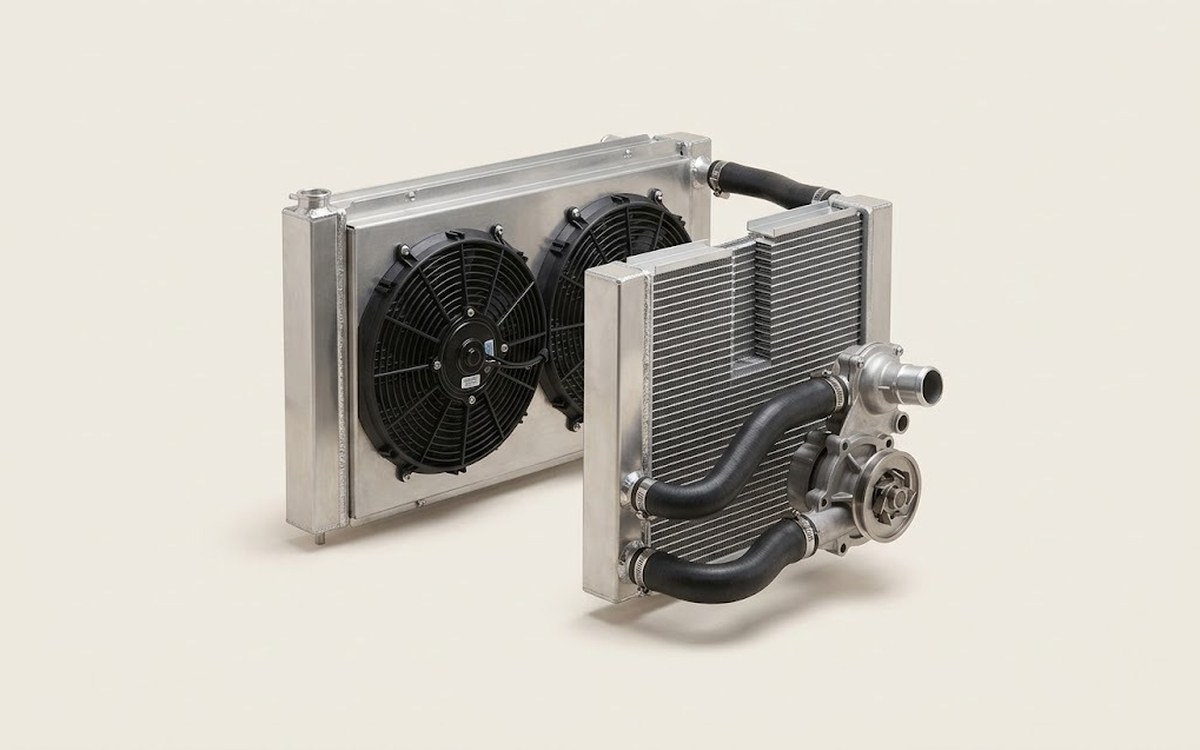 How it works · 3D
How the Engine Cooling System Works
How the part you're working on actually works — in plain English, on a 3D model.
Open in 3D →