Autopapyrus · Toyota Hi-Ace 3.0 D-4D 1KD-FTV (2014)
https://autopapyrus.com/catalog/toyota/hi-ace/guides/choosing-and-topping-up-coolant/
https://autopapyrus.com/catalog/toyota/hi-ace/guides/choosing-and-topping-up-coolant/
Compiled automatically from service literature and owner experience. Specs are for the typical configuration — check them against your exact car before you start.
Toyota Hi-Ace 3.0 D-4D 1KD-FTV (2014): Choosing and Topping Up Coolant
The Hi-Ace H200 with the 1KD-FTV engine normally runs genuine pink, ethylene glycol-based Toyota Super Long Life Coolant in the cooling system. For topping up, it's best to use ready-mixed 50/50. Concentrate must be diluted first, or the coolant in the system will become too weak.
Parts
3| № | Part |
|---|---|
| 01 | Toyota Super Long Life Coolant, pink, premixed 50/50for topping upFind on Amazon → |
| 02 | Toyota Super Long Life Coolant concentrate (pink)alternative to premix, dilute with distilled waterFind on Amazon → |
| 03 | Distilled waterfor diluting concentrateFind on Amazon → |
Amazon links search by the part name; use Amazon's fit check for your car before ordering. We may earn a commission from qualifying purchases.
Tools
4 There's a full repair manual for this car
Every system, wiring diagrams and torque specs — not just this job. Haynes AutoFix (online) and 1 more.
See manuals →
Step by step
9 steps- Park the vehicle on level ground and shut off the engine. Wait until it has cooled completely. The diesel cooling system is under pressure, and hot coolant can burn you.
- Open the hood and find the expansion tank. The level should be between the LOW (minimum) and FULL (maximum) marks. Check it with the engine cold.
- Determine what is in the system. Look at the color of the coolant in the tank. If it's pink, use Toyota Super Long Life Coolant. If the coolant is a different color, it's better to top up with the same kind that's already in the system, because other manufacturers' formulations can differ.
- The manufacturer allows mixing pink Super Long Life with green Toyota LLC. Compatibility with other brands' coolants is not confirmed. If you don't know what is in the system, then after a significant coolant loss or when mixing unknown formulations, it's safer to flush the system and replace all the coolant.
- For topping up, use ready-mixed 50/50. If you have concentrate, dilute it with distilled water following the instructions on the container. Don't top up with plain water: it reduces freeze protection and corrosion protection.
- Remove the expansion tank cap. Using a funnel, add coolant up to the FULL mark, but not above it. Tighten the cap until it stops.
- Start the engine and let it warm up with the cabin heater set to maximum heat. This purges air pockets. Shut off the engine, let it cool, and check the level again. Add coolant if needed.
- If you have to top up often, look for a leak. Inspect the hoses, radiator, water pump, radiator cap and the ground under the vehicle. Streaks or stains, or a sweetish smell, are signs of a leak.
- If the coolant is old, cloudy or has sediment, it's better to replace all of it. The total system capacity depends on trim level (with or without rear heater). Check the exact value in the manufacturer's maintenance schedule. The replacement interval is also listed there. You don't need it for topping up.
Common mistakes and warnings
- Never open the radiator cap or expansion tank cap on a hot engine: hot coolant released under pressure causes severe burns
- Antifreeze is toxic and dangerous to animals
- Don't leave open containers around, and wipe up spills right away
- If the level keeps dropping, overheating keeps recurring, or an emulsion appears in the oil, take the vehicle to a repair shop: the water pump, radiator or head gasket may be faulty
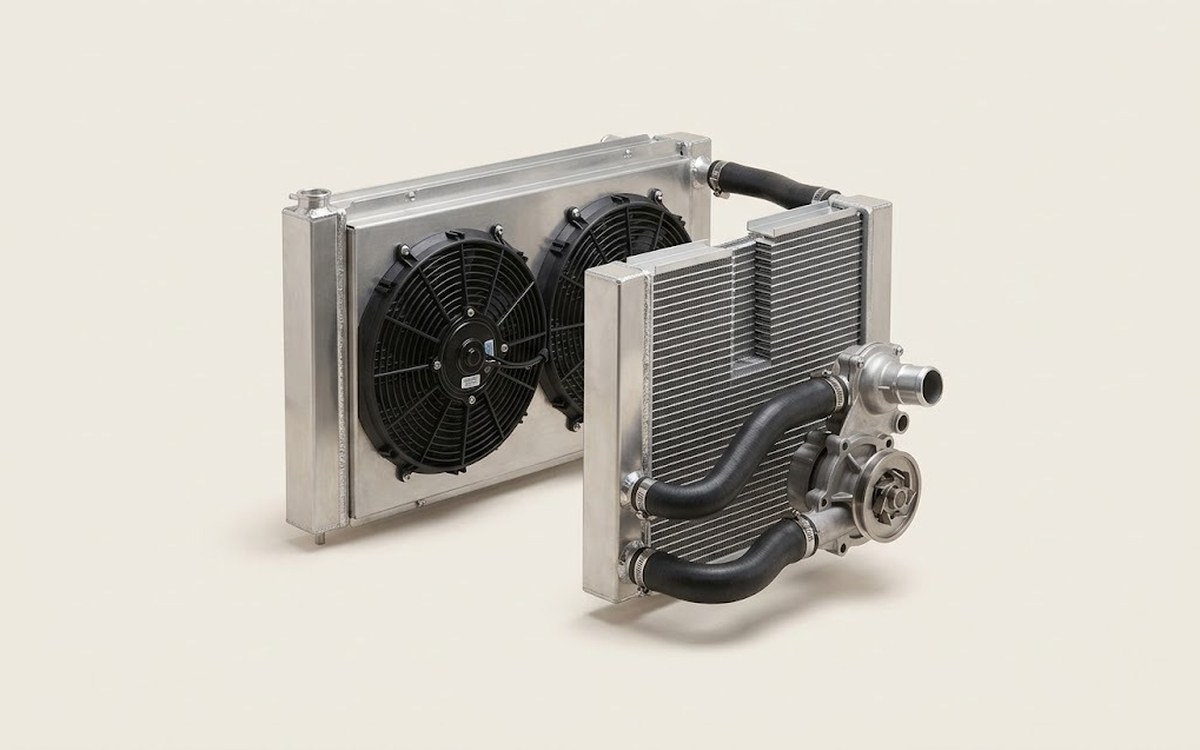 How it works · 3D
How the Engine Cooling System Works
How the part you're working on actually works — in plain English, on a 3D model.
Open in 3D →
Spotted a mistake? Tell us →
Our articles
 Brand stories
The History of Toyota
From weaving looms to reliable mass-produced cars.
Read →
 Garage
Fuel Quality Indicators: What Octane and Cetane Numbers Mean
What is an octane number? What about a cetane number? Which fuel should you choose for a high-compression engine?…
Read →
 Before you buy
How to Pick Up Your Car from the Dealership the Right Way
If you've decided to buy a car from a dealership, it isn't enough to simply choose a model you like, pay for it, and…
Read →