Autopapyrus · Wuling Jiachen 1.5 turbo (2024)
https://autopapyrus.com/catalog/wuling/jiachen/guides/coolant-antifreeze-replacement/
https://autopapyrus.com/catalog/wuling/jiachen/guides/coolant-antifreeze-replacement/
Compiled automatically from service literature and owner experience. Specs are for the typical configuration — check them against your exact car before you start.
Wuling Jiachen 1.5 turbo (2024): Coolant (Antifreeze) Replacement
On the 1.5 turbo engine, coolant is changed according to the manufacturer's schedule, roughly every 3-5 years or by mileage. The coolant is drained through the lower hose or the radiator drain plug, then fresh coolant is added and the air is bled from the system. Check the exact system capacity and service interval for this model against the manufacturer's maintenance schedule. The figures below are approximate.
Parts
2| № | Part | Alternatives |
|---|---|---|
| 01 | G12/G12+ ethylene glycol coolant (ready-mixed or concentrate)concentrate is diluted with distilled waterFind on Amazon → | AlternativesTotalLukoilSintecMotul |
| 02 | Distilled waterfor diluting concentrateFind on Amazon → |
Amazon links search by the part name; use Amazon's fit check for your car before ordering. We may earn a commission from qualifying purchases.
Tools
8Step by step
14 steps- Park the vehicle on level ground and let the engine cool down completely. Never remove the expansion tank cap on a hot engine: the system is under pressure and the coolant can scald you.
- Open the hood, find the expansion tank, and note the coolant level between the MIN and MAX marks.
- Raise the front of the vehicle on a jack and secure it with jack stands, or drive over a pit. Remove the lower engine skid plate if it blocks access to the radiator.
- Place the drain pan under the lower left or right corner of the radiator (depending on the version). Find the plastic drain plug and loosen it with a socket or a flat-blade screwdriver. Unscrew it only until coolant starts to flow. There is no need to remove it completely. If there is no plug, remove the lower radiator hose. Carefully slide back the spring clamp or retaining ring, and be careful not to break the plastic radiator nipple.
- Open the expansion tank cap so the coolant drains faster. Some coolant may run over the skid plate and bumper, so lay down rags and protect the floor.
- Pump the remaining coolant out of the expansion tank with a hose or syringe. If you see dirt or sediment at the bottom, remove the tank and rinse it out (you will need a wrench or socket that fits its mounting bolts). Tighten the tank mounting hardware moderately, per the manufacturer's specification.
- Tighten the radiator drain plug, or reinstall the hose and secure it with the clamp. Tighten the plug by hand with light force, since the plastic threads are easy to strip.
- If the drained coolant is dark, contains sediment, or has rust in it, flush the system with distilled water. Fill with water, warm up the engine with the heater on maximum, shut it off, let it cool, and drain. Repeat until the water runs clear. Do not mix different types of coolant without flushing, as sediment may form.
- Pour the new coolant into the expansion tank in a thin stream. If the system hoses have a bleed fitting, open it slightly and close it once coolant flows without bubbles. Air should leave the system gradually.
- Bring the level up to the MAX mark. Close the tank cap.
- Start the engine, set the heater to maximum heat, and let it idle for 10-15 minutes, revving it to 2000-3000 rpm from time to time. Make sure the heater gets hot and the radiator fan comes on. If the heater stays cold, an air pocket remains in the system. Shut off the engine, let it cool, and repeat the bleeding procedure.
- Shut off the engine, let it cool completely, and check the level again. Top up to MAX if necessary. Inspect the plug, hoses, and clamps for leaks.
- Reinstall the engine skid plate and tighten its fasteners to the manufacturer's specification (usually a low torque, without excessive force). Take the drained coolant to a recycling facility. Do not pour it on the ground.
- After 100-200 km (60-125 miles) of driving, check the level on a cold engine again and top up if necessary.
Common mistakes and warnings
- Antifreeze is toxic and tastes sweet, so keep it away from children and pets
- Drain the coolant only into a sealed container
- Never open the system on a hot engine
- Check the exact system capacity, coolant type, and tightening torques for this model against the manufacturer's maintenance schedule
- Torque values for the plastic drain plug and skid plate fasteners are not given in this guide
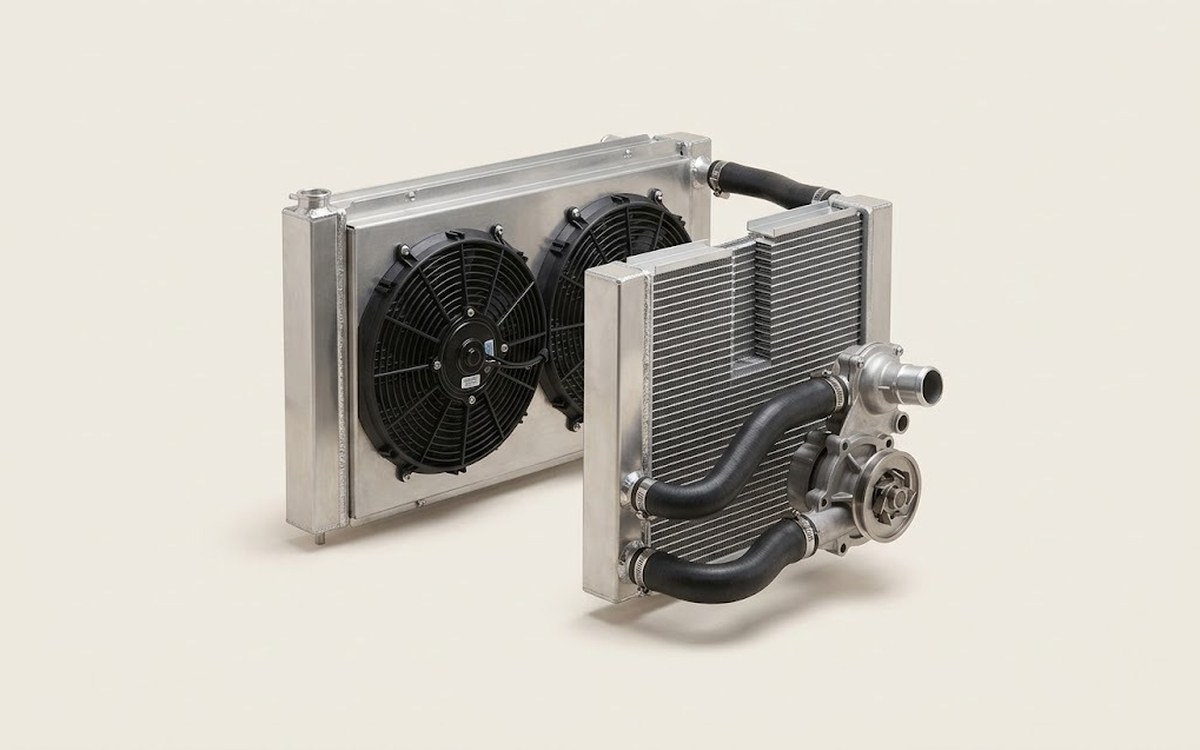 How it works · 3D
How the Engine Cooling System Works
How the part you're working on actually works — in plain English, on a 3D model.
Open in 3D →